 Save
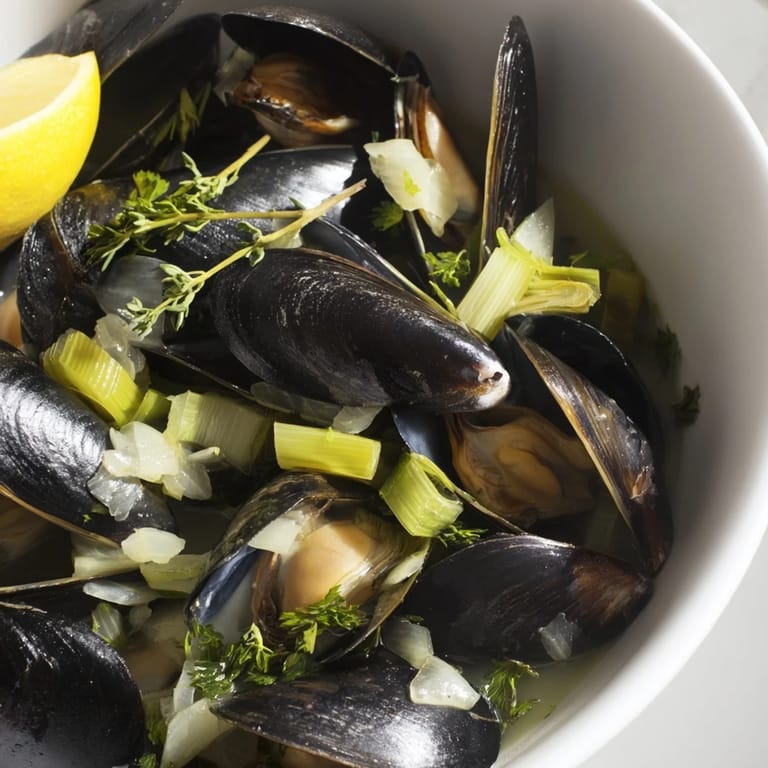
Save The first time I truly understood why Belgians treat moules marinière like a national treasure was at a tiny seaside café in Ostend, watching the chef work with almost meditative focus—just mussels, wine, and flame. There's something honest about a dish with so few ingredients; nothing hides, nothing pretends. That afternoon, I realized it wasn't complexity that made it special, it was the way each element trusted the others to shine. Now whenever I make this, I'm transported back to that moment of simplicity revealing itself as sophistication.
I made this for my partner on a cold November night when we both needed something warm and alive on the table, and watching him taste that broth for the first time—eyes closed, completely still—reminded me why cooking for people matters so much. The kitchen filled with steam and wine and that unmistakable sea-and-garlic perfume, and suddenly everything felt right.
Ingredients
- 2 kg fresh live mussels, scrubbed and debearded: Look for ones that feel heavy and smell like the ocean, not like ammonia; they should snap shut when you tap them.
- 2 medium shallots, finely chopped: Their gentle sweetness melts into the wine and becomes the soul of the broth.
- 2 cloves garlic, minced: Fresh garlic makes all the difference—I learned this the hard way with jarred.
- 1 small leek, white part only, finely sliced: This adds a subtle onion note that shallots alone can't capture.
- 2 stalks celery, finely chopped: It whispers in the background, adding depth you can't quite name.
- 1 small bunch flat-leaf parsley, chopped: Add this at the very end so it stays bright and herbaceous.
- 2 sprigs fresh thyme and 1 bay leaf: Together they create an aromatic foundation that says 'this is something special.'
- 300 ml dry white wine: Use something you'd actually drink; the mussels deserve it.
- 2 tbsp olive oil: Good olive oil matters here since there's nowhere to hide.
- Freshly ground black pepper and sea salt: The mussels themselves are already salty, so taste before adding more.
- Lemon wedges: A squeeze at the end brightens everything and cuts through the richness beautifully.
Tired of Takeout? 🥡
Get 10 meals you can make faster than delivery arrives. Seriously.
One email. No spam. Unsubscribe anytime.
Instructions
- Prepare and inspect:
- Rinse each mussel under cold running water, using a stiff brush or the edge of a knife to scrub away any barnacles or sand. Gently pull away the fibrous 'beard' (if it hasn't already come off during rinsing). Discard any that feel light, smell off, or won't close when you tap them—they're telling you they're not ready.
- Build the aromatic base:
- Heat olive oil in your largest pot over medium heat until it shimmers, then add the shallots, garlic, leek, and celery. Listen for that gentle sizzle and stir occasionally for about 3-4 minutes, until everything softens and the kitchen begins to smell incredible—this is when you know you're on the right track.
- Create the flavor foundation:
- Toss in the thyme sprigs and bay leaf, letting them toast for just 30 seconds, then pour in your white wine. Bring it to a gentle simmer—you want small bubbles breaking the surface, not a rolling boil.
- Welcome the mussels:
- Add all the cleaned mussels to the pot in one motion, cover tightly with the lid, and turn the heat up to high. The steam inside does the work; you're creating a hot, wine-scented sauna that coaxes the shells open.
- Steam with patience:
- After about 5-7 minutes, carefully lift the lid (watch for the burst of fragrant steam) and gently shake the pot. The mussels should be opening like tiny treasures revealing themselves. Most will be done in 5 minutes; don't overcook or they become rubbery and sad.
- Finish with care:
- Remove from heat and stir in the fresh parsley—its green brightness should be the last thing you add. Taste the broth and add black pepper and a pinch of salt only if it needs it. Remember, the broth is as important as the mussels.
- Serve immediately:
- Divide into deep bowls with plenty of broth, arrange lemon wedges on the side, and serve with crusty bread for soaking up every drop. This is a dish that doesn't wait—eat it while the steam is still rising.
 Save
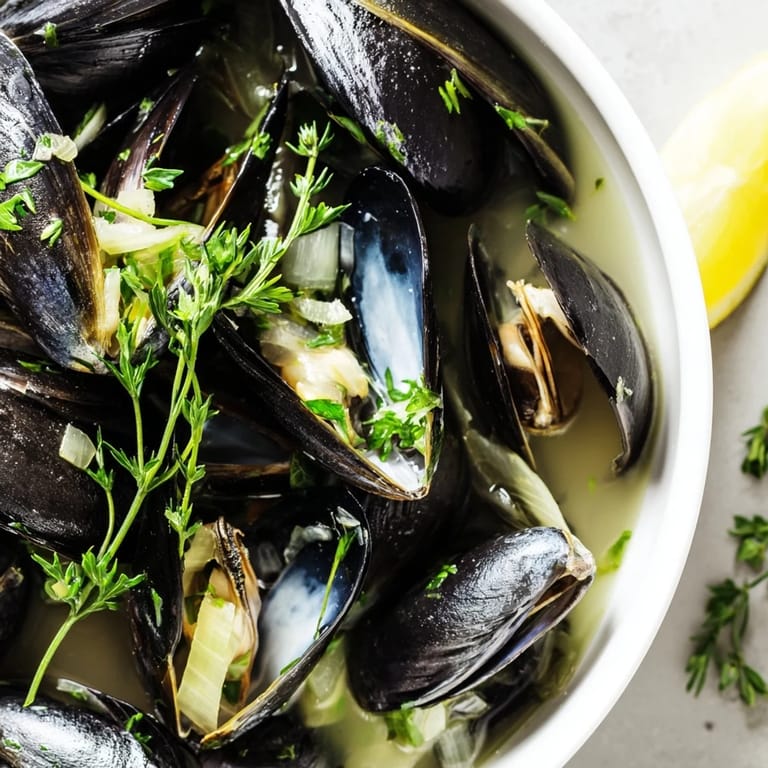
Save The moment I realized this dish had become a ritual was when my mother asked me to make it for her birthday dinner, and three people who swore they 'didn't really like shellfish' came back for seconds while silently fighting over the last of the broth. Food has a way of changing minds when you make it with attention.
Why This Dish Feels Like Luxury
There's something about the way moules marinière sits at the intersection of effort and ease that makes it feel extravagant without being pretentious. You're feeding people something that tastes like a French coastal restaurant, but you've done it in your own kitchen in under 30 minutes. It's proof that simple doesn't mean boring, and that the best meals often come from ingredients trusting each other rather than a long list of techniques.
The Art of the Broth
The broth is honestly the star—the mussels are just the vehicle. Every vegetable, the wine, the herbs, the mussel liquor that releases into the pot during steaming—they're all melting into this silky, briny, herbaceous liquid that you'll want to bottle and drink straight. This is why crusty bread is non-negotiable; you're meant to soak every piece in that broth and not feel even slightly guilty about it.
Pairing and Variations
Traditionally, this is served with Belgian fries and a cold beer, and honestly, that pairing works because the crispy, salty fries play against the delicate broth beautifully. You could also add a splash of cream at the very end for richness, a tablespoon of butter for extra silkiness, or a pinch of saffron if you want to be slightly fancy. Crusty bread is the only truly essential accompaniment—everything else is just your kitchen asking what it feels like today.
- Belgian fries with mayonnaise is the classic pairing, but crusty bread with broth is truly all you need.
- A dry white wine or crisp beer makes the perfect drink alongside this.
- Leftover broth freezes beautifully and becomes the best seafood soup base you've ever had.
 Save
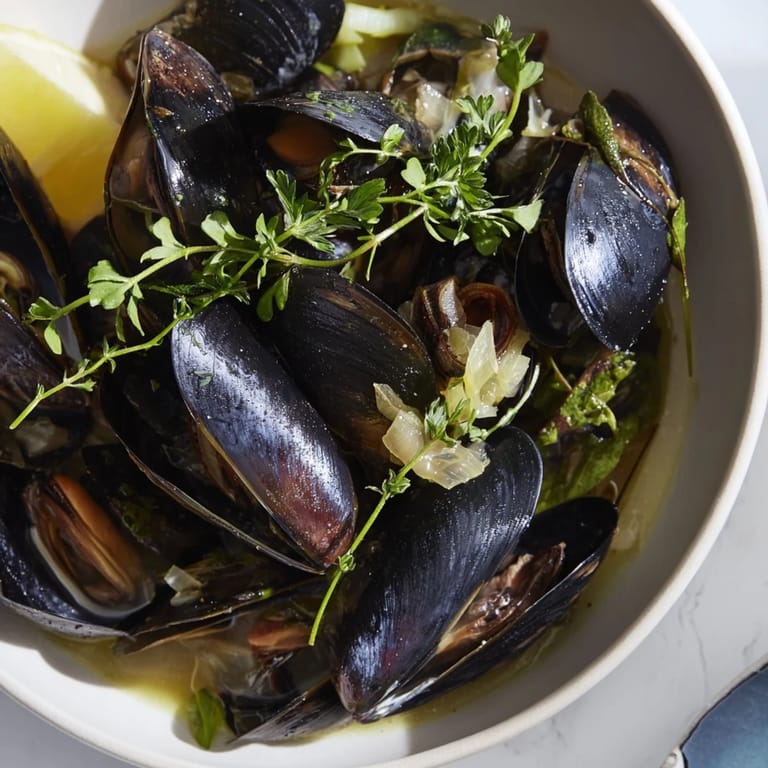
Save This dish taught me that sometimes the best meals aren't the complicated ones—they're the ones where everything is exactly what it claims to be, working in harmony. Make this and taste what honesty in cooking actually sounds like.
Recipe FAQs
- → How do I clean fresh mussels properly?
Rinse mussels under cold running water, scrub shells to remove debris, and discard any that remain open when tapped or have broken shells.
- → What role does white wine play in cooking mussels?
White wine adds acidity and depth, enhancing the natural briny flavor while steaming the mussels gently.
- → Can I substitute the fresh herbs used in this dish?
Yes, thyme and parsley can be swapped with herbs like tarragon or chervil for a different aromatic profile.
- → How long should mussels be cooked to ensure they open correctly?
Steam mussels covered for about 5–7 minutes until shells open fully; discard any that remain closed.
- → What are good accompaniments for this steamed mussel dish?
Crusty bread or Belgian fries (frites) are traditional sides, perfect for soaking up the flavorful broth.
- → Is it necessary to add salt to the broth?
Mussels are naturally salty, so tasting the broth before adding salt is recommended to avoid over-seasoning.