 Save
Save My neighbor Marcus first taught me dirty rice on a humid August afternoon when a blackout knocked out his fancy kitchen plans. He'd grabbed whatever was in his pantry, and forty minutes later, we were eating the most satisfying thing I'd ever tasted from a single cast-iron skillet. The way those spices bloomed when they hit the hot oil—that moment changed how I thought about weeknight cooking.
I've made this for friends who claimed they didn't like rice, and watched them go back for seconds without hesitation. There's something about the way the Cajun spices cling to every grain that makes people slow down and actually taste their food. That quiet moment when someone closes their eyes after the first bite—that's when you know you've nailed it.
Ingredients
- Ground pork: This is the base that gives dirty rice its savory backbone; it renders fat that flavors everything else, so don't skip browning it properly.
- Ground beef or chicken livers: The traditional choice adds deep umami and an almost mineral richness that regular beef can't match, though beef works fine if you're not adventurous with livers.
- Onion, bell pepper, celery: This holy trinity is the foundation of Cajun cooking; dice them evenly so they cook at the same rate and build layers of flavor together.
- Garlic: Mince it fine so it distributes throughout and adds gentle heat without overpowering the spices.
- Long-grain white rice: Rinsing it removes surface starch that would make everything gummy, and long-grain stays separate and fluffy when done right.
- Chicken broth: Use good broth if you can—it's worth noticing the difference, and it carries all those spices into every grain.
- Cajun seasoning: This blend does the heavy lifting, so taste as you go since every brand has slightly different saltiness.
- Thyme, smoked paprika, cayenne: These aren't just fillers; they create the warm, slightly smoky taste that makes people ask what's in it.
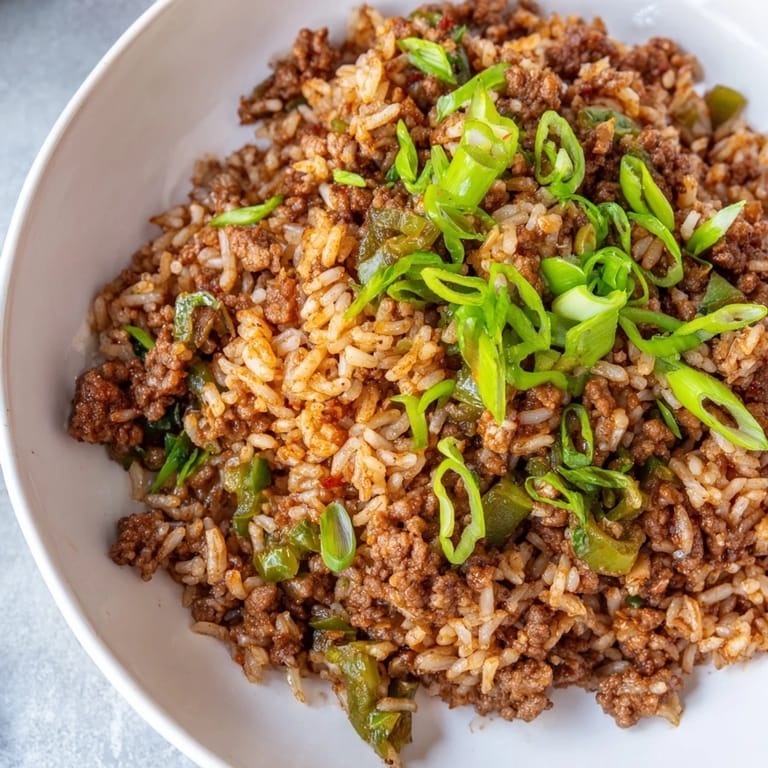
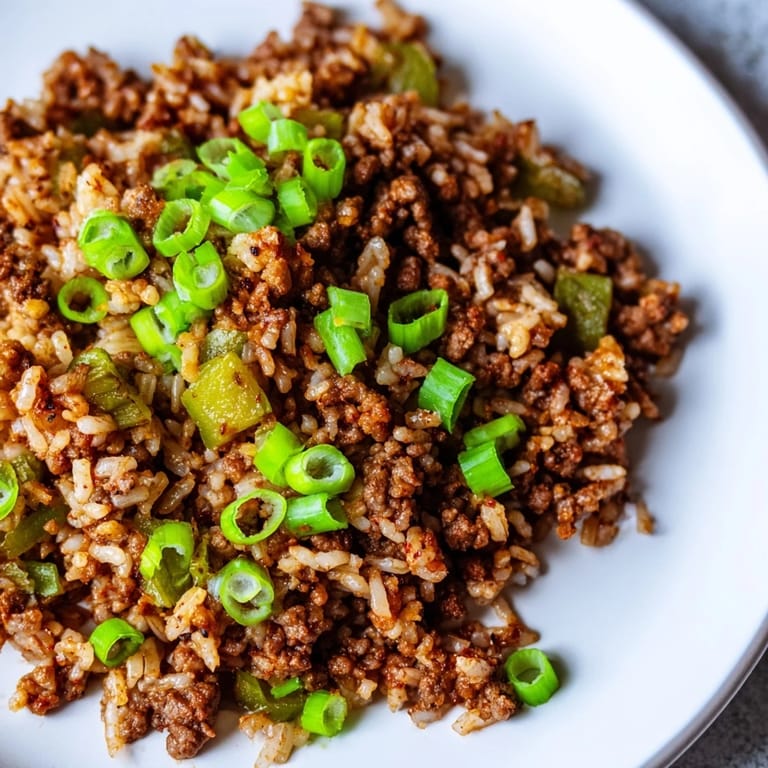
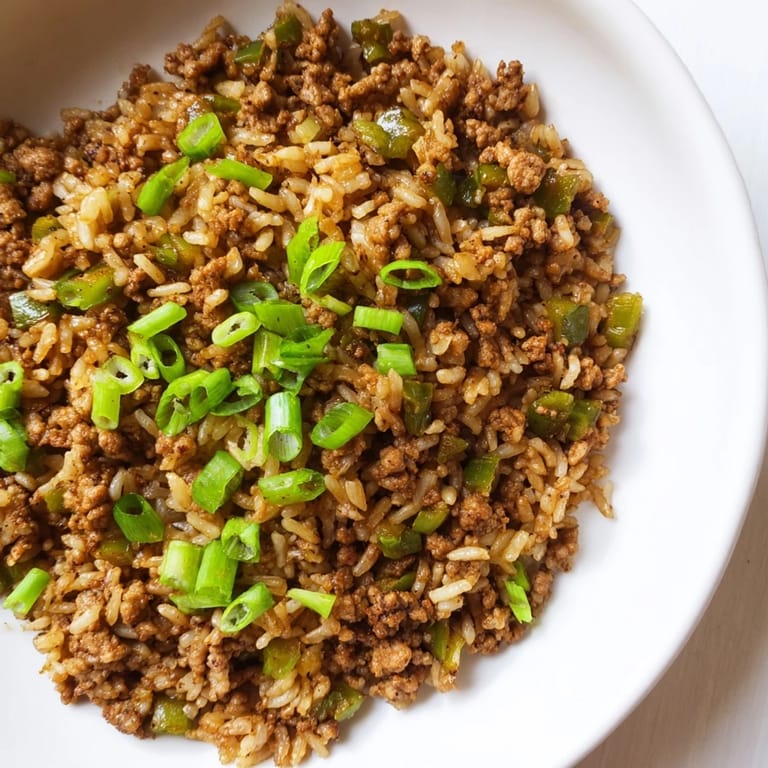
- Spring onions: Save these for garnish—they add a fresh snap that cuts through the richness and reminds you that vegetables were involved.
Tired of Takeout? 🥡
Get 10 meals you can make faster than delivery arrives. Seriously.
One email. No spam. Unsubscribe anytime.
Instructions
- Brown the meat:
- Heat oil until it shimmers, then add the pork and beef, stirring as it cooks so it breaks into small, even pieces. You want it golden and cooked through, about 6 to 7 minutes—this step builds all the flavor that comes next.
- Soften the vegetables:
- Toss in your onion, pepper, celery, and garlic, letting them sizzle and soften for 5 minutes. The kitchen will smell incredible; that's how you know it's working.
- Bloom the spices:
- Add all your seasonings and stir constantly for about 30 seconds, coating everything with that fragrant oil. This wakes up the spices and deepens their flavor before the liquid goes in.
- Toast the rice:
- Stir in the rinsed rice, stirring gently for 1 to 2 minutes until it starts to turn slightly golden. This small step changes everything, giving the rice a subtle nuttiness.
- Simmer gently:
- Pour in your broth, bring it to a boil, then cover and drop the heat low. Let it sit undisturbed for 20 to 22 minutes—don't peek, don't stir, just trust the process.
- Rest and fluff:
- Turn off the heat and leave it covered for 5 minutes, then use a fork to gently fluff the rice. This resting time lets the grains separate and the flavors settle.
 Save
Save I served this to my dad on his birthday, and he asked if I'd learned to cook professionally. It wasn't the complexity—it was that I'd finally understood the difference between following instructions and actually cooking with intention. This dish taught me that.
The Soul of Cajun Cooking
Dirty rice isn't about perfection; it's about building flavor in stages and letting every ingredient do its job. When you brown the meat first, you're developing the foundation. When you toast the spices, you're releasing oils and deepening their intensity. This approach—layering flavor instead of rushing—is what separates good food from forgettable food.
Making It Your Own
The beauty of dirty rice is how forgiving it is once you understand the basics. Some people add chopped liver for traditional depth, others use diced ham for smokiness, and I've seen versions with shrimp that were nothing short of revelatory. The framework stays the same—brown your protein, build your base, toast your rice—but the details can shift with what you love and what's in your kitchen.
Serving and Pairing
Serve this hot in shallow bowls, letting the rice settle before you eat so those spices are still active on your tongue. A crisp lager or cold white wine cuts through the richness and makes the meal feel complete. I like offering hot sauce on the side because some people want more heat, and it's nice to let them choose their own adventure.
- Let the dish rest for a few minutes after plating so you don't burn your mouth on piping hot rice.
- Leftover dirty rice reheats beautifully in a skillet with a splash of broth stirred in, and honestly tastes better the next day.
- The spring onion garnish is non-negotiable—it brightens everything and deserves its moment.
 Save
Save Dirty rice is the kind of food that brings people together without any fuss or pretense. It's honest, satisfying, and absolutely worth making on nights when you want something that tastes like you've been cooking all day.
Recipe FAQs
- → What meats are used in this dish?
Ground pork and ground beef are the primary meats, with chicken livers as a traditional alternative for added authenticity.
- → Which vegetables enhance the flavor?
Onion, green bell pepper, celery, and garlic create a flavorful base that complements the spices and meats.
- → How are the spices incorporated?
Cajun seasoning along with thyme, smoked paprika, black pepper, and cayenne are mixed in with the vegetables and meat to coat everything evenly.
- → What cooking method is used for the rice?
The rice is toasted briefly in the skillet with the spiced mixture before simmering gently in chicken broth until tender.
- → Can this dish be made dairy-free?
Yes, it is naturally dairy-free by using vegetable oil and chicken broth, without any milk or cheese ingredients.
- → What garnishes complement the dish?
Sliced spring onions add freshness and a mild crunch to finish the dish beautifully.