 Save
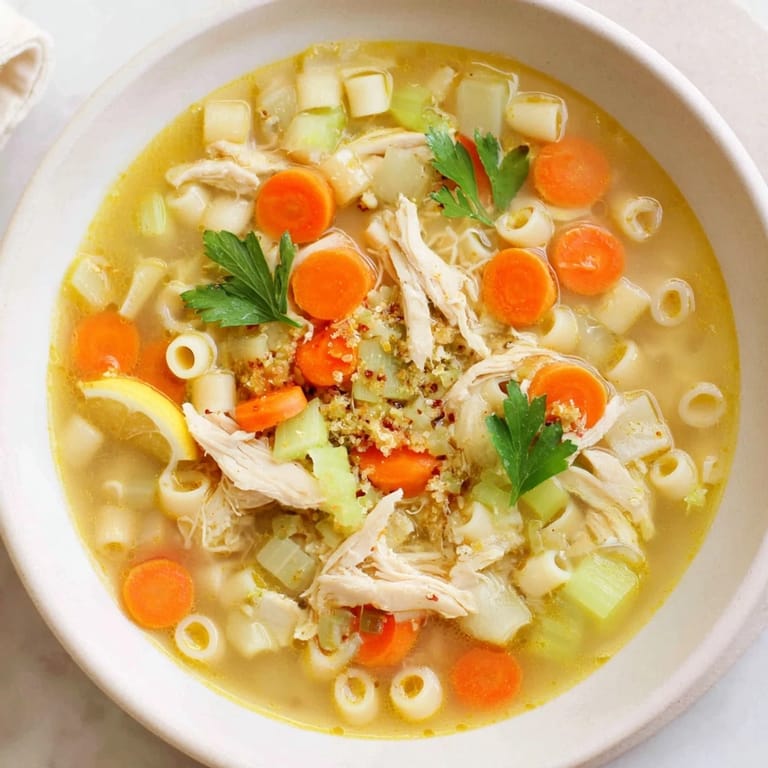
Save I made this soup on a gray Wednesday when my throat felt scratchy and my energy was gone. I didn't want anything heavy, just something warm that tasted like care. The smell of ginger and garlic hitting the hot oil pulled me back into my body, and by the time I was spooning it into a bowl, I already felt a little more human.
I brought a pot of this to my neighbor when she was recovering from a cold, and she texted me later that night saying it was the first thing that actually tasted good in days. That's when I knew this recipe was a keeper. It's not just soup, it's the kind of thing you make when you want someone to feel taken care of.
Ingredients
- Boneless, skinless chicken breasts: I sear them first to lock in moisture and add a little color, then shred them at the end so every spoonful has tender bites of chicken.
- Olive oil: Just enough to coat the pot and help the aromatics release their flavor without making the soup greasy.
- Onion, carrots, and celery: The classic base that gives the broth body and a subtle sweetness as it simmers.
- Garlic and fresh ginger: These two are the heart of the soup, they bloom in the oil and fill the kitchen with a smell that feels like medicine in the best way.
- Fresh turmeric: I grate it right into the pot for a golden hue and earthy warmth, though ground turmeric works if that's what you have.
- Low-sodium chicken broth: I always use low-sodium so I can control the salt myself, especially since the pasta will absorb some as it cooks.
- Ditalini pasta: These little tubes are perfect for soup, they hold onto the broth and make every bite satisfying.
- Bay leaf: One leaf adds a quiet depth that you don't notice until it's missing.
- Salt and black pepper: I add them in stages, tasting as I go, because the broth and pasta both affect the final seasoning.
- Fresh parsley and lemon juice: Stirred in at the end, they brighten everything and wake up the flavors just before serving.
Tired of Takeout? 🥡
Get 10 meals you can make faster than delivery arrives. Seriously.
One email. No spam. Unsubscribe anytime.
Instructions
- Sear the chicken:
- Heat the olive oil in a large pot over medium heat and sear the chicken breasts for 2 to 3 minutes on each side until they're lightly golden. Pull them out and set them aside, they'll finish cooking in the broth later.
- Cook the vegetables:
- Toss the onion, carrots, and celery into the same pot and sauté for about 5 minutes until they soften and start to smell sweet. You'll see little browned bits on the bottom of the pot, that's flavor.
- Add the aromatics:
- Stir in the garlic, ginger, and turmeric, and cook for just 1 minute until the kitchen smells incredible. Don't let the garlic burn or it'll turn bitter.
- Simmer the chicken:
- Return the chicken to the pot, pour in the broth, and drop in the bay leaf. Bring it to a boil, then lower the heat, cover, and let it simmer for 20 minutes.
- Shred the chicken:
- Pull the chicken breasts out and shred them with two forks. They should fall apart easily, then stir the shredded chicken back into the pot.
- Cook the pasta:
- Add the ditalini, salt, and pepper, and cook uncovered for 8 to 10 minutes until the pasta is al dente. Stir occasionally so it doesn't stick to the bottom.
- Finish and serve:
- Stir in the parsley and lemon juice, taste it, and adjust the salt if needed. Fish out the bay leaf, ladle the soup into bowls, and serve it hot.
 Save
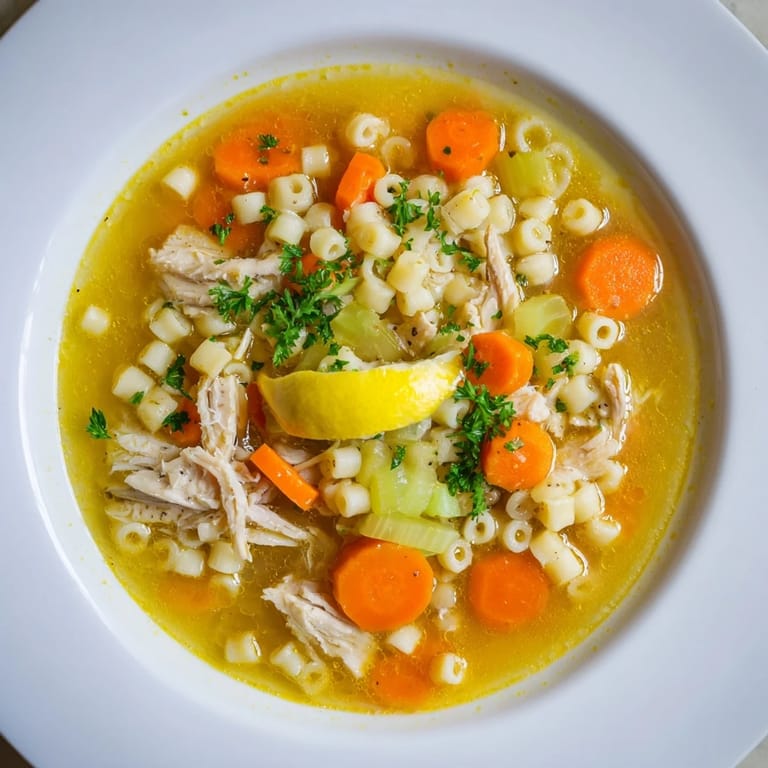
Save The first time I made this, I was skeptical about adding lemon at the end, but it completely transformed the soup from comforting to crave-worthy. Now I can't imagine it without that bright little squeeze cutting through the richness.
Storing and Reheating
This soup keeps in the fridge for up to 4 days in an airtight container. The pasta will swell a bit as it sits, so I sometimes add a splash of broth when I reheat it on the stove. It also freezes well for up to 3 months, just leave the pasta out and cook it fresh when you're ready to eat.
Swaps and Add-Ins
I've made this with orzo and small shells when I didn't have ditalini, and both worked beautifully. If you want a little heat, add a pinch of cayenne or red pepper flakes with the garlic. A handful of chopped spinach or kale stirred in at the end adds color and a bit more nutrition without changing the flavor.
Serving Suggestions
I like to serve this with a hunk of crusty bread for dipping, or sometimes I'll toast a slice and rub it with a cut garlic clove for a little extra bite. A crisp green salad on the side keeps things light, and if you're feeling fancy, a glass of dry white wine pairs surprisingly well with the ginger and lemon.
- Garnish with extra parsley or a drizzle of good olive oil for a restaurant touch.
- Serve alongside saltine crackers if you're eating it sick in bed, no judgment.
- Double the batch and freeze half so you always have a comfort meal ready to go.
 Save
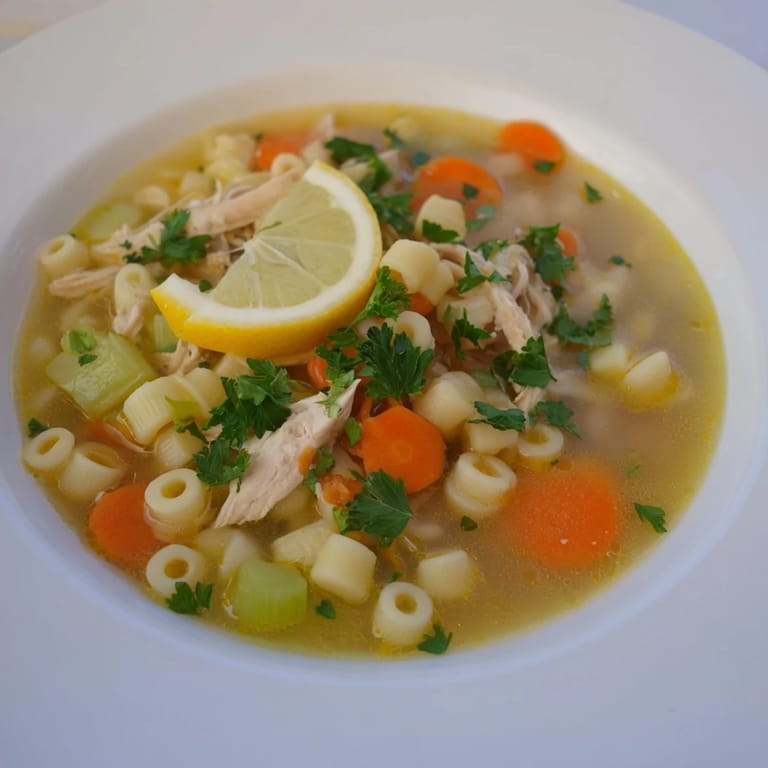
Save This soup has pulled me through more cold nights and rough weeks than I can count. I hope it does the same for you.
Recipe FAQs
- → Can I substitute ditalini pasta with other pasta types?
Yes, small pasta shapes like orzo or small shells work well and maintain the soup's texture.
- → How does turmeric contribute to this soup?
Turmeric adds a warm, earthy flavor and subtle color while offering anti-inflammatory properties.
- → What is the best way to shred the cooked chicken?
Use two forks to pull apart the chicken breasts into bite-sized shreds for even distribution in the soup.
- → Can I add extra vegetables for more nutrition?
Absolutely, adding chopped spinach or a pinch of cayenne towards the end enhances flavor and nutrients.
- → How long should I simmer the soup to develop flavors?
Simmering for about 20 minutes allows the aromatics and spices to meld with the broth and chicken.