 Save
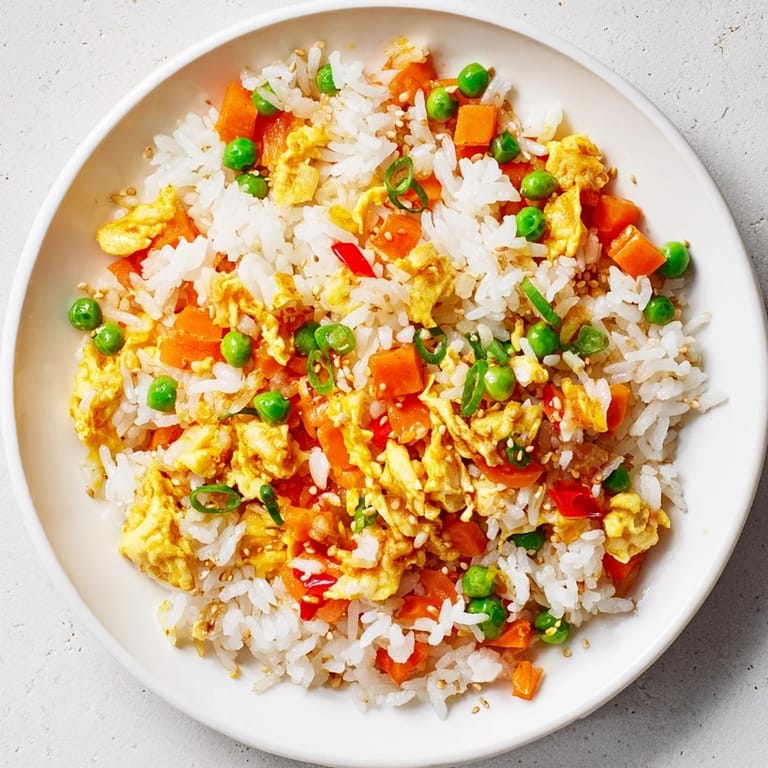
Save There's something about the sizzle of a hot wok that makes you feel like you're actually cooking, not just assembling dinner. One random Tuesday, I had leftover rice in the fridge and maybe three vegetables I could name, so I threw it all together with eggs and soy sauce—and suddenly I had something restaurant-quality on a weeknight. That moment taught me that the best meals don't require planning, just confidence and a hot pan.
I made this for my roommate once when she came home frustrated from work, and watching her face change after the first bite was the kind of small magic that reminds you why cooking matters. She asked for the recipe, then made it three times that week. Now whenever she visits, she brings her own wok.
Ingredients
- Cooked leftover rice: Two cups, cold and preferably from yesterday—day-old rice actually works better because the grains separate instead of clumping into a sticky mess.
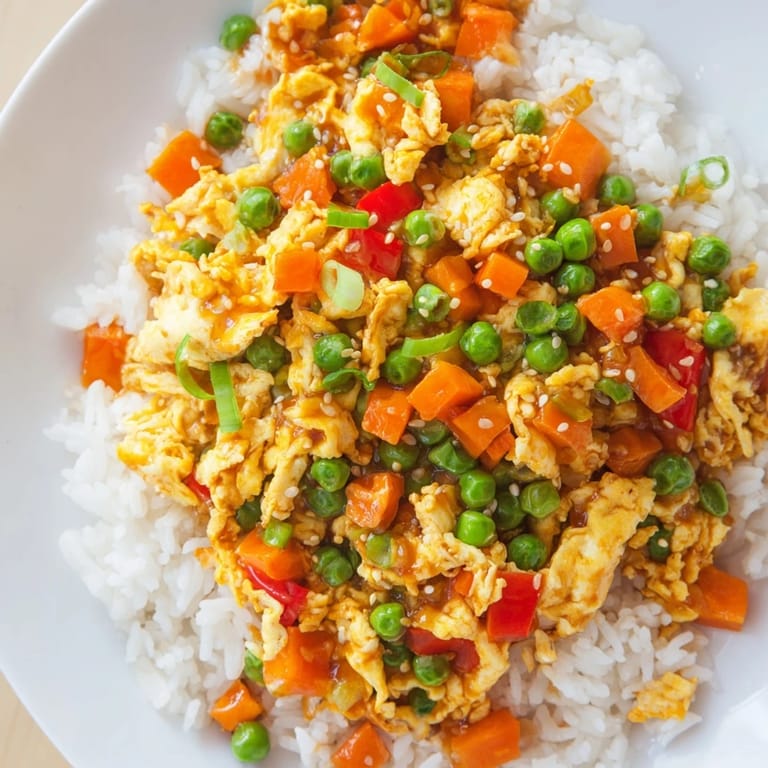
- Large eggs: Two eggs scrambled and set aside, which gives you those golden, fluffy pieces scattered throughout the dish.
- Diced carrots: Half a cup, cut small so they cook quickly and add natural sweetness.
- Frozen peas: Half a cup thawed, they brighten both the flavor and the look of everything.
- Chopped scallions: A quarter cup (keep some back for garnish at the end).
- Bell pepper (optional): Half a cup diced, adds a slight crunch if you include it.
- Soy sauce: Two tablespoons—this is the backbone of flavor, so don't skip it or go too light.
- Sesame oil: One teaspoon drizzled at the end, it smells like a secret ingredient and tastes like one too.
- Ground white or black pepper: A quarter teaspoon, adjust to your taste.
- Vegetable oil: Two tablespoons total for cooking, using a neutral oil keeps the flavors clean.
Tired of Takeout? 🥡
Get 10 meals you can make faster than delivery arrives. Seriously.
One email. No spam. Unsubscribe anytime.
Instructions
- Get everything ready first:
- Dice your vegetables, beat your eggs in a bowl, and make sure your rice is broken apart into individual grains. This takes five minutes and makes the actual cooking feel effortless.
- Cook the eggs:
- Heat a tablespoon of oil in a wok or large skillet over medium-high heat, then scramble the eggs quickly until just set and transfer them to a plate—you want them still a little tender since they'll cook more later.
- Sauté the hearty vegetables:
- Add the remaining oil to the pan and toss in your carrots and bell pepper, cooking for about two minutes until they just start to soften but still have a bit of life in them.
- Add the quick-cooking vegetables:
- Stir in the thawed peas and half of your scallions, cooking for just a minute so they warm through without losing their color.
- Toast the rice:
- Break up any clumps of cold rice with your spatula as you add it to the pan, then stir-fry the whole thing for two to three minutes until the rice is heated through and the grains separate and actually taste toasted.
- Season and combine:
- Drizzle in the soy sauce and sesame oil, stirring everything to coat evenly—you should smell something that makes you want to eat immediately.
- Bring it all together:
- Return the scrambled eggs to the pan and stir everything for one more minute so the eggs distribute throughout and everything tastes like one unified dish, not separate components.
- Finish and serve:
- Taste it, adjust pepper and salt if needed, then top with your remaining scallions and serve while it's still steaming.
 Save
Save The first time I made this for someone else, I realized that this simple dish has a way of bringing people together that fancier food sometimes misses. It's humble and fast but somehow feels generous—like you took care of someone by feeding them something good.
Timing Is Everything
The magic of fried rice happens when everything moves quickly, so having your mise en place ready is actually the difference between a restaurant-quality dish and a slightly chaotic stir-fry. High heat, confidence, and knowing that it only takes ten minutes from pan to plate—that's what makes this recipe feel less like cooking and more like a small performance that tastes great at the end.
The Vegetables Are Your Canvas
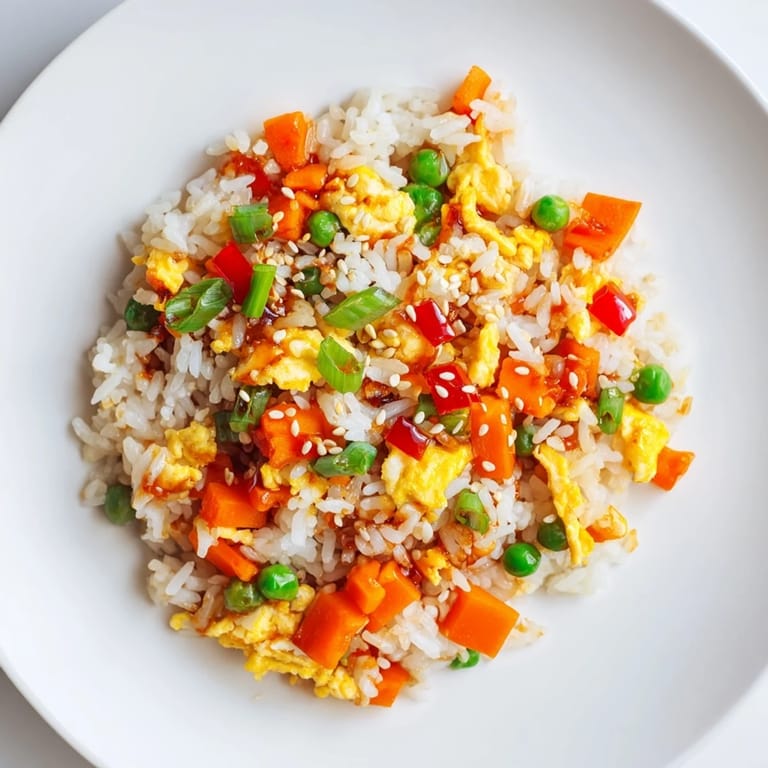
The beauty here is flexibility without sacrificing flavor—corn, snap peas, broccoli, mushrooms, whatever you have hiding in your fridge gets better when it hits a hot wok with soy sauce. I've made this with nearly every vegetable combination imaginable, and it's never once disappointed. The vegetables are really just your chance to use what's available while the eggs, rice, and soy sauce hold everything together.
Upgrade or Make It Your Own
If you want to add protein, cooked chicken, shrimp, or tofu fold in naturally and don't slow you down. A pinch of minced garlic or fresh ginger when you sauté the vegetables transforms this into something you'd genuinely order at a restaurant and then realize you just made at home for a fraction of the cost.
- Leftover rotisserie chicken shredded and stirred in at the end saves you cooking time and adds incredible flavor.
- If you make this vegetarian, make sure your soy sauce is certified vegetarian, and the sesame oil becomes even more important for depth.
- This keeps well in the refrigerator for two days, and somehow tastes good cold straight from the container the next day at lunch.
 Save
Save This recipe has fed me on lazy nights, impressed unexpected guests, and reminded me that cooking doesn't have to be complicated to be satisfying. Keep it in your back pocket for whenever you need something fast, warm, and honest.
Recipe FAQs
- → What type of rice works best?
Day-old, cold rice helps prevent clumping and achieves a firmer texture when stir-frying.
- → Can I use other vegetables?
Yes, corn, snap peas, broccoli, or any preferred vegetables can be swapped based on availability.
- → How do I avoid scrambled eggs overcooking?
Scramble eggs quickly over medium-high heat until just set, then remove from the pan before adding other ingredients.
- → Is there a way to add more protein?
You can include cooked chicken, shrimp, or tofu during the stir-frying process for extra protein.
- → What oils are recommended?
Vegetable or neutral oils are ideal for stir-frying, finished with a touch of sesame oil for flavor.
- → How to make it gluten-free?
Use certified gluten-free soy sauce or tamari to keep the dish gluten-free.