 Save
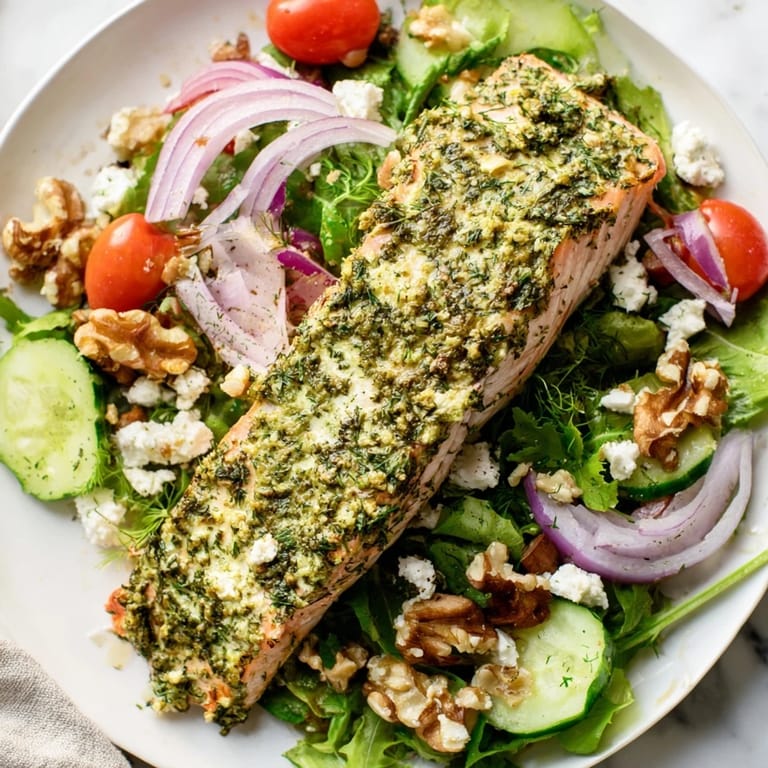
Save There's something about the smell of fresh dill hitting a hot oven that makes you feel like you've got your life together, even if you're just throwing dinner together on a Tuesday. I discovered this salmon salad combination completely by accident when I had gorgeous fillets thawing and realized my usual repertoire of sauces felt tired. The herb crust came together in maybe two minutes, and what emerged from the oven was so bright and vibrant that I actually plated it nicely instead of eating it standing at the counter like I usually do. Now it's become my go-to when someone's coming over and I want them to think I'm a real cook.
I made this for my friend Marcus who'd just moved back to the city, and he kept asking if I'd bought it from somewhere until he watched me pull the salmon out of the oven. There's something about that moment of revealing how simple it actually was that felt kind of like showing him a magic trick, except the magic was just good ingredients and ten minutes of attention.
Ingredients
- Salmon fillets: Use skinless fillets about the same thickness so they cook evenly; uneven pieces mean some dry, some raw, and that's a waste of good fish.
- Fresh herbs: Don't even think about using dried herbs here—the whole point is that bright, alive green coating, and dried parsley is basically colored cardboard.
- Dijon mustard: This acts as both a binder for your herb paste and a subtle flavor anchor that makes the salmon taste more like itself.
- Lemon juice: A little acidity while cooking prevents the herb paste from tasting flat and keeps everything tasting fresh.
- Mixed salad greens: Arugula adds peppery notes, spinach brings earthiness—choose based on what you actually like eating, not what a recipe tells you to.
- Cherry tomatoes: Halving them releases their juice into the salad, creating a natural sauce that coats everything beautifully.
- Cucumber and red onion: These add crunch and sharpness; the onion is thin enough to soften slightly under the vinaigrette but still keep its bite.
- Extra-virgin olive oil: Spend a little here because you taste it directly in the vinaigrette, not hidden in cooking.
- White wine vinegar: Gentler than regular vinegar, it adds brightness without making your face scrunch up with tartness.
Tired of Takeout? 🥡
Get 10 meals you can make faster than delivery arrives. Seriously.
One email. No spam. Unsubscribe anytime.
Instructions
- Heat your oven and prep your workspace:
- Get the oven to 400°F and line your baking sheet with parchment paper so cleanup is actually manageable and the salmon doesn't stick. This takes ninety seconds but saves you from standing at the sink later.
- Make the herb paste:
- Combine your olive oil, Dijon mustard, lemon juice, and all those fresh herbs in a small bowl, stirring until everything looks like a thick, vibrant green spread. If you have a mortar and pestle, gently bruising the herbs first releases more of their essential oils, but a bowl works perfectly fine.
- Coat the salmon:
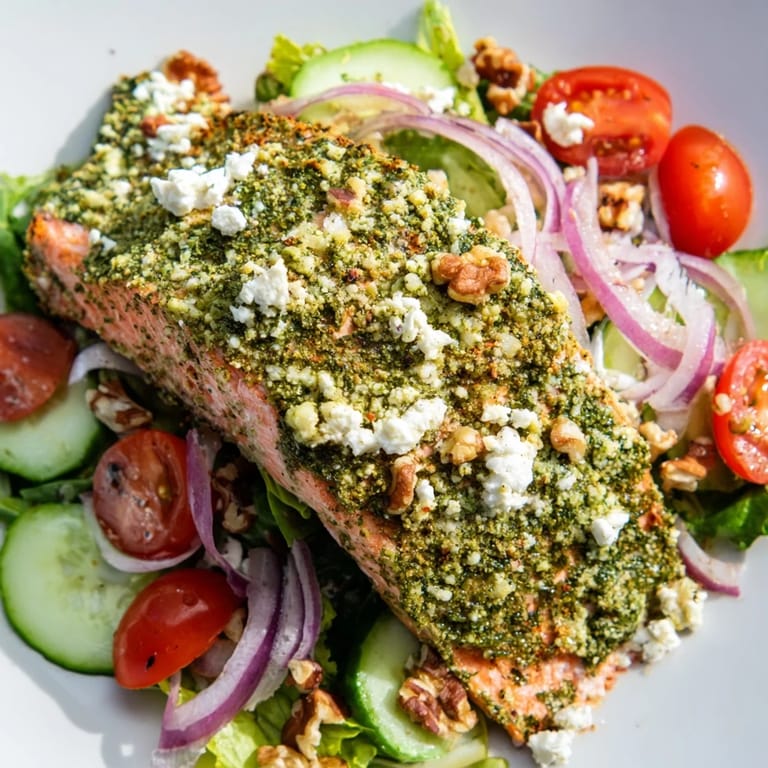
- Place your fillets on the prepared sheet and spread the herb mixture generously over the top of each one, using about the same amount of paste per fillet. Don't be shy—this isn't a light dusting, it's a full crust.
- Bake until just cooked through:
- Slide everything into the oven for 12 to 15 minutes, depending on the thickness of your fillets and your oven's personality. The salmon is ready when it flakes easily with a fork and the thickest part looks opaque with maybe a hint of translucence at the very center.
- Build your salad:
- While the salmon roasts, toss your greens, tomatoes, cucumber, red onion, and any optional toppings into a large bowl—hold off on dressing it until the very last second so nothing gets soggy.
- Make the vinaigrette:
- Whisk together the olive oil, vinegar, honey, and mustard in a small bowl until the honey dissolves and everything looks emulsified and glossy. Taste it and adjust the salt and pepper until it tastes right to you, not some recipe.
- Bring it all together:
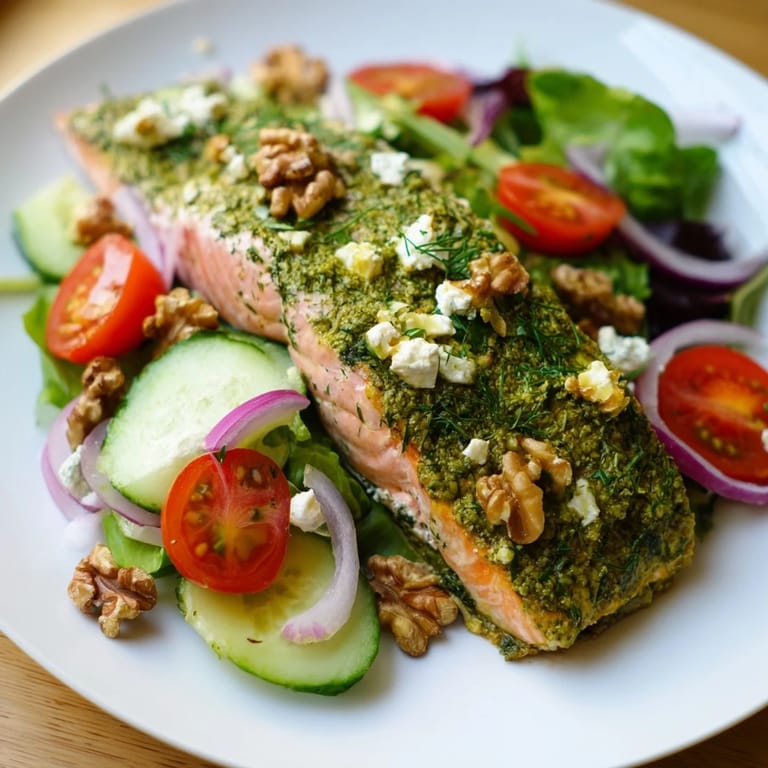
- Dress the salad gently with the vinaigrette just before plating, then divide it among four plates and top each with a warm salmon fillet, letting the residual heat soften the greens slightly while keeping them just past crisp.
 Save
Save There was this one evening when I made this for my family, and my dad—who eats the same things on rotation every week—asked for seconds, which in his language means I'd stumbled onto something genuinely good. It wasn't complicated, just salmon and a salad, but somehow it felt like I'd learned something about how simple ingredients treated with attention become more than the sum of their parts.
Why This Works as a Complete Meal
You get protein from the salmon that actually keeps you full, healthy fats that your brain and skin appreciate, and raw vegetables that taste like life. The warm and cool contrast makes it feel more interesting than a regular salad, and plating it with the salmon on top instead of mixed in means you're eating all the best bites together rather than having the fish disappear by the third forkful. The whole thing takes less time than ordering delivery, which is the real victory.
Adjusting This for What You Have
If salmon isn't in your budget or your freezer, trout works beautifully and costs less, or even a thick white fish like halibut will take the same herb treatment. You can swap the mixed greens for whatever's in your crisper drawer—kale, butter lettuce, even shredded cabbage if that's what you've got, though adjust the vinaigrette acidity accordingly. The herbs are flexible too; if you don't have dill, use tarragon or basil or just double down on parsley and nobody will know the difference except you.
Making It Your Own
This recipe is really just a framework for whatever seasonal vegetables you want to celebrate—in summer I add sliced peaches, in spring I throw in some fresh peas, and in fall roasted beets become the star. The herb crust is where the magic lives, so keep that constant, but everything else is a conversation between you and your kitchen and what sounds good right now.
- Toast your walnuts or almonds fresh if you can; they taste exponentially better than ones that have been sitting open in your pantry for three months.
- If you're adding avocado, slice it just before plating or it will brown and look unappetizing within five minutes.
- A squeeze of fresh lemon juice over the finished plate brightens everything and gives you an excuse to eat it with a little more intention.
 Save
Save This is the kind of meal that reminds you why cooking for yourself matters, even on nights when you're tired and takeout feels easier. There's something quietly satisfying about pulling something this good together with your own hands.
Recipe FAQs
- → What herbs are ideal for the crust on salmon?
Fresh parsley, dill, and chives blend well to create a fragrant and flavorful crust that complements the salmon’s natural taste.
- → How can I tell when the salmon is perfectly cooked?
Cook salmon until it flakes easily with a fork and appears opaque throughout, usually around 12-15 minutes at 200°C (400°F).
- → Can I substitute the greens used in the salad?
Yes, mixed greens like arugula, spinach, or romaine provide a crisp base, and you can customize based on preference or availability.
- → What vinaigrette ingredients ensure a balanced flavor?
An emulsion of extra-virgin olive oil, lemon juice or white wine vinegar, Dijon mustard, and a touch of honey or maple syrup provides a bright and slightly sweet dressing.
- → Are nuts and cheese necessary for the salad?
They are optional but add texture and richness; toasted walnuts or almonds and crumbled feta enhance the overall experience.