 Save
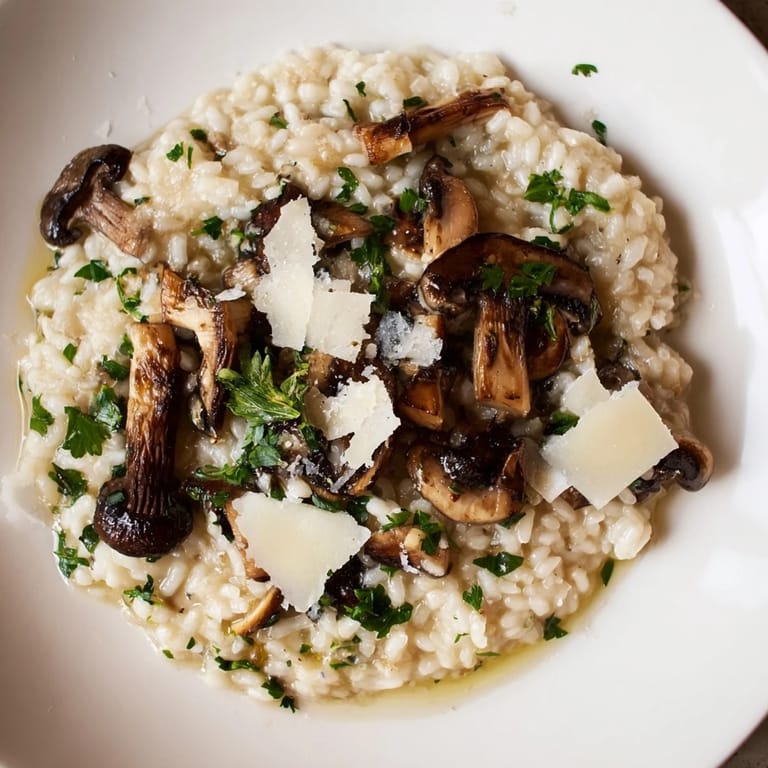
Save The first time I stood in front of a risotto, I was convinced I'd ruin it. My Italian neighbor had mentioned casually over the fence that risotto requires patience and attention, not fear, and somehow that gave me courage. When I finally tasted those creamy, luxurious grains with the mushrooms melting into every bite, I understood why she'd made it look so effortless. It wasn't magic—it was just care, one ladle of broth at a time.
I made this for my book club on a rainy Thursday, and the whole apartment filled with that toasty, nutty smell of Arborio rice hitting the pan. Someone asked if I'd made a restaurant dish at home, and I realized that risotto has this quiet power—it looks fancy but tastes like comfort. That night, nobody wanted to leave until the last spoonful was gone.
Ingredients
- Arborio Rice: This short-grain rice has a high starch content that creates that signature creaminess without falling apart. Don't skip the toasting step; it locks in the structure and adds a subtle depth.
- Mixed Wild Mushrooms: Cremini, shiitake, and porcini each bring different earthy notes. Slice them uniformly so they cook evenly and caramelize beautifully.
- Vegetable Broth: Keep it warm in a separate pot—adding cold liquid will shock the cooking process and mess with your timing.
- Parmesan Cheese: Grate it fresh; pre-grated loses its ability to melt into that glossy richness.
- Dry White Wine: A Pinot Grigio or Sauvignon Blanc adds acidity that balances the richness and brightens every bite.
- Cold Butter: The last-minute cubes create that silky finish called mantecatura, and it really does make the difference.
Tired of Takeout? 🥡
Get 10 meals you can make faster than delivery arrives. Seriously.
One email. No spam. Unsubscribe anytime.
Instructions
- Toast the Base:
- Heat your oil and butter together until the butter foams, then soften the onion until it's almost see-through. This takes patience, but it's building flavor from the ground up.
- Embrace the Mushrooms:
- Let the mushrooms sit undisturbed for a minute or two after you add them so they get a golden crust, then stir. You're coaxing out their deepest, earthiest flavors.
- Toast the Rice:
- Coat every grain in the butter and oil, stirring for about a minute. You'll hear a subtle clicking sound—that's how you know it's ready.
- Deglaze with Wine:
- Pour in the white wine and let it sizzle and reduce, stirring constantly. The liquid disappears, but its brightness stays in the rice.
- Add Broth Gradually:
- This is the heart of risotto—one ladleful at a time, stirring frequently, waiting until the liquid is mostly absorbed before the next addition. It usually takes about 18 to 20 minutes total.
- Finish with Mantecatura:
- Remove from heat, then stir in the cold butter and Parmesan until the risotto looks almost glossy and moves lazily on the plate. This step is where risotto becomes risotto.
 Save
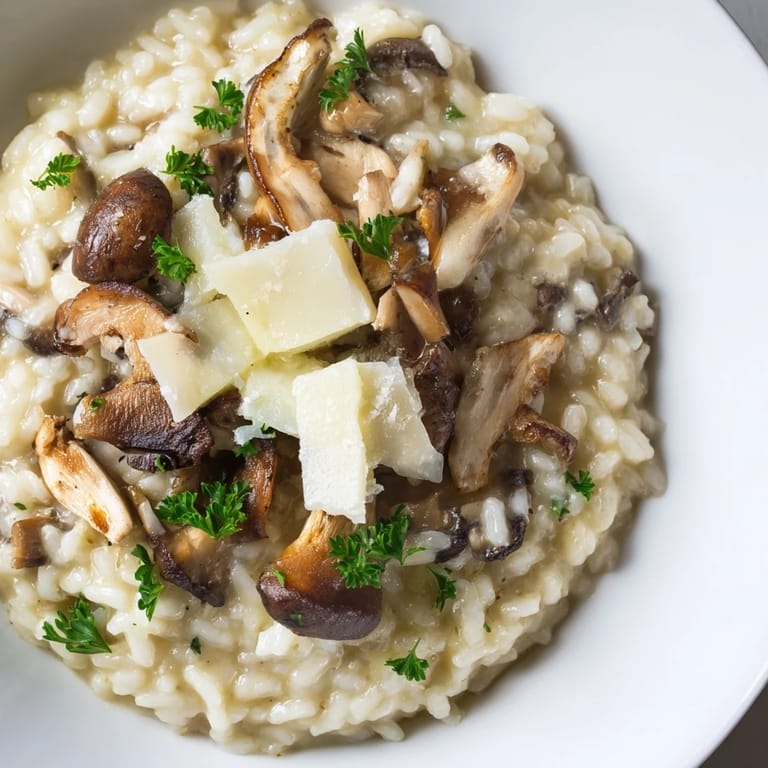
Save There was a moment last month when a friend who never cooks anything fancier than pasta admitted she felt nervous about trying risotto, and I handed her the spoon. Watching her understand that she could make something this good, just by staying present with it, reminded me why I love this recipe. Food that asks for your attention somehow becomes a gift you give both to yourself and to the people eating it.
The Secret of Arborio Rice
Arborio rice isn't just any rice—it's specifically bred to absorb liquid while holding its shape. The grains are almost translucent when raw, and they have this waxy coating that releases starch slowly, creating creaminess as you stir. Once you understand that risotto's texture comes from technique and rice structure, not cream, you realize you can make it anywhere, with any vegetable, and it will always work.
Mushroom Magic
The quality of your mushrooms changes everything here. I learned this the hard way, using sad supermarket buttons that had no flavor at all, and then switching to a farmers market vendor who had fresh shiitakes and creminis that still smelled earthy and alive. If you can find them, dried porcini rehydrated in warm water adds an almost meaty depth, and you can use that soaking liquid in your broth for extra umami. Even a small handful transforms the whole dish.
Timing, Texture, and When to Serve
Risotto doesn't sit well—it keeps absorbing liquid and gets stodgy if you leave it on the heat or even in a bowl for too long. The moment it's finished, it's at its best, so time your cooking so you can serve it right away, ideally straight to the table while it's still moving slightly in the bowl. I've found that if you're cooking for guests, you can prepare everything ahead and then start the broth-adding phase about 15 minutes before you want to eat.
- Keep the broth at a gentle simmer in a separate pot so it's always ready and warm.
- Stir more toward the end of cooking so you don't overdevelop the starch and lose that al dente bite.
- If you make risotto for a crowd, double the recipe and use a wider pan so everything cooks evenly.
 Save
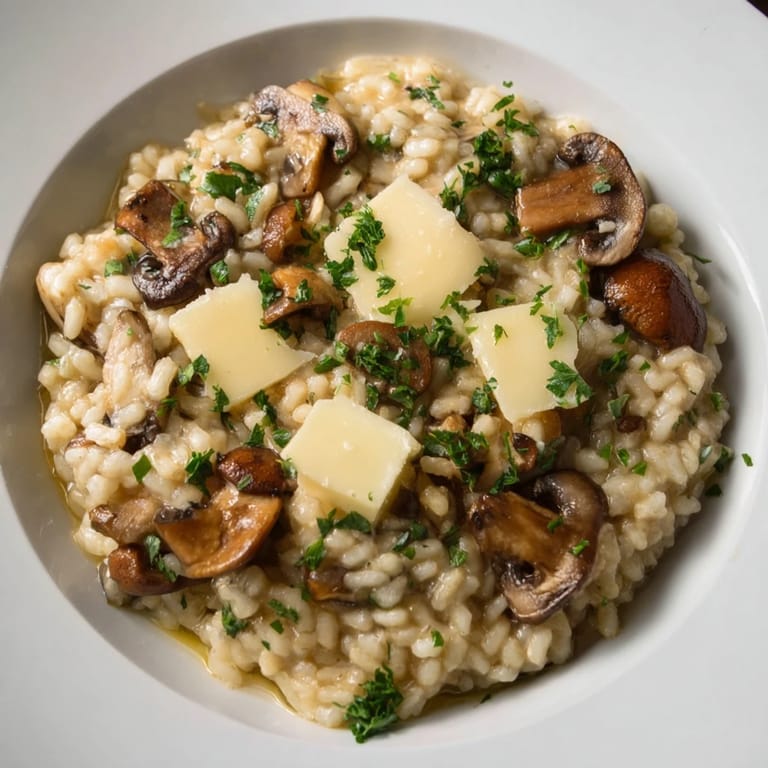
Save Making risotto is less about following orders and more about learning to listen to your ingredients—the sizzle, the smell, the way the rice looks as it transforms. Once you make it a few times, it stops feeling like a challenge and starts feeling like coming home in a bowl.
Recipe FAQs
- → What type of rice is best for this dish?
Arborio rice is ideal as its high starch content creates the creamy texture essential to this dish.
- → Can other mushrooms be substituted?
Yes, a mix of wild mushrooms like cremini, shiitake, and porcini enhances flavor but common button mushrooms can be used too.
- → How should I cook the mushrooms for best flavor?
Sauté mushrooms over medium heat until golden and most moisture evaporates to concentrate their earthy aroma.
- → Why is white wine added during cooking?
White wine adds acidity and depth, balancing richness and enhancing the overall flavor profile.
- → What is the purpose of adding cold butter and Parmesan at the end?
Incorporating cold butter and Parmesan off the heat ensures a silky, rich finish and smooth texture.
- → Can this dish be prepared ahead of time?
Risotto is best served fresh to maintain its creamy consistency, but can be gently reheated with added broth if necessary.