 Save
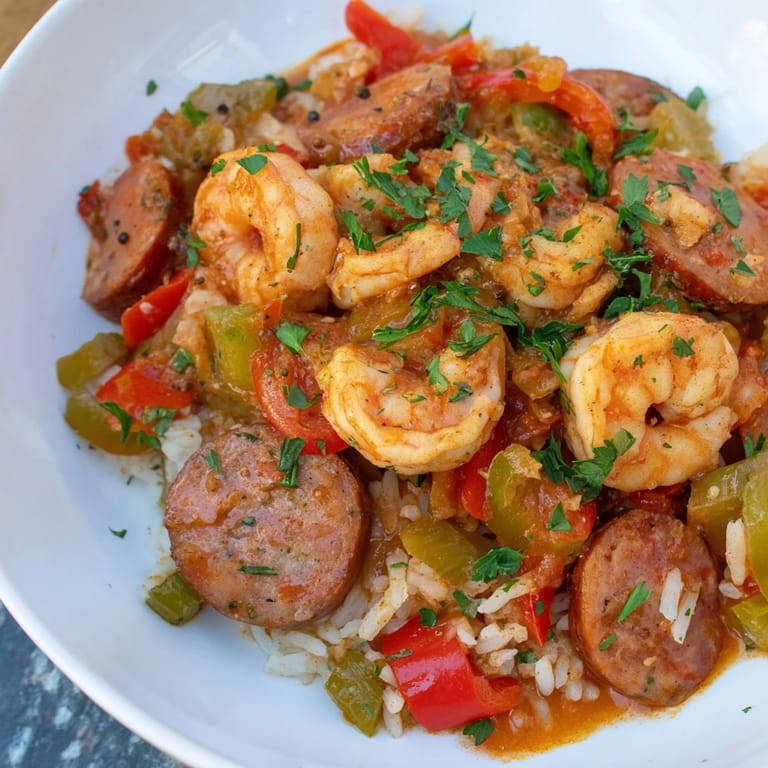
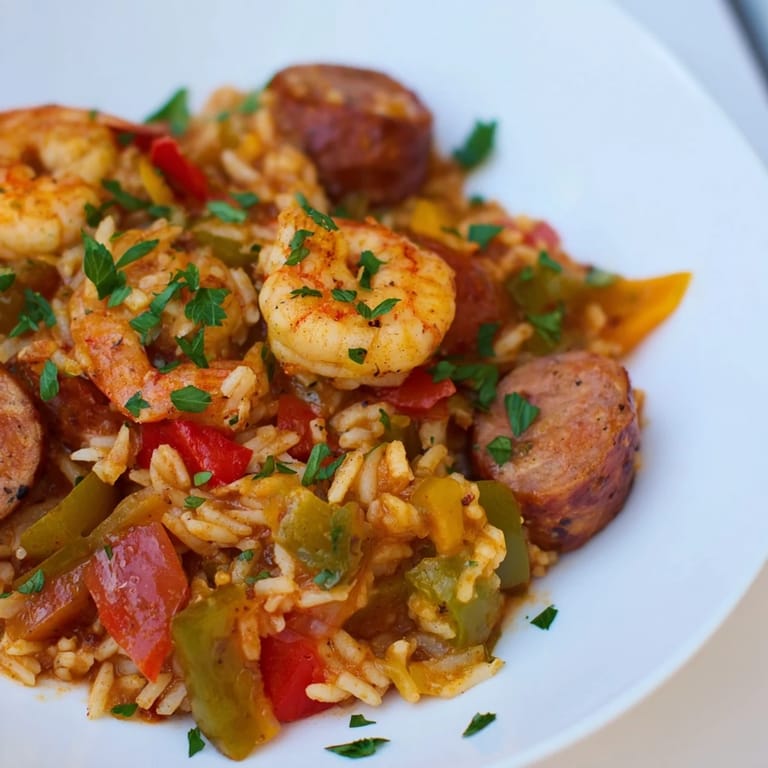
Save The first time I made jambalaya, I wasn't trying to impress anyone—I just wanted to capture that warm, spiced feeling I got from a tiny restaurant on a humid afternoon in New Orleans. The air had been thick with smoke and the smell of sausage hitting hot oil, and I couldn't stop thinking about it for weeks. So one random Tuesday, I threw together what I remembered: sausage, shrimp, rice, and whatever spices sounded right. What came out of that skillet was close enough to the real thing that I've been making it ever since, tweaking it along the way.
I remember cooking this for friends who said they didn't like seafood, and watching them go back for seconds of the shrimp without even realizing what they were eating—the spices and smokiness just took over everything else. That's when I knew this recipe had something special.
Ingredients
- Andouille or smoked sausage (225 g): This is where the soul of the dish lives—look for the really smoky stuff, and don't skip browning it first to build flavor.
- Large shrimp (225 g): The shrimp cook fast, so peel and devein them before you start, and add them at the very end so they stay tender.
- Yellow onion, red and green bell peppers, celery (diced): This is the holy trinity of Creole cooking, and dicing them roughly the same size helps them cook evenly.
- Garlic (3 cloves, minced): Add it after the softer vegetables so it doesn't burn and taste bitter.
- Long-grain white rice (200 g): This type holds its shape and doesn't get mushy, which is crucial for a proper skillet jambalaya.
- Low-sodium chicken broth and diced tomatoes (canned is fine): The broth should be low-sodium so you control the salt level, and the tomatoes with their juice add acidity that balances the richness.
- Smoked paprika, thyme, oregano, cayenne, black pepper, salt: These spices build layers—start with what's called for, then taste and adjust the cayenne to match your heat tolerance.
- Olive oil (2 tablespoons total): Use it to sear the sausage and sauté the vegetables, letting each ingredient brown slightly.
- Fresh parsley (2 tablespoons): The bright green garnish at the end cuts through the richness and wakes up your palate.
Tired of Takeout? 🥡
Get 10 meals you can make faster than delivery arrives. Seriously.
One email. No spam. Unsubscribe anytime.
Instructions
- Brown the sausage first:
- Heat a tablespoon of oil in your skillet over medium-high heat until it shimmers, then add sausage slices and let them sit without stirring for a minute so they get crispy edges. That browning is flavor, so don't rush it—about 3 to 4 minutes total.
- Build the soffritto:
- Push the sausage aside, add the remaining oil, and sauté onion, peppers, and celery together, stirring occasionally until they soften and the onion turns translucent. When you add the garlic, stir constantly for just a minute so it flavors the oil without burning.
- Toast the rice with spices:
- Stir the raw rice into the vegetables and spices, coating every grain with oil. You'll hear it clicking against the pan—let it cook for about a minute, which helps it absorb flavor and keeps it from getting mushy later.
- Bring it together:
- Return the sausage to the skillet, pour in the tomatoes with their juice and the broth, stir well, and bring the whole thing to a gentle simmer. The liquid should just barely cover the rice.
- Low and slow:
- Cover the skillet, turn the heat down to low, and resist the urge to lift the lid—let it cook undisturbed for about 20 minutes until the rice is tender and has absorbed most of the liquid. You want a little moisture left, not a dry pan.
- Add the shrimp:
- Arrange the shrimp on top of the rice, cover again, and cook for 5 to 7 minutes until they turn pink and opaque. They'll release their own liquid into the dish as they cook.
- Finish and serve:
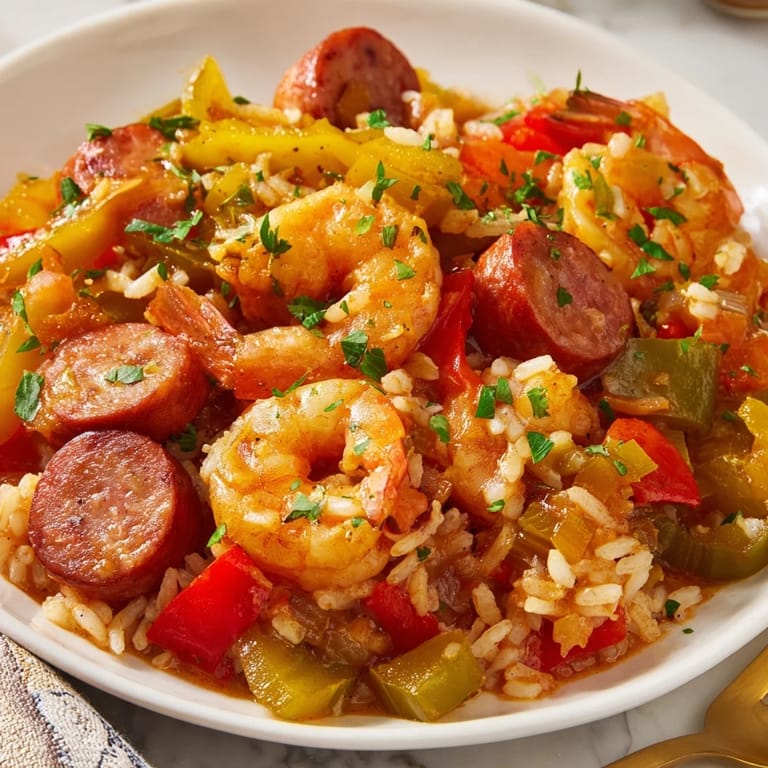
- Gently fluff the rice with a fork, scatter fresh parsley on top, and get it to the table while everything is still steaming hot.
 Save
Save There was a moment when I made this for someone who grew up eating their grandmother's jambalaya, and I was nervous—that's a lot of expectation sitting at your table. But they took a bite and smiled in a way that told me I'd gotten something right, even if my version was a little different from the original.
How to Make It Your Own
The beautiful thing about jambalaya is that it's a framework, not a rulebook. Some people add okra for extra thickness, others throw in chicken thighs alongside the shrimp, and I've seen it made with andouille and seafood together like a party in a pan. If you love heat, start with a full teaspoon of cayenne and go from there; if you're cooking for people who prefer mild, use half and let them add their own at the table. The trinity of onion, pepper, and celery is sacred, but everything else can bend to what's in your fridge.
The Science of Simmering
Low heat and a covered skillet create a steamy environment where rice cooks evenly without sticking to the bottom. The sausage fat renders into the oil, the spices hydrate and bloom, and the tomato juice creates just enough acidity to keep the flavors bright instead of heavy. It's less about precision and more about gentle, even heat—once you cover that pan, the dish almost cooks itself.
Serving and Pairing
Jambalaya is the kind of dish that's almost a complete meal on its own, but a hunk of crusty bread on the side makes it feel like dinner. A chilled glass of Sauvignon Blanc, with its acidity and mineral notes, cuts through the richness beautifully, or you can go with an ice-cold beer if that's more your style. I've also served it with a simple green salad dressed with lemon vinaigrette, which adds freshness without fighting the bold spices.
- If you have leftovers, store them in an airtight container in the fridge for up to three days, and reheat gently with a splash of broth to restore moisture.
- Leftovers can also be turned into fried rice by breaking up the cold jambalaya and stir-frying it in a hot pan with a touch more oil.
- For meal prep, you can brown the sausage and cook the vegetables ahead, then add the rice and broth when you're ready to finish the dish.
 Save
Save This recipe has become my version of comfort food, the kind of dish I make when I want to feel like I'm cooking with intention but without stress. It brings people together in the easiest way possible.
Recipe FAQs
- → What type of sausage works best in this skillet?
Andouille or smoked sausage provides a smoky depth that complements the shrimp and spices well, but any flavorful smoked sausage can be used.
- → Can I substitute the shrimp with another protein?
Yes, chicken or a mix of chicken and sausage can be used for a different protein profile while retaining the dish's essence.
- → How can I adjust the heat level of this dish?
Modulate cayenne pepper amount or add hot sauce at serving to suit your preferred spice intensity.
- → What side dishes pair well with this meal?
Crusty bread and a crisp white wine, such as Sauvignon Blanc, complement the flavors and balance the spices nicely.
- → Is it possible to make this dish dairy-free?
This meal is naturally dairy-free as prepared, making it suitable for those avoiding dairy.