 Save
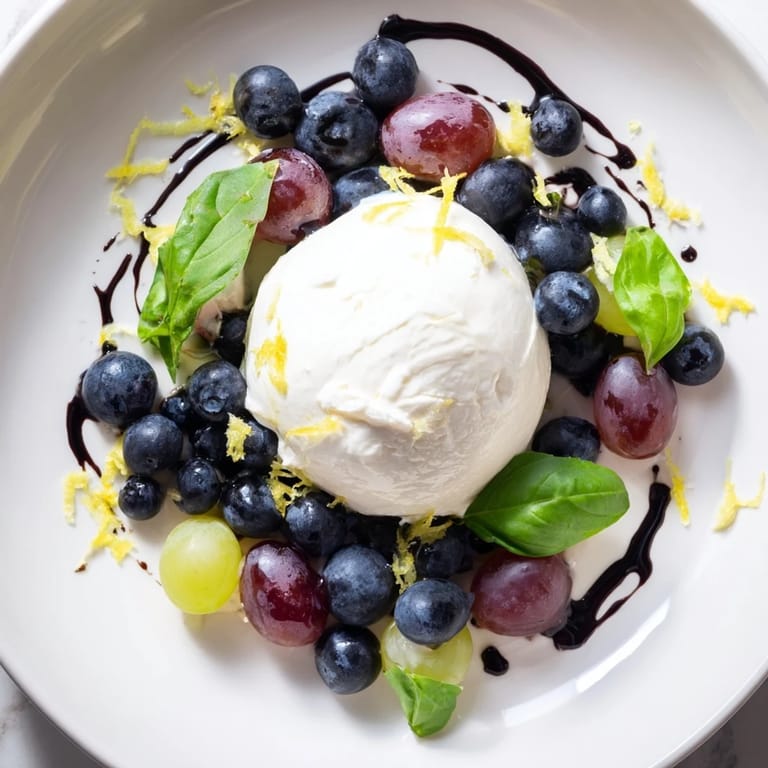
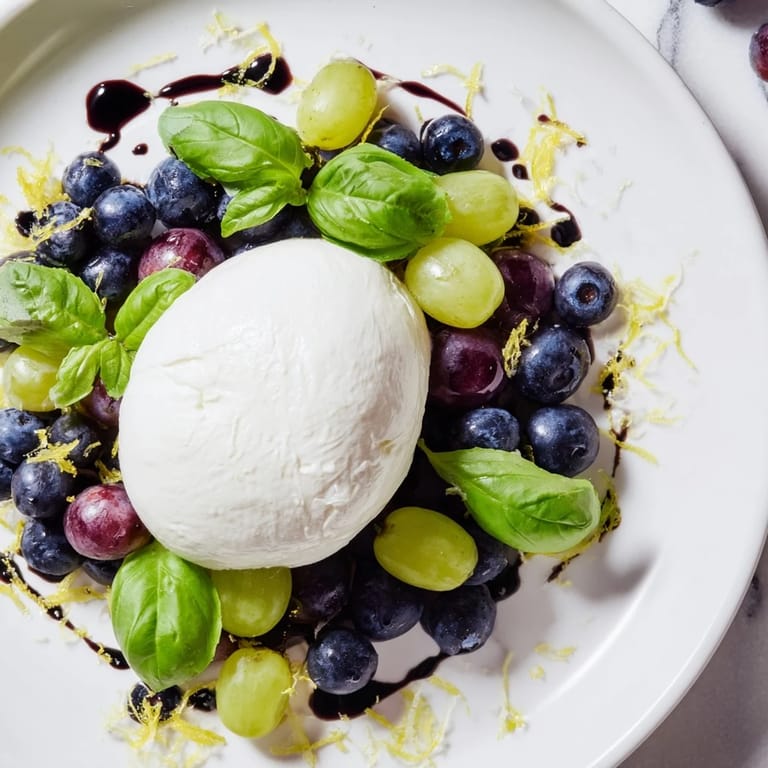
Save I discovered this salad on a late summer evening when my neighbor brought over a ball of burrata so creamy it practically melted at room temperature. We stood in the kitchen debating what to do with it, and I suddenly remembered the purple grapes sitting in my crisper drawer, almost forgotten. The combination felt inspired rather than planned—bright berries against that pale, dreamy cheese, arranged like a little edible moon. It turned out to be one of those dishes that looks deceptively simple but tastes like you spent hours plotting its beauty.
I made this for a small gathering last June, and what struck me most wasn't the compliments but the silence that fell when everyone took their first bite. Someone asked if it was a special restaurant recipe, and I had to laugh—it's barely a recipe at all, just good ingredients arranged with intention. That's when I realized the real magic here: it proves you don't need complicated techniques to create something memorable.
Ingredients
- Fresh blueberries (1 cup): These should be at their peak ripeness, slightly yielding to gentle pressure but not mushy—they're your jewels here, so taste one to make sure they're sweet.
- Seedless purple grapes (1 cup, halved): Halving them creates more surface area to catch the balsamic glaze, and honestly, it makes the presentation feel less casual and more intentional.
- Burrata cheese (1 large ball, about 200 g): This is the heart of everything—buy it fresh and use it the same day if you can, when that center is still impossibly creamy.
- Fresh basil leaves (1/3 cup, torn): Tear by hand rather than cutting; the bruising from a knife releases oils that can make basil taste slightly bitter.
- Baby arugula or mixed greens (1 cup, optional): These provide a peppery backdrop that makes the sweetness of the fruit pop, but if you're not in the mood, skip them entirely.
- Extra-virgin olive oil (2 tbsp): This isn't the time to use your everyday oil—reach for something you'd actually enjoy tasting on its own.
- Balsamic glaze (1 tbsp): The glaze (not vinegar) is crucial; it's thick, it drapes beautifully, and it adds sweetness without the sharp bite of regular balsamic.
- Sea salt and freshly ground black pepper: Grind the pepper fresh—pre-ground loses its brightness, and this dish needs that little peppery spark.
- Lemon zest (from 1 lemon, optional): One pass of the microplane over the top adds this bright, almost salty counterpoint that makes people wonder what your secret ingredient is.
Tired of Takeout? 🥡
Get 10 meals you can make faster than delivery arrives. Seriously.
One email. No spam. Unsubscribe anytime.
Instructions
- Build your base:
- If using greens, spread them across a wide, shallow bowl or platter—think of it as creating a canvas. If skipping them, that's fine too; just make sure your serving dish is something you love looking at.
- Create the ring:
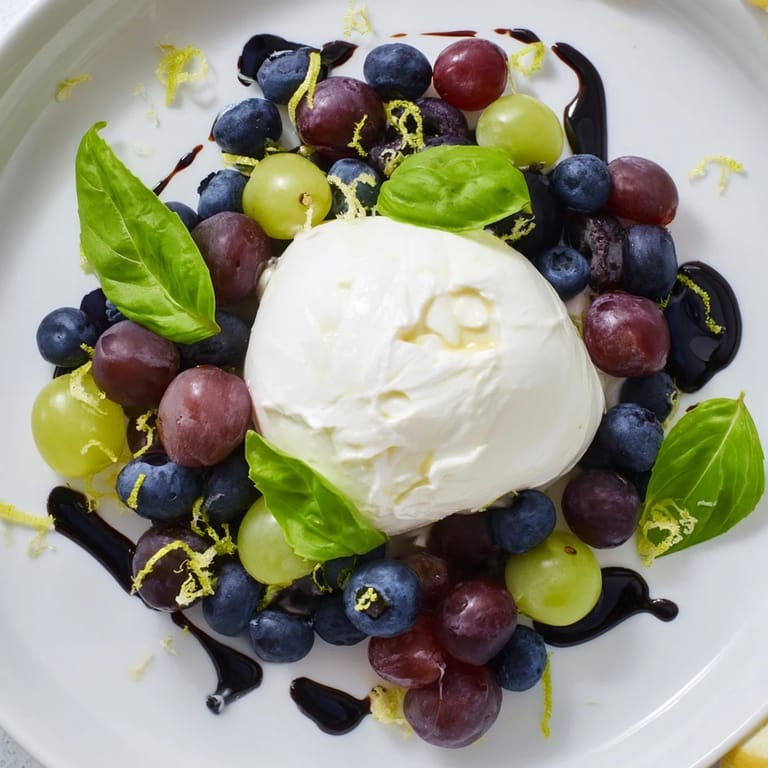
- Scatter the blueberries and grape halves in a generous circle around the edge, leaving a clear space in the center about the size of your palm. This isn't random—you're literally creating that moon-and-sky effect.
- Crown the center:
- Place the burrata ball right in the middle where all the fruit circles around it. If it's still cold from the fridge, let it sit out for a minute or two so the interior stays creamy.
- Add the oil:
- Drizzle the olive oil evenly over everything—use a spoon if your hand isn't steady, and don't be shy. The fruit and cheese need that richness to shine.
- Drizzle the glaze:
- Pour the balsamic in a thin, deliberate stream across the berries and over the top of the burrata, creating those dark ribbons. It's visual, it's intentional, and it tastes incredible.
- Season and garnish:
- Scatter torn basil leaves, add a whisper of lemon zest if you're using it, then finish with sea salt and freshly cracked pepper. Taste as you go—you want enough salt to wake everything up, but not so much that it overwhelms the delicate fruit.
- Serve immediately:
- This is best eaten within a few minutes of assembly, when everything is still bright and the burrata hasn't started to lose its texture. Crusty bread on the side helps you catch every last drop of oil and glaze.
 Save
Save The first time someone told me this salad reminded them of a summer night—the colors, the simplicity, the way it made them slow down and actually taste their food—I understood why I kept making it. Food doesn't have to be complicated to be meaningful; sometimes the most elegant dishes are just the ones that let beautiful ingredients speak for themselves.
The Poetry of Presentation
There's something almost ceremonial about arranging this salad, the way you place each berry with intention and settle that burrata in the center like it's the star of its own little universe. I've learned that presentation isn't vanity—it's respect for your ingredients and your guests. When people see something this thoughtfully composed, they eat slower, they pay attention, and somehow everything tastes better because of it.
When to Make This
Summer is the obvious answer, but I've made versions of this in early fall when grapes are at their sweetest and burrata somehow feels less heavy. It works as an appetizer before a light main course, but I've also served it as the entire meal with crusty bread and good wine, letting the simplicity do all the work. The beautiful thing is flexibility—this salad doesn't demand perfection or timing; it just asks for fresh ingredients and your honest attention.
Small Variations That Matter
I've experimented with adding a handful of toasted pistachios for crunch, or swapping blackberries in when blueberries looked tired at the market. A drizzle of aged balsamic instead of glaze lends a deeper, more complex sweetness. The core magic stays the same—ripe fruit, creamy cheese, good oil—but small tweaks let you make it yours without losing what makes it special.
- Toast walnuts or pistachios lightly and scatter them over the top for texture that catches the balsamic beautifully.
- Swap in blackberries, raspberries, or even sliced fresh figs if you're working with what the season offers.
- A microplane of fresh mint or a whisper of aged balsamic transforms this into something entirely new while keeping the spirit intact.
 Save
Save This salad reminds me why cooking doesn't always require complexity—sometimes the best dishes are the ones that let you see exactly what you're eating and why it matters. Make it when you want something beautiful without the stress.
Recipe FAQs
- → What is the best way to serve this salad?
Arrange on a wide platter to showcase the fruit ring and burrata moon. Serve immediately to enjoy fresh textures and flavors.
- → Can I substitute the blueberries?
Yes, blackberries or other small berries can be used for a similar sweet and tart contrast.
- → How should the balsamic glaze be applied?
Drizzle in a thin stream over the fruit and burrata to add a glossy sweetness without overpowering.
- → Is it necessary to use fresh basil?
Fresh basil leaves provide a fragrant herbal note that complements the creamy and fruity elements well.
- → What drinks pair well with this salad?
Light white wines like Sauvignon Blanc or dry rosé accompany the fresh, vibrant flavors perfectly.