 Save
Save I discovered chermoula by accident during a cooking class in a cramped Marrakech kitchen, where an elderly woman ground spices by hand while her granddaughter chopped herbs with the kind of speed that made my knife work look leisurely. The marinade she mixed together—vibrant green, fragrant with cilantro and lemon—transformed a simple piece of fish into something that tasted like the Atlas Mountains and Mediterranean sunshine had collided on a single plate. I've made it countless times since, and it never fails to transport me back to that humid afternoon and the sound of her laughter when I accidentally dropped an entire bunch of parsley on the floor.
The first time I served this to friends who'd never had Moroccan food, I watched their faces light up when they bit into the fish—that moment when someone tastes something that makes them pause mid-conversation. One friend kept asking if I'd added fish sauce or some hidden umami bomb; she couldn't believe it was just herbs and spices playing beautifully together. Now whenever she texts that she's coming over, I know exactly what she wants, and I start thinking about which white fish to buy.
Ingredients
- Fresh cilantro: Use the leaves generously—they're the backbone of the marinade and their bright, peppery character is non-negotiable.
- Fresh flat-leaf parsley: This softens cilantro's intensity and adds earthiness; don't skip it thinking cilantro alone will do.
- Garlic and shallot: Mince them fine so they distribute evenly and release their aromatic oils into the oil base.
- Lemon zest and juice: The zest adds floral brightness that juice alone cannot deliver; use a microplane for the finest texture.
- Ground cumin: Toast it lightly in a dry pan before using if you want deeper, warmer notes.
- Sweet paprika: This gives the marinade its rusty-red color and mild sweetness; Hungarian paprika works beautifully here.
- Ground coriander: A spice that whispers rather than shouts, it rounds out the blend with subtle citrus undertones.
- Cayenne pepper: Start with half a teaspoon and taste as you go; heat builds as the marinade sits.
- Ground black pepper: Freshly ground makes a noticeable difference in brightness.
- Extra-virgin olive oil: This is where quality matters—a fruity oil will add depth that regular olive oil cannot match.
- Sea salt: Kosher salt works too, but sea salt dissolves more gently into the herbs.
Tired of Takeout? 🥡
Get 10 meals you can make faster than delivery arrives. Seriously.
One email. No spam. Unsubscribe anytime.
Instructions
- Gather and chop your herbs:
- Start with cilantro and parsley—wash and dry them thoroughly, then chop finely so they release their oils as you work. The more surface area exposed, the more flavor you'll extract into the oil.
- Build your aromatic base:
- Mince garlic and shallot together on a cutting board, letting them get to know each other before they meet the herbs. This creates small pieces that will infuse evenly throughout the marinade.
- Add bright citrus notes:
- Zest your lemon directly over the bowl, scraping every bit of that fragrant yellow into the mix. Juice the lemon and add it, letting the acid begin to soften the garlic and shallot.
- Bloom your spices:
- Sprinkle cumin, paprika, coriander, cayenne, and black pepper directly into the bowl rather than mixing them first—this prevents clumping and ensures even distribution. Breathe in deeply; you're about to smell what's to come.
- Pour in the oil and bind everything together:
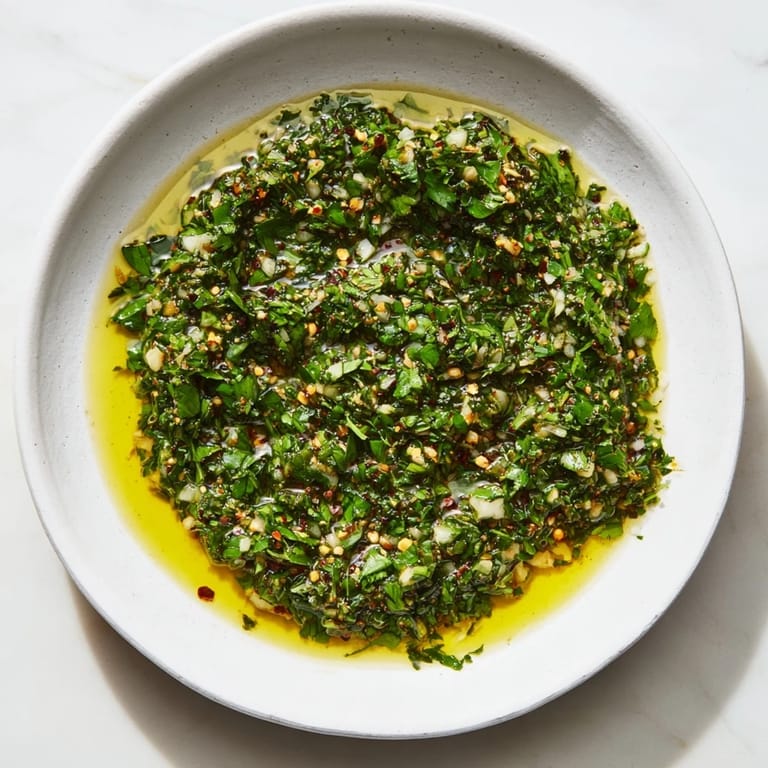
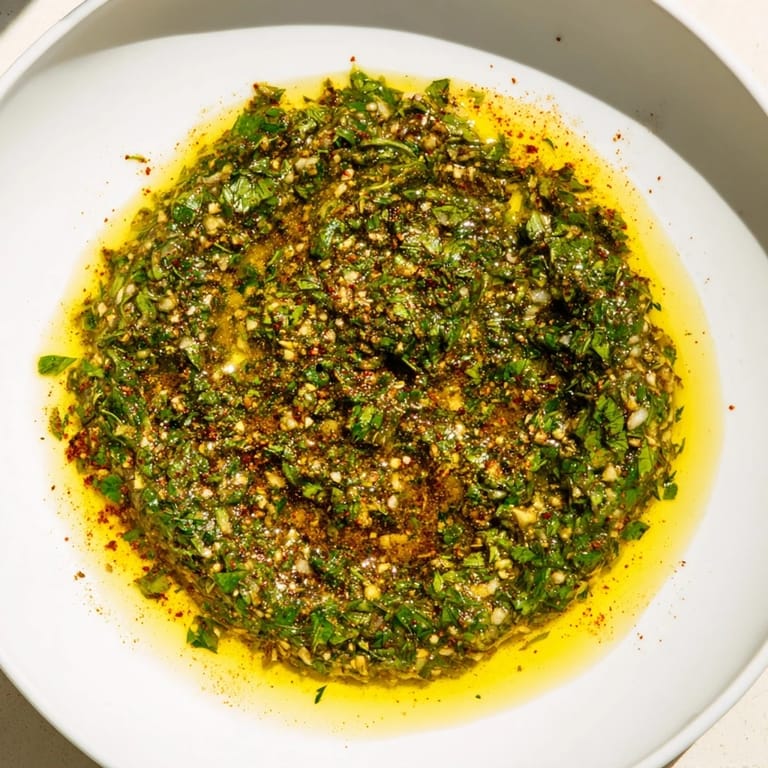
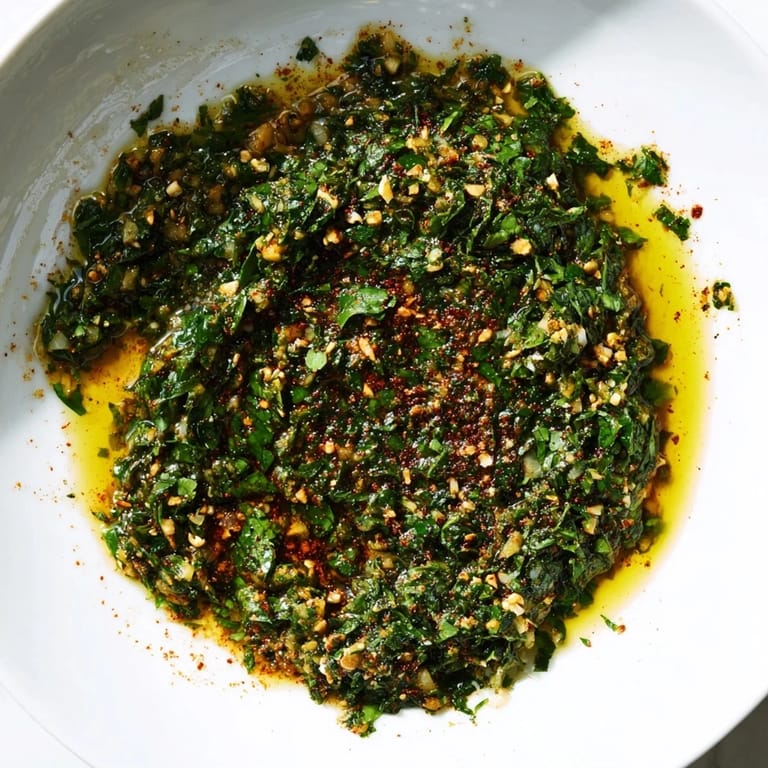
- Add olive oil slowly while stirring, watching the loose herbs and spices transform into a cohesive, fragrant paste. The oil carries all the flavors and helps them marry into harmony.
- Taste and adjust with intention:
- A pinch more salt, an extra squeeze of lemon juice, or a whisper more cayenne—trust your palate here, because everyone's heat tolerance and citrus preference is different. This is your moment to make it yours.
 Save
Save I'll never forget serving this to my neighbor who grew up in Casablanca and hadn't tasted homemade chermoula in fifteen years—she closed her eyes after the first bite and didn't speak for a full minute. When she opened them, there were actual tears, and she just said, "You got it right." That's when I realized this marinade is more than a flavor vehicle; it's a bridge across continents and memories.
The Magic of Fresh Herbs in North African Cooking
Moroccan cuisine doesn't rely on heat or richness to create impact; it relies on the generous hand with fresh herbs that grow in Mediterranean gardens and desert oases. Cilantro in particular is polarizing—some people taste soap, others taste revelation—but in chermoula, it's balanced by parsley and spices in a way that even cilantro skeptics can appreciate. The herbs aren't just garnish here; they're the soul of the dish, and using the freshest bundles you can find makes an audible difference when you taste the final result.
Marinating Time and Technique
The longer you let fish sit in chermoula, the more the flavors penetrate, but 30 minutes is genuinely enough to transform a fillet. I've marinated for 2 hours before and noticed the lemon juice begins to subtly cure the flesh, which can be beautiful if that's your intention—it creates a delicate texture similar to ceviche. For most people, 45 minutes to an hour hits that sweet spot where flavor has fully infused but the fish hasn't begun to break down.
Beyond Fish: Creative Uses for Chermoula
This marinade has become my secret weapon for giving boring Tuesday dinners a complete personality transplant. Chicken thighs marinated in it develop a crispy, aromatic crust when pan-seared, and roasted vegetables—especially cauliflower or zucchini—become something so flavorful that vegetarians at my table forget they're not eating fish. I've even spread it on grilled bread, mixed it into plain yogurt as a dip, and whisked it into vinaigrettes when I wanted salads to wake up.
- Toss it with warm couscous and roasted vegetables for a grain bowl that tastes like a Moroccan street food stall.
- Mix a spoonful into Greek yogurt as a condiment for grilled meats or as a dip for raw vegetables and flatbread.
- Store any leftovers in a jar under a thin layer of olive oil in the refrigerator for up to one week, and it only gets more interesting as flavors meld.
 Save
Save This marinade has taught me that some of the most impressive dishes come from simplicity and respect for quality ingredients, not complexity. Every time I make it, I'm grateful for that overcrowded kitchen in Marrakech and the woman who showed me that food is the most honest language we have.
Recipe FAQs
- → What ingredients are key in this marinade?
Fresh cilantro, parsley, garlic, lemon zest and juice, cumin, paprika, coriander, cayenne pepper, olive oil, and sea salt form the core flavor components.
- → How long should fish be marinated?
Coat fish generously and refrigerate between 30 minutes to 2 hours to allow the flavors to infuse well.
- → Can this mix be used for other foods?
Yes, it’s excellent with white fish varieties, shrimp, chicken, and even vegetables for added zest and aroma.
- → How can the spiciness be adjusted?
Reducing or omitting cayenne pepper softens the heat without compromising the overall flavor balance.
- → Should I blend the ingredients for a smoother marinade?
Blending in a food processor yields a smoother texture, but mixing by hand preserves a rustic, chunky consistency.
- → What dishes pair well with this marinade?
Serve marinated fish alongside Moroccan couscous and a crisp white wine such as Sauvignon Blanc for a harmonious meal.