 Save
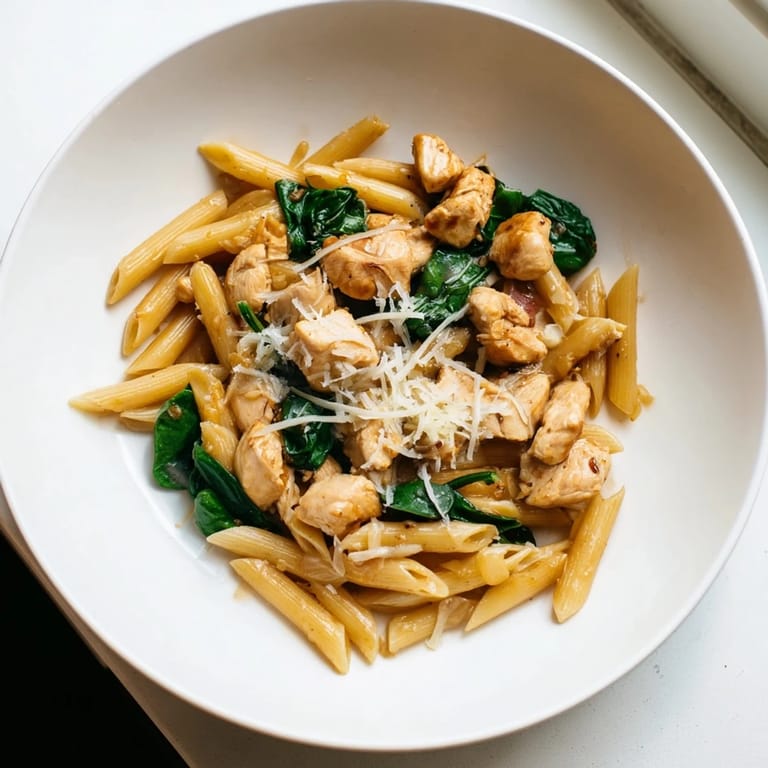
Save There was this Tuesday night when I had exactly twenty minutes before everyone needed to be somewhere else. The fridge had chicken, a bag of spinach going soft, and not much inspiration. I dumped everything into one pot, crossed my fingers, and somehow ended up with something everyone asked for again. That's how this became my go-to when time is scarce but hunger is loud.
I made this for my neighbor after she had a baby, doubling the batch and bringing half over still warm. She texted me later asking if I'd written it down anywhere. That's when I realized it had quietly become one of those recipes I didn't need to measure anymore, the kind you make with your hands and your gut instead of your eyes.
Ingredients
- Boneless, skinless chicken breasts (300 g, diced): I cut them small so they cook fast and every bite gets a little protein, no dry chunks hiding at the bottom.
- Fresh baby spinach (3 cups): It looks like a mountain before it hits the heat, then shrinks down to almost nothing, but that's where the iron lives.
- Small onion (finely chopped): This builds the base, the part that makes it taste like more than just boiled pasta and chicken.
- Garlic (2 cloves, minced): I learned to add this after the chicken or it burns and turns bitter, a mistake I only made once.
- Short pasta (250 g, penne or fusilli): The shapes with ridges grab onto the sauce better than smooth ones, a trick my grandmother swore by.
- Low-sodium chicken broth (3 cups): This is what cooks the pasta and flavors it from the inside out, not just a sauce on top.
- Olive oil (1 tablespoon): Just enough to keep things from sticking and add a whisper of richness without weighing it down.
- Grated Parmesan cheese (1/4 cup, optional): I stir it in at the end when the pot is off the heat so it melts into the pasta instead of clumping up.
- Dried Italian herbs (1/2 teaspoon): Basil, oregano, thyme, whatever blend you have works, it ties the whole thing together.
- Red pepper flakes (1/4 teaspoon, optional): A little heat in the background makes it interesting without making it spicy.
- Salt and black pepper: I go light at first because the broth and Parmesan bring their own salt, then adjust at the end.
Tired of Takeout? 🥡
Get 10 meals you can make faster than delivery arrives. Seriously.
One email. No spam. Unsubscribe anytime.
Instructions
- Brown the chicken:
- Heat the olive oil over medium heat until it shimmers, then add the diced chicken and let it sizzle for three to four minutes. You want a little color on the edges, not a full cook through, it'll finish later.
- Soften the aromatics:
- Toss in the onion and garlic, stirring them around until the onion goes translucent and your kitchen starts smelling like something worth eating. This takes about two minutes, no more.
- Add everything else:
- Stir in the pasta, pour in the broth, sprinkle the herbs and pepper flakes, season with salt and pepper. Bring it all to a rolling boil, it should look busy and alive in there.
- Simmer it down:
- Lower the heat to medium-low, clap the lid on, and let it bubble gently for eight to ten minutes, stirring every few minutes so nothing sticks to the bottom. The pasta should be just tender and most of the liquid soaked up.
- Wilt the spinach:
- Stir in the spinach and watch it collapse into the pot in under two minutes, turning dark green and silky. It barely takes up space but adds so much.
- Finish and serve:
- Pull it off the heat, stir in the Parmesan if you're using it, taste and fix the salt if it needs it. Serve it hot, maybe with a little extra cheese or a drizzle of olive oil on top.
 Save
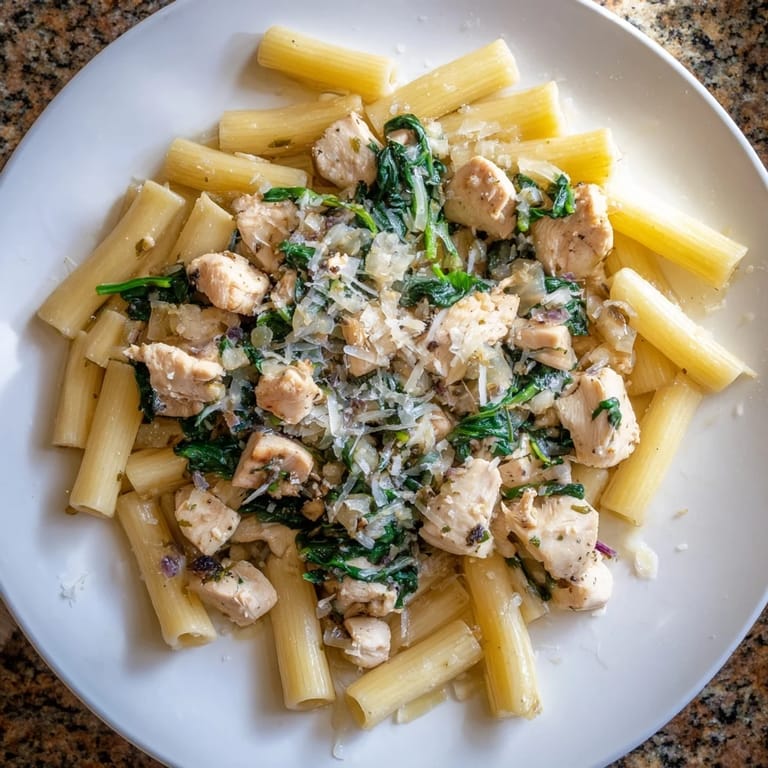
Save My son once said this tasted like the kind of dinner that makes you feel taken care of, and I haven't forgotten that. It's not fancy, but it's warm and filling and it shows up when you need it to, which is more than enough most nights.
Making It Your Own
I've stirred in a handful of cherry tomatoes during the simmer and they burst into little pockets of sweetness. Mushrooms work too, sliced thin and added with the onion. If you want it creamier, a splash of heavy cream or a spoonful of ricotta at the end turns it silky without feeling heavy.
What to Serve Alongside
A simple green salad with lemon vinaigrette cuts through the richness, or just some crusty bread to soak up any leftover sauce in the bowl. I've poured a cold glass of Pinot Grigio with it on nights when I remembered to chill one, but water works just fine when I don't.
Storing and Reheating
Leftovers keep in the fridge for three days in a sealed container, though the pasta soaks up more liquid as it sits. Reheat it gently on the stove with a splash of broth or water to loosen it back up, the microwave works but the stovetop brings it back to life better.
- If you're meal prepping, undercook the pasta by a minute so it doesn't get mushy when reheated.
- You can freeze it for up to two months, but the texture of the pasta softens a bit after thawing.
- Always taste and add a pinch of salt or Parmesan after reheating, flavors dull in the cold.
 Save
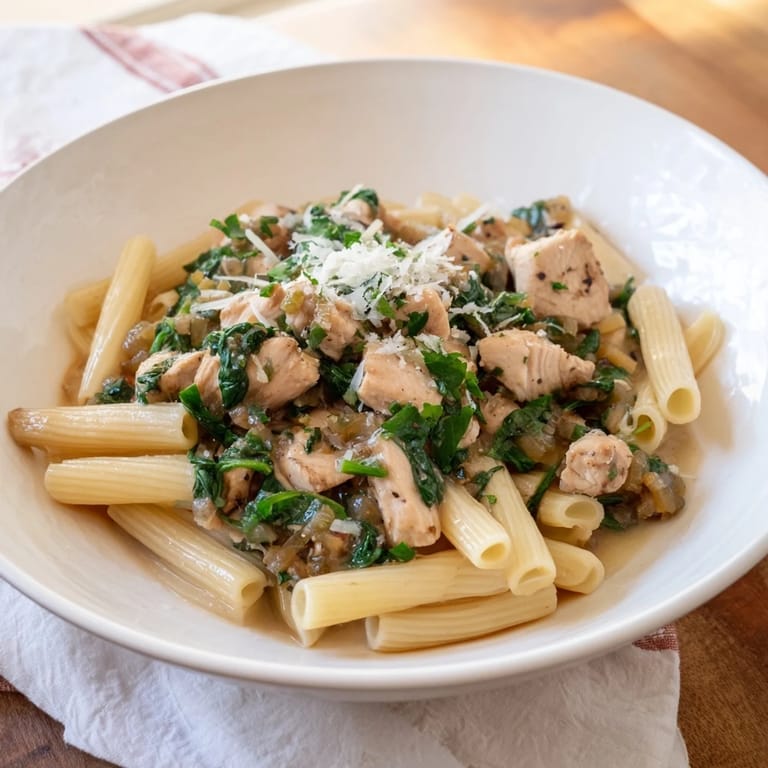
Save This is the kind of recipe that doesn't ask much but gives back plenty, the sort of meal that feels like a small win on a long day. I hope it does the same for you.
Recipe FAQs
- → Can I use different types of pasta for this dish?
Yes, penne, fusilli, or rotini all work well, and you can substitute with whole wheat or gluten-free pasta if preferred.
- → How do I prevent the chicken from drying out?
Sauté diced chicken over medium heat until lightly browned but still slightly undercooked before simmering with pasta and broth to retain moisture.
- → Can I add other vegetables to enhance the flavor?
Cherry tomatoes or mushrooms make great additions, adding both flavor and extra nutrition to the dish.
- → What can I use instead of Parmesan cheese?
For a dairy-free option, omit the cheese or use a plant-based alternative to maintain creaminess without dairy.
- → Is it possible to make this dish creamier?
Yes, a splash of cream or a dollop of ricotta added before serving will create a richer, creamier texture.