 Save
Save There's a particular moment in autumn when I crave the kind of food that makes you slow down—when the kitchen fills with the aroma of sautéed mushrooms and you realize you're not just cooking, you're creating something worthy of lingering over. That's risotto. I discovered this dish by accident one rainy evening, standing in front of an almost-empty pantry with nothing but rice, mushrooms, and determination. What emerged was creamy, luxurious, and so satisfying that I've been perfecting it ever since.
I made this for my sister the first time she visited my new apartment, and she sat at my kitchen counter asking questions while I stirred the pot. The ritual of adding broth slowly, watching the rice transform from hard grains into creamy clouds—she got it immediately. That's when I knew this wasn't just dinner, it was the kind of dish that brings people into your cooking space and makes them want to understand it.
Ingredients
- Arborio rice (1½ cups): This medium-grain variety has the starch content you need for that signature creaminess; it holds its shape while releasing just enough starch to create the sauce.
- Cremini or button mushrooms (12 oz): Cremini mushrooms have deeper flavor than whites, but honestly, whatever mushrooms you love work here—I've used a mix of cremini and shiitake when I wanted something richer.
- Olive oil (1 tbsp): Use good olive oil for sautéing the mushrooms; it carries their flavor beautifully.
- Unsalted butter (3 tbsp total): Divide this carefully—some for the mushrooms, some stirred in at the end for that final silky finish.
- Yellow onion (1 medium): Finely chopped onion dissolves into the rice and becomes the aromatic foundation; don't skip this step.
- Garlic (2 cloves): Minced garlic added just after the onion prevents burning while keeping the flavor bright.
- Vegetable broth (4 cups, kept warm): Warm broth is essential—cold broth will shock the rice and interrupt the cooking process.
- Dry white wine (½ cup): The wine adds acidity and complexity; don't use anything you wouldn't drink.
- Parmesan cheese (½ cup grated, plus extra): Freshly grated Parmesan melts into the rice more smoothly than pre-grated, and the extra for serving is non-negotiable.
- Salt and black pepper: Taste as you go—the broth is already seasoned, so go gently at first.
- Fresh parsley (2 tbsp, optional): A bright garnish that adds color and a whisper of freshness at the end.
Tired of Takeout? 🥡
Get 10 meals you can make faster than delivery arrives. Seriously.
One email. No spam. Unsubscribe anytime.
Instructions
- Sauté the mushrooms until golden:
- Heat olive oil and 1 tablespoon butter in a large skillet over medium heat. Add sliced mushrooms and let them sit for a minute before stirring—this helps them brown properly. You'll know they're ready when they've released their moisture and turned deep golden, about 6 to 8 minutes. Set them aside on a plate.
- Build the aromatic base:
- In the same pan, add your finely chopped onion and cook gently until it turns translucent and soft, roughly 3 minutes. Add minced garlic and cook for just 1 minute more—you want it fragrant, not browned.
- Toast the rice:
- Add your Arborio rice and stir constantly for about 2 minutes. You're looking for the edges of each grain to turn translucent while the center stays white and opaque—this toasting step ensures the rice stays firm rather than turning mushy.
- Deglaze with wine:
- Pour in the dry white wine and stir until it's almost completely absorbed into the rice. You'll hear the liquid sizzle and smell the wine—that's exactly what you want.
- Add broth slowly and stir constantly:
- This is where patience becomes your ingredient. Add warm broth one ladle at a time, stirring frequently. Wait until most of the liquid is absorbed before adding the next ladle—this usually takes about 18 to 20 minutes total. The rice will gradually soften and release starch, creating that signature creamy sauce.
- Finish with mushrooms, butter, and cheese:
- When the rice is creamy and tender but still has a slight firmness when you bite it (that's al dente), stir in your sautéed mushrooms, the remaining 2 tablespoons of butter, and the grated Parmesan. Season with salt and pepper to taste, cook for just 2 more minutes, then take it off the heat immediately.
- Serve right away:
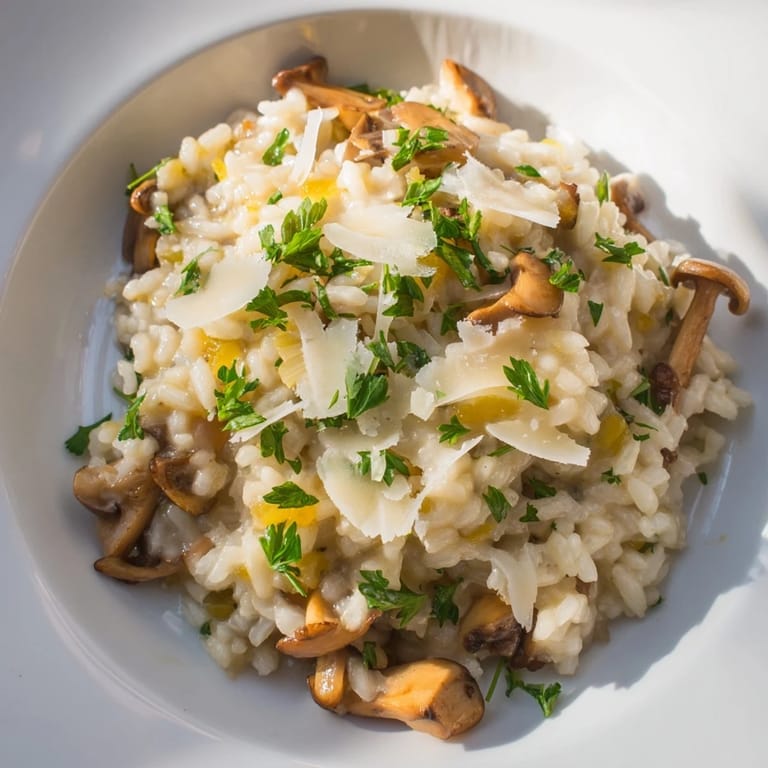
- Risotto waits for no one. Divide into bowls, top with extra Parmesan and parsley if you like, and eat it while the steam is still rising.
 Save
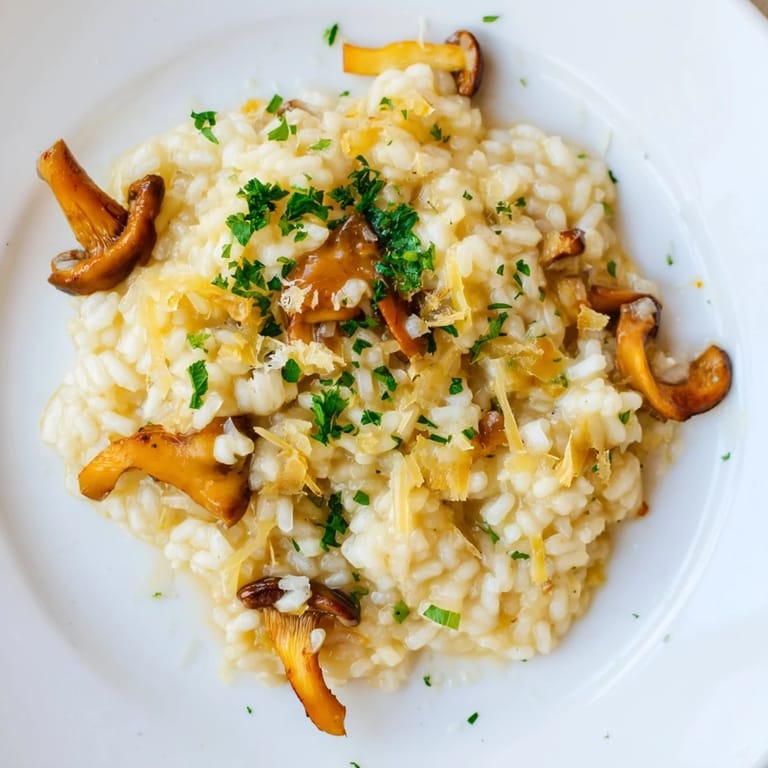
Save The first time I served this to someone who thought they didn't like risotto, I watched their skepticism turn into pure surprise with that first bite. They'd had versions that were either gluey or soupy, never this—tender, luxurious, with actual mushroom flavor singing through. That's when I realized risotto isn't difficult; it's just misunderstood.
The Magic of Mushroom Umami
Mushrooms are one of nature's flavor amplifiers, especially cremini varieties. When you sauté them first and let them caramelize, you're concentrating their umami—that savory depth that makes your brain sit up and pay attention. The trick is patience: don't stir them constantly while they're cooking. Let them sit in the heat for a minute or two, then flip. That's when the browning happens, and that's where the flavor lives.
Broth Temperature Matters More Than You'd Think
I learned this the hard way once by absentmindedly reaching for cold broth from the fridge. The whole process stuttered—the rice wouldn't cook evenly, the timing went off, and the finished dish was grainy instead of creamy. Now I keep broth simmering gently in a separate pot the entire time I'm cooking the risotto. It's a small habit that transforms the outcome completely.
Variations and Occasions
This recipe is your foundation, not your limit. I've made it with wild mushroom blends when I wanted earthier notes, added fresh herbs like thyme while the risotto cooks, and once threw in some truffle oil at the very end for a special anniversary dinner. The constant is the technique—master the base, and you can dress it however your mood or pantry suggests. Here are some directions I love to take it:
- Mix wild mushrooms, cremini, and oyster varieties for complexity that surprises you in every spoonful.
- Finish with a splash of truffle oil and fresh sage right before serving for something that feels restaurant-worthy in your home.
- Stir in a handful of fresh spinach or kale in the last minute of cooking for color and a nutritional boost.
 Save
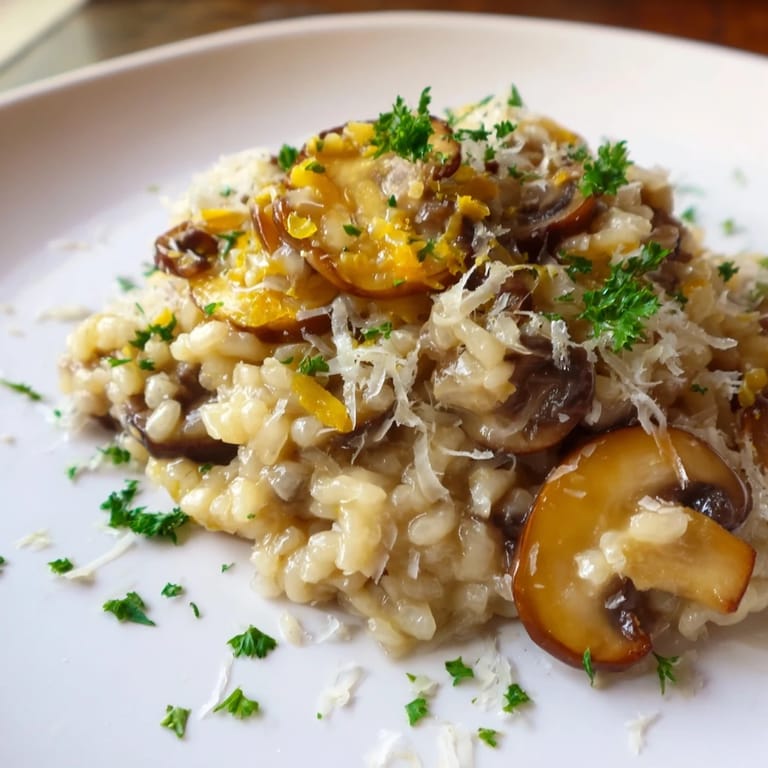
Save There's something almost meditative about standing at the stove, ladle in hand, watching rice transform. This risotto has become my comfort food and my show-off dish—proof that simple ingredients and a little attention create magic. Make it once, and you'll understand why it's remained a cornerstone of Italian cooking for centuries.
Recipe FAQs
- → What type of rice is best for this dish?
Arborio rice is preferred due to its high starch content, which helps create the creamy texture typical of this dish.
- → Can other mushrooms be used instead of cremini?
Yes, wild mushrooms or button mushrooms can be used to add different flavors and textures.
- → How is the creamy texture achieved?
Slowly adding warm broth while stirring releases starch from the rice, creating a rich and creamy consistency.
- → Is white wine necessary in the cooking process?
White wine adds acidity and depth but can be omitted or replaced with extra broth if preferred.
- → How can this dish be kept vegetarian?
Use vegetable broth and avoid any non-vegetarian ingredients like chicken broth or animal fats.