 Save
Save There's something almost theatrical about slicing cabbage into thick rounds and watching them transform into something so utterly different from what you expect. The first time I made these roasted cabbage steaks, I was skeptical—honestly, I thought it sounded like a wellness trend that would disappoint. But the moment those golden, caramelized edges came out of the oven, that sharp cabbage smell melted into something sweet and almost nutty, and I understood why this dish has quietly become a favorite for both meat-eaters and plant-based folks at my table.
I made these for a dinner party last spring when my friend mentioned she was trying to eat less meat, and I wanted to prove that plant-based cooking didn't have to feel like compromise. Watching everyone go back for seconds, asking for the recipe, and then actually making it themselves—that's when I realized this wasn't just about food, it was about breaking down what people think vegetables can be.
Ingredients
- 1 large green cabbage: Look for one that feels dense and heavy for its size; that density is your promise of tender, caramelized steaks rather than watery disappointment.
- 3 tbsp olive oil: Use something you actually like tasting, because it's not hiding in a sauce—it's a main player here.
- 1 tsp ground cumin: This warm, earthy spice is what makes people lean in and ask what you put in this.
- 1 tsp smoked paprika: The smoke adds depth and a gentle color that makes these steaks look intentional, not accidental.
- ½ tsp garlic powder: Fresh garlic can burn at high heat, so powder is your friend here—it seasons evenly without scorching.
- Salt and freshly ground black pepper, to taste: Season generously; vegetables need more salt than you think to taste like themselves.
- ⅓ cup tahini: Buy the kind that's just sesame seeds ground into paste, no added oils or stabilizers; it makes a creamier sauce.
- 2 tbsp freshly squeezed lemon juice: Fresh lemon is non-negotiable here—bottled juice tastes thin and tinny against the rich tahini.
- 1 small garlic clove, finely minced: Raw garlic sings in the sauce, so mince it as fine as you can manage.
- 2–4 tbsp cold water: Start with 2 and add more slowly; every tahini brand is different, and you'll feel when it's right.
- 2 tbsp chopped fresh parsley: This bright garnish cuts through the richness and makes the plate feel finished.
- 2 tbsp toasted sesame seeds (optional): Toasting them yourself releases an almost buttery aroma that makes the whole dish smell better.
- Lemon wedges: These aren't just decoration; they're there for people who want to squeeze extra brightness into each bite.
Tired of Takeout? 🥡
Get 10 meals you can make faster than delivery arrives. Seriously.
One email. No spam. Unsubscribe anytime.
Instructions
- Heat your oven and prep your stage:
- Preheat to 425°F and line a baking sheet with parchment paper so nothing sticks and cleanup doesn't haunt you later. Getting the oven hot means the cabbage will caramelize instead of steaming.
- Slice your cabbage like you mean it:
- Remove any bruised outer leaves, then cut the cabbage into 1-inch thick rounds—you'll get 4 to 5 steaks depending on the size. A sharp knife makes this easier and safer, so take your time.
- Season generously and let the oil do its work:
- Place steaks on the sheet, brush both sides with oil, then sprinkle the cumin, paprika, garlic powder, salt, and pepper all over. The oil helps the spices stick and browns them beautifully.
- Roast until the edges tell you they're done:
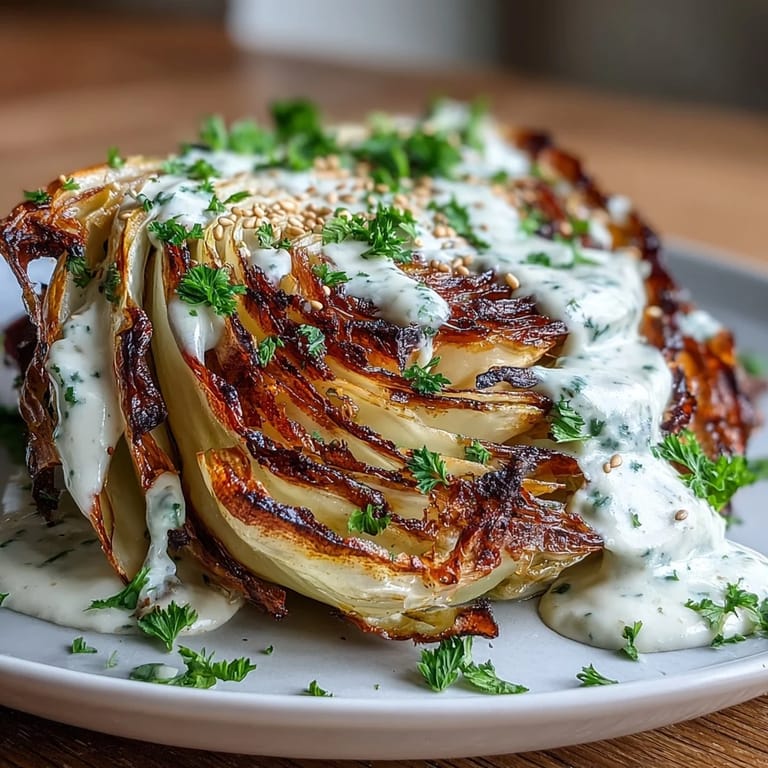
- Put them in for 25 to 30 minutes, flipping halfway through—you're looking for golden, almost charred edges and a tender center when you press it with a fork. The smell will change from raw cabbage to something almost caramel-like; that's when you know it's working.
- Make the tahini sauce while the cabbage works:
- Whisk tahini, lemon juice, minced garlic, and a pinch of salt in a bowl, then add water one tablespoon at a time, whisking until it's smooth and pourable like heavy cream. Taste it; it should make your mouth water.
- Bring it all together:
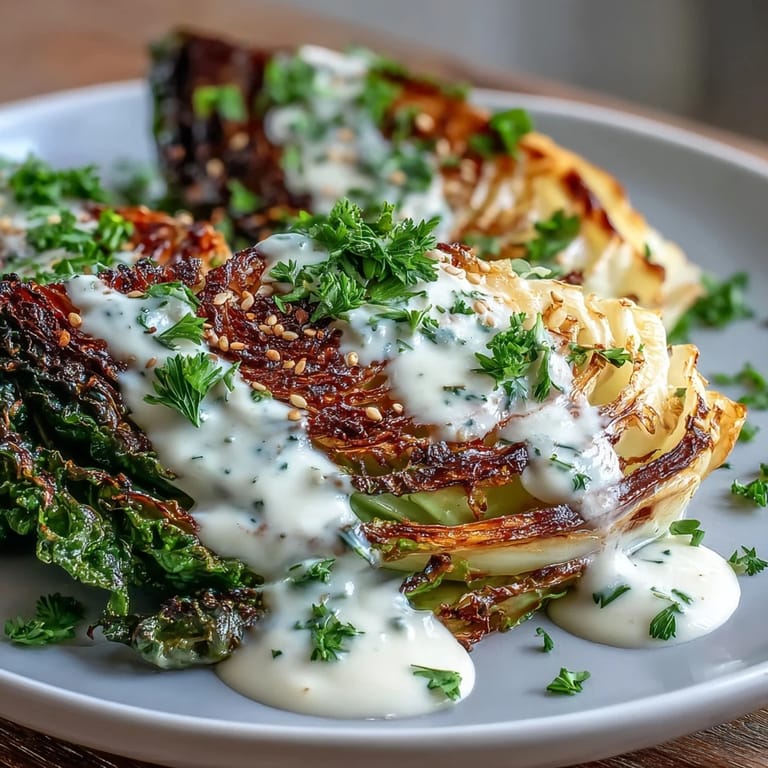
- Transfer the roasted steaks to a platter, drizzle generously with tahini sauce, then scatter with parsley, sesame seeds, and lemon wedges. Serve while the cabbage still has warmth.
 Save
Save My partner, who claims he doesn't like cabbage, ate three steaks without comment and then asked if I could make them again next week. That's when I knew this recipe had crossed over from clever vegetable cooking into the category of things people actually crave.
The Magic of Caramelization
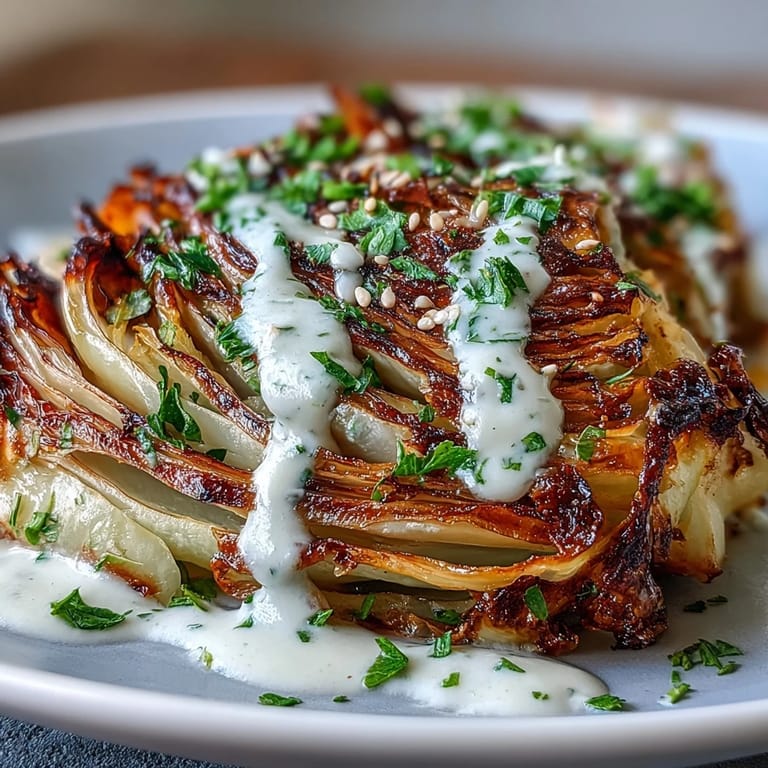
What transforms a humble cabbage steak into something craveable is time and heat working together in the oven. As the cabbage roasts, its natural sugars concentrate and brown, creating layers of flavor you wouldn't expect from something so ordinary. The outside edges get crispy and almost burnt in the best way, while the inside stays tender enough to cut with a fork—it's this contrast that makes people take a second bite.
Why Tahini Is the Opposite of Overkill
Tahini sounds fancy, but it's just ground sesame seeds, and it exists to do one simple thing: make vegetables taste like something worth remembering. The sauce is creamy without cream, rich without heaviness, and it brings a subtle nuttiness that makes you understand why it's been part of Middle Eastern cooking for centuries. It's not a garnish here; it's the reason someone comes back for another bite.
Serving and Variations That Actually Work
These steaks are flexible enough to fit into whatever you're cooking. Serve them alongside grains like freekeh or bulgur for a complete meal, or next to grilled chicken if you're cooking for mixed preferences at the table. Cold leftovers the next day are surprisingly good in a grain bowl with some crumbled feta or hummus, so don't hesitate to make extra.
- If you want heat, sprinkle a pinch of chili flakes or zaatar on the cabbage before roasting—it adds a welcome prickle without overwhelming the dish.
- Swap parsley for cilantro or mint if that's what you have on hand; both work beautifully and give completely different vibes.
- The tahini sauce also works on roasted cauliflower, eggplant, or even as a dip for crispy chickpeas if you get experimental.
 Save
Save This dish reminded me that the best cooking isn't about complexity or rare ingredients; it's about understanding what heat, salt, and time can do to something as simple as a cabbage. Make it once, and you'll make it again.
Recipe FAQs
- → How do I cut cabbage into steaks?
Trim off the tough outer leaves, then slice the whole head crosswise into 1-inch thick rounds. You'll get 4-5 substantial steaks that hold their shape beautifully during roasting.
- → Can I make the tahini sauce ahead?
Yes, whisk the sauce together up to 3 days in advance. Store it in the refrigerator and thin with a little water before serving if it thickens too much.
- → What can I serve with roasted cabbage?
Pair with quinoa or rice for a complete meal. Also excellent alongside grilled chicken, fish, or as part of a Middle Eastern mezze platter with hummus and flatbread.
- → How do I know when the cabbage is done?
The edges should be deeply browned and crispy, while the centers feel tender when pierced with a fork. This usually takes 25-30 minutes at high heat.
- → Can I use red cabbage instead?
Absolutely! Red cabbage works just as well and creates a stunning purple presentation. The flavor is slightly sweeter and the color becomes vibrant when roasted.