 Save
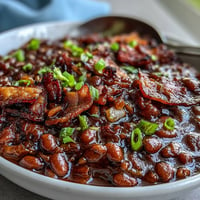
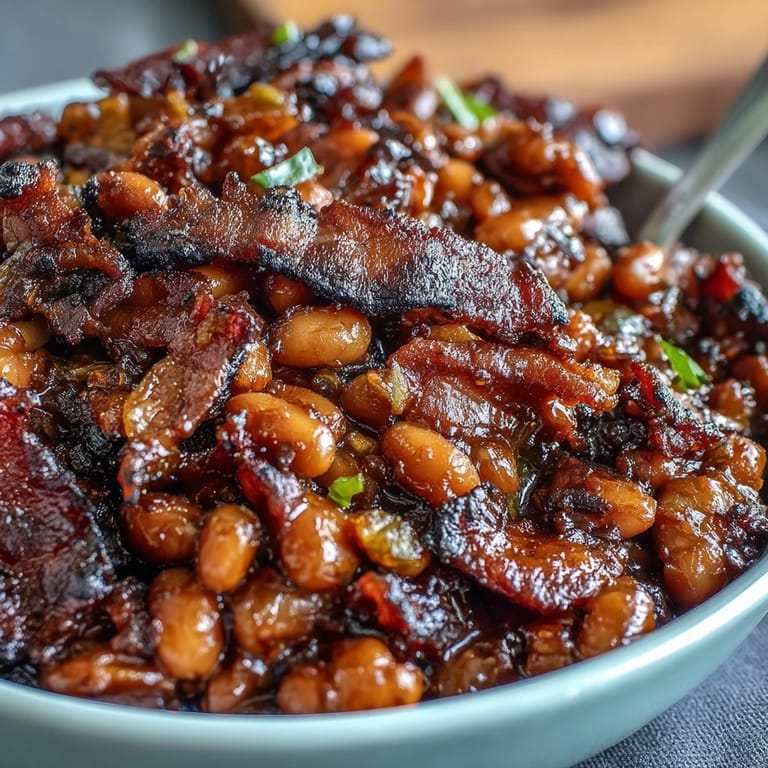
Save My dad's Fourth of July tradition involved a massive cast-iron pot of baked beans that he'd somehow always manage to burn on the edges while keeping the center perfect. Years later, I finally understood his method wasn't careless—it was just his way of caramelizing that sauce into something deeply smoky and complex. This version strikes the balance he never quite achieved, letting the oven do the patient work while bacon fat and brown sugar create something that tastes like summer itself.
I made this for the first time at a potluck where someone else brought store-bought beans in a cardboard carton, and honestly, the difference was so obvious it felt almost rude. A friend went back for thirds and asked what I'd done differently, and when I explained it was just paying attention to the sauce, she laughed and said that's what cooking actually is.
Ingredients
- 4 cups canned navy beans (about 2 cans, 30 oz total), drained and rinsed: These are your foundation, and rinsing them removes the starchy liquid that can make the final dish feel gluey or oversalted.
- 8 slices thick-cut bacon, chopped: Thick-cut matters because thin bacon disappears entirely into the sauce; you want pieces substantial enough to find with your spoon.
- 1 medium yellow onion, finely diced: The dice size affects how quickly it softens and how much it melts into the background—fine pieces vanish into the sauce, adding sweetness without texture.
- 1 green bell pepper, finely diced: This adds a subtle brightness that keeps the dish from feeling one-dimensional, though red pepper works if that's what you have.
- 3/4 cup ketchup: It's doing double duty as both sweetness and body for the sauce, so don't skip it for something fancier.
- 1/2 cup dark brown sugar, packed: The molasses in brown sugar is what gives this depth; light brown sugar will make it taste flat by comparison.
- 1/4 cup molasses: This is the secret ingredient that makes people ask what you did—it adds a subtle bitterness that balances all the sweetness.
- 2 tablespoons Dijon mustard: Mustard cuts through richness and adds a gentle tang that keeps the beans from becoming cloying.
- 2 tablespoons Worcestershire sauce: Use the gluten-free version if you need to; the umami here ties everything together into something that tastes intentional.
- 1 tablespoon apple cider vinegar: Acid is your friend in sweet dishes—it brightens everything and prevents the sauce from feeling heavy.
- 1 teaspoon smoked paprika: This reinforces the bacon flavor and adds color, so it's not just working on taste.
- 1/2 teaspoon garlic powder and 1/2 teaspoon black pepper: Standard seasonings, but don't let familiarity make you skip them—they're the difference between good and generic.
- 1/4 teaspoon salt and 1/4 teaspoon cayenne pepper (optional): Taste as you go and add cayenne only if you want heat; salt amount might surprise you since bacon and Worcestershire bring saltiness already.
Tired of Takeout? 🥡
Get 10 meals you can make faster than delivery arrives. Seriously.
One email. No spam. Unsubscribe anytime.
Instructions
- Preheat and prepare your vessel:
- Get your oven to 350°F and make sure you're using an oven-safe skillet or Dutch oven—this matters because you'll be moving from stovetop directly into the oven without transferring.
- Render the bacon until it shatters:
- Cook the chopped bacon over medium heat, stirring occasionally, until it's deeply crispy and the fat has rendered out into the pan—this usually takes 8 to 10 minutes. Remove it with a slotted spoon, leaving about 2 tablespoons of fat behind; that fat is now your cooking medium for the vegetables.
- Soften the vegetables in bacon fat:
- Add your diced onion and green pepper to that rendered bacon fat and let them cook for 4 to 5 minutes, stirring occasionally, until they've turned translucent and slightly golden at the edges. The kitchen will smell unreal at this point.
- Build the sauce directly in the pan:
- Stir in your drained beans and all the sauce components—ketchup, brown sugar, molasses, mustard, Worcestershire, vinegar, paprika, garlic powder, pepper, salt, and cayenne if you're using it. Mix everything thoroughly so the beans are evenly coated and no dry pockets of sugar remain.
- Bridge the heat:
- Bring the mixture to a gentle simmer on the stovetop, which activates the flavors and helps them marry before the oven takes over. This step only takes a few minutes.
- Transfer if needed:
- If your skillet isn't oven-safe, transfer the entire mixture to a baking dish now. Sprinkle your reserved bacon over the top as a garnish and final flavor accent.
- Let the oven work:
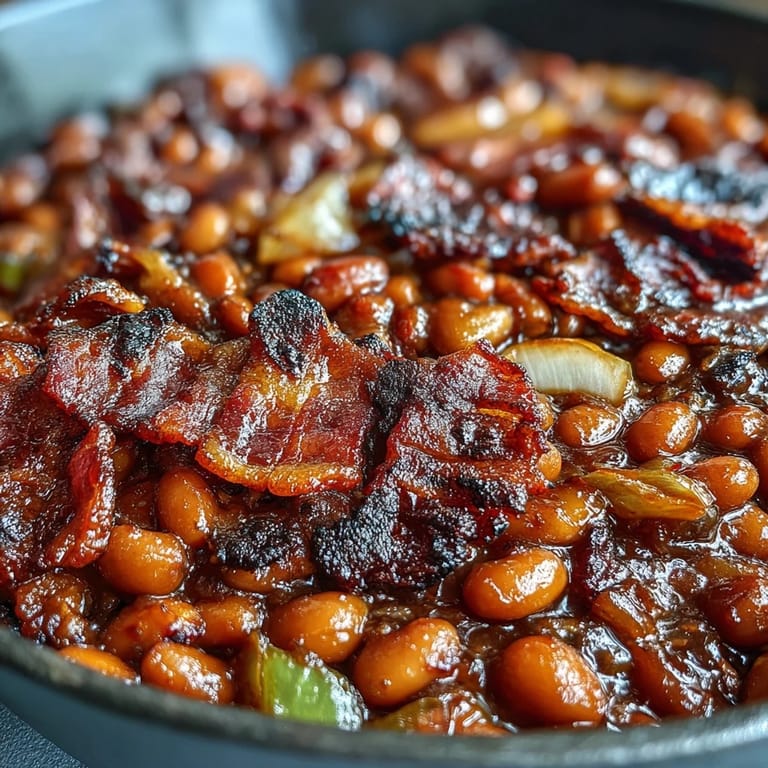
- Bake uncovered for 1 hour at 350°F, during which the sauce will bubble gently at the edges and gradually thicken as it reduces. You don't need to stir it; the oven does the patient work.
- Rest before serving:
- Let the beans cool for 10 minutes after removing from the oven—they'll continue to thicken slightly as they cool, and this rest prevents a scalding first bite.
 Save
Save Someone brought these to a potluck where I was also eating, and I caught myself going back for a fourth helping while pretending I was just there to socialize. That's when I knew I had to master the recipe—not because it was technically impressive, but because it made people happy in that effortless way that real food does.
The Bacon Question
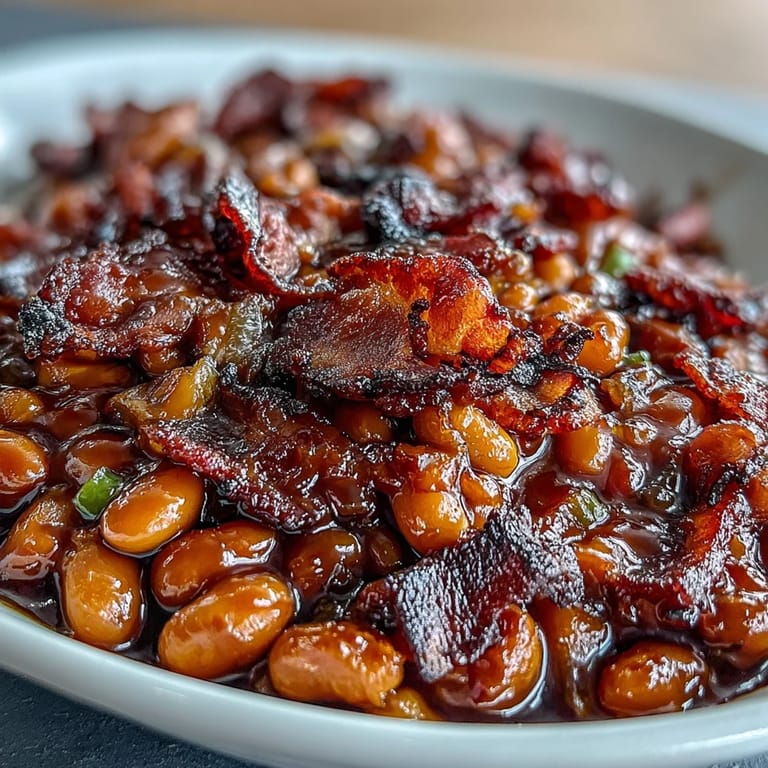
Thick-cut bacon is worth the hunt because it has enough surface area to crisp properly without turning into grease-soaked strings. When you chop it and render it in the pan, you're building a flavor base that thin bacon simply can't provide. The reserved tablespoon or two on top isn't just decoration—it's your textural contrast against the soft beans, and that contrast is what makes the dish memorable.
Why This Tastes Like Summer
The combination of molasses, smoked paprika, and Worcestershire creates a flavor profile that tastes smoky and grilled even though everything happens in the oven. It's the kind of dish that makes sense alongside grilled meat because the sauce echoes those charred, savory notes rather than competing with them. The brown sugar and ketchup keep it approachable instead of heavy, so you can eat a full bowl without feeling weighed down on a hot day.
Making It Your Own
This recipe is sturdy enough to handle variations without falling apart, which is probably why it's lasted this long in American cooking. If you want it vegetarian, olive oil replaces the bacon fat, but add a pinch of smoked paprika and extra salt to compensate for the richness you're losing. For heat, a splash of hot sauce stirred in during the last 10 minutes of baking works better than putting it in at the beginning, since heat mellows as the dish bakes.
- Add a splash of hot sauce in the final 10 minutes of baking if you want heat without bitterness.
- Leftover beans keep for 4 days in the refrigerator and actually taste better the next day as flavors settle.
- Reheat gently on the stovetop with a splash of water rather than the microwave, which can make the sauce separate and weep.
 Save
Save These beans have become the dish I'm known for, which is funny because it's mostly just paying attention to what was already a classic. Make this once and you'll understand why it belongs at every summer table.
Recipe FAQs
- → Can I make this dish vegetarian?
Yes, omit the bacon and sauté the vegetables in olive oil instead to maintain flavor and richness.
- → What type of beans is best for this dish?
Navy beans work well due to their tenderness and ability to absorb the sauce, but other white beans like cannellini can be used.
- → How do I ensure the sauce is thick and flavorful?
Simmering the mix before baking and slow baking uncovered helps reduce excess liquid and concentrate flavors.
- → Can I prepare this dish ahead of time?
Yes, it stores well refrigerated for up to 4 days; gently reheat before serving for best results.
- → What adds the smoky flavor to this dish?
Smoked paprika and crispy bacon contribute depth and a smoky aroma that defines the character of the dish.