 Save
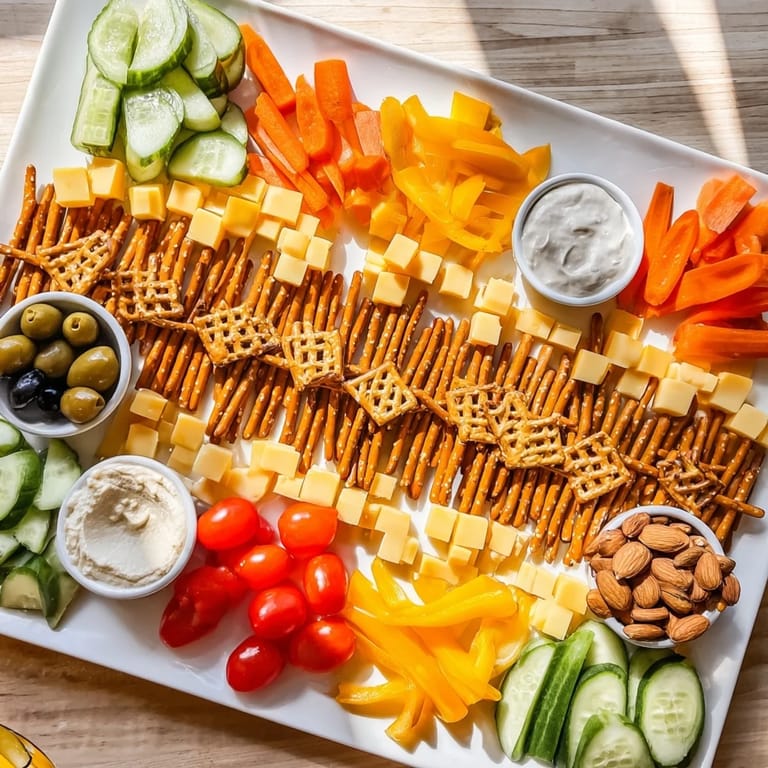
Save I discovered the magic of grid-based entertaining by accident at a rooftop gathering when a friend challenged me to make something that looked like a city map. Armed with pretzel rods and whatever I could grab from my kitchen, I arranged them like streets and filled the blocks between with cheese, vegetables, and dips. The moment guests started treating it like an edible puzzle, picking and mixing from different neighborhoods on the platter, I realized I'd stumbled onto something special—a snack that was as much about play as it was about eating.
What stuck with me most was watching my friend's teenager layer salami with three different cheeses and a dollop of hummus—something I'd never think to pair. That's when it hit me: the grid format gives people permission to be creative with combinations they'd normally avoid. It stopped being just a platter and became a conversation piece that actually tasted good.
Ingredients
- Pretzel rods (20): These are your grid lines—they need to be sturdy enough to hold their shape but still snappable for guests. I learned the hard way that thin pretzels bend under the weight of cheese.
- Mild cheddar, gouda, and mozzarella (100 g each): The trio gives you sharpness, smokiness, and creaminess without overwhelming. Cube them roughly instead of dicing for a more generous, casual feel.
- Salami and smoked turkey (100 g each, optional): These add umami and texture without needing to be cooked. Slice the salami thin and cube the turkey to keep portions manageable.
- Cherry tomatoes, cucumber, bell pepper, and baby carrots: Fresh vegetables provide contrast and make the grid visually pop with color. The slight crunch keeps people coming back for balance between rich dips and salty pretzels.
- Hummus and ranch dip (½ cup each): Double dips give guests options and create natural gathering spots on your platter. They're also the glue that holds flavor combinations together.
- Mixed olives and roasted nuts (½ cup each): These are your secret weapons for depth—the olives bring briny funk and the nuts add richness that makes everything else taste better.
Tired of Takeout? 🥡
Get 10 meals you can make faster than delivery arrives. Seriously.
One email. No spam. Unsubscribe anytime.
Instructions
- Map out your city:
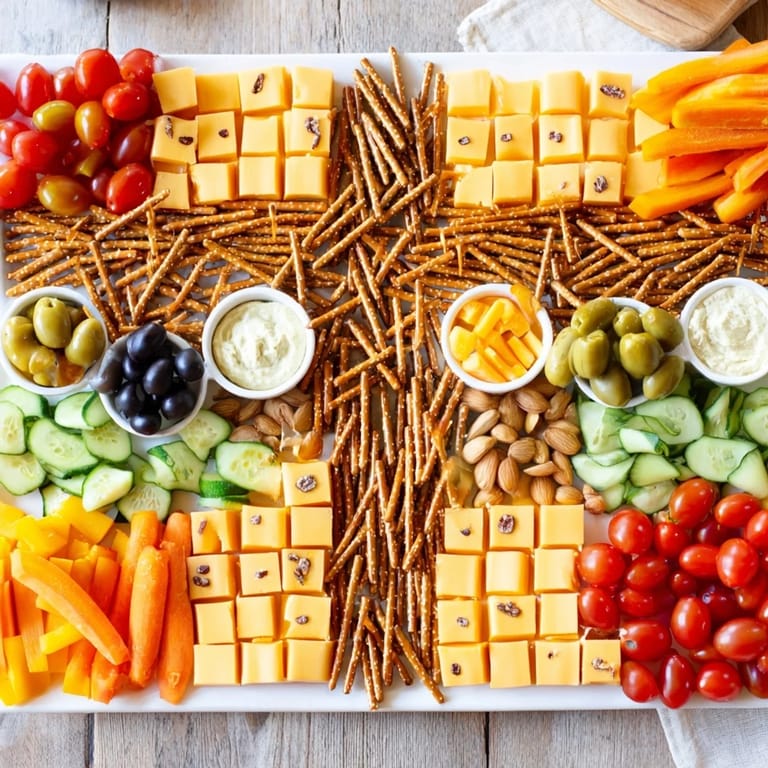
- Lay the pretzel rods in parallel lines on your board to create a grid, leaving enough space between them for ingredients to fit comfortably. Think of it like city blocks—the grid doesn't need to be perfect, just intentional enough that people understand the game.
- Fill your neighborhoods:
- Start with cheeses in one block, vegetables in another, meats clustered together, and so on. Vary the heights by piling vegetables loosely and nestling dips into small bowls within the grid. The unevenness makes it look alive and inviting rather than sterile.
- Position your gathering points:
- Place the dip bowls where three or four blocks meet—people naturally reach inward, and it becomes a focal point for building combinations. This also helps with traffic flow when multiple people are reaching at the same time.
- Bring it to the table:
- Serve immediately while everything is fresh and the pretzels haven't started absorbing moisture. The moment people see the grid, they'll understand the concept without instruction.
 Save
Save What made this platter shift from clever concept to genuine favorite was seeing someone make a combination they'd never order at a restaurant—hummus, mozzarella, and roasted cashews on a pretzel. They took a bite, got quiet for a second, and then started building another one. That's when I understood this wasn't about the individual ingredients at all. It was about permission and proximity—having things close together made people brave enough to experiment.
Making It Your Own
The grid system is flexible enough to follow your dietary needs or whatever's in your fridge. For a vegan version, swap the cheeses for plant-based alternatives and forget the meats—the vegetables and nuts will carry enough flavor that nobody misses them. I've also thrown in dried cranberries, apple slices, and grapes when I wanted a sweet note cutting through the salt, and it shifts the whole mood of the platter from savory snack to sophisticated grazing board.
Plating Like You Know What You're Doing
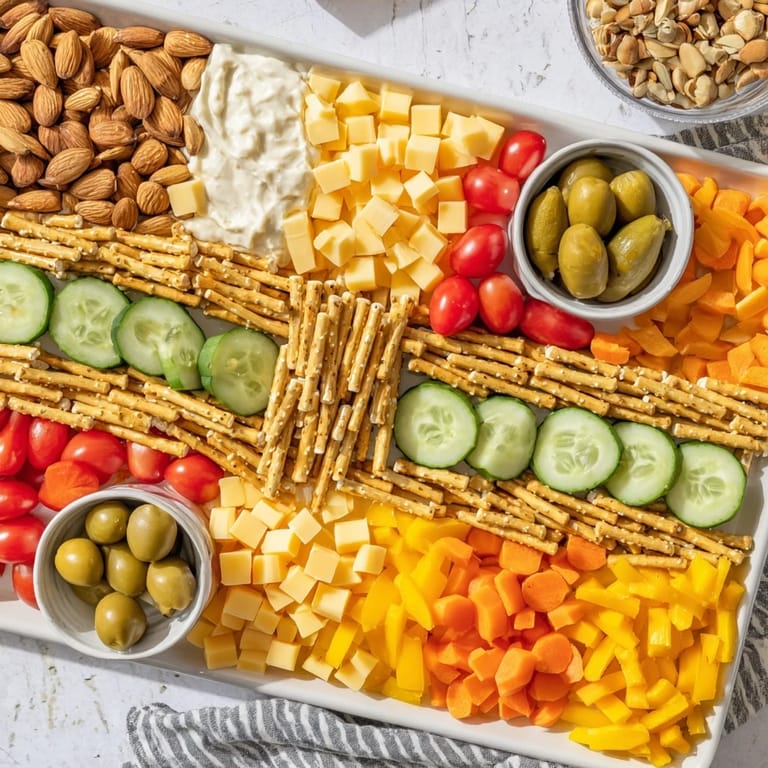
The grid pattern does heavy lifting for you visually—it's inherently organized and modern-looking even if your ingredient placement is a little loose. The key is using the pretzel rods as structural support and keeping similar items together in blocks. Your eyes will naturally follow the lines you've created, so the platter reads as intentional rather than chaotic no matter how casually you threw it together.
Pro Moments and Practical Wisdom
Timing matters more than perfection with this platter. Everything tastes better when it's just come together, while the vegetables still have their snap and the cheese hasn't warmed too much. If you're serving this at a party, assemble it on the serving board about 15 minutes before guests arrive—it's long enough for flavors to know each other, but not so long that things start looking tired.
- Cut everything into pieces you'd actually want to eat in one bite rather than multi-bite pieces that require commitment.
- Roast your own nuts if you have time—they taste sharper and fresher than pre-roasted ones that have been sitting.
- Taste one combination yourself before people start digging in so you know it actually works.
 Save
Save The Urban Grid stopped being a conversation starter and became my go-to platter because it works—people relax around it, they linger longer, and they actually talk to each other while they're building their bites. That's worth more than any recipe that just tastes good.