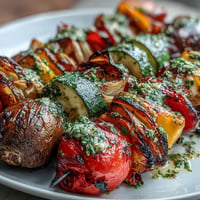
 Save
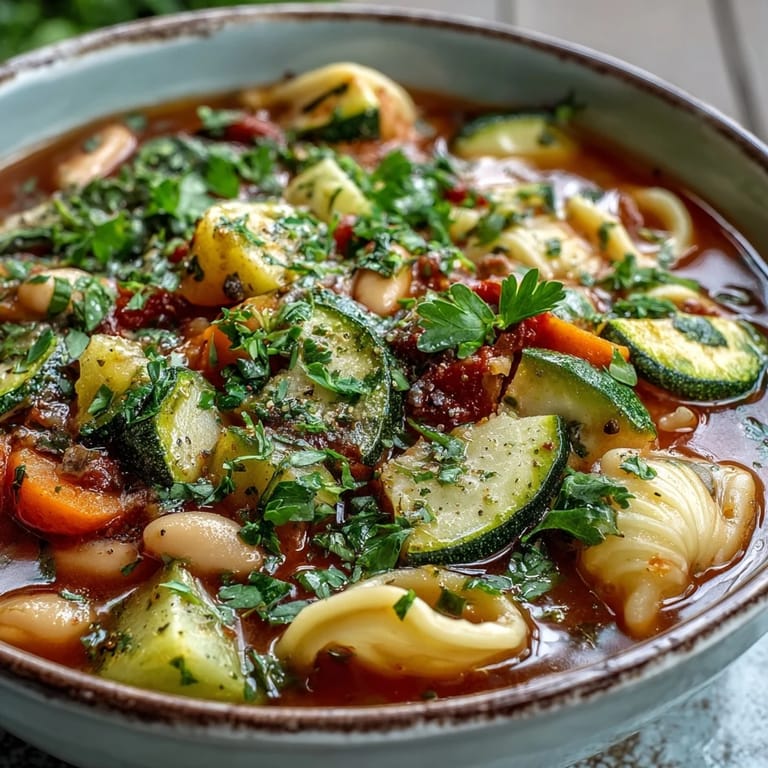
Save The sky was that bruised shade of purple that usually signals a heavy rain and all I wanted was something that felt like a hug. I found myself staring at a half empty crisper drawer wondering if a few stray carrots and a lonely zucchini could actually become a meal. It turns out that minestrone is less of a rigid recipe and more of a conversation between you and your pantry. By the time the first drops hit the window the kitchen smelled like warm herbs and simmering broth. That impromptu pot of soup changed how I look at leftovers forever.
Last October I hosted a small gathering where everyone brought a single vegetable from their own garden. We chopped and chatted around the kitchen island while the pot bubbled away on the stove. There is something deeply grounding about watching a pile of humble produce transform into a vibrant steaming bowl of comfort. We ended up eating straight from the pot with thick slices of sourdough bread. It was the kind of evening that reminded me why I started cooking in the first place.
Ingredients
- Olive oil: A high quality oil provides the necessary fat to carry the flavors of the aromatic vegetables.
- Onion: Dicing this finely ensures it melts into the background while providing a sweet savory base.
- Carrots and celery: These two staples offer the essential crunch and earthiness every Italian soup requires.
- Zucchini or butternut squash: Choosing your vegetable based on the temperature outside makes the dish feel intentional and fresh.
- Green beans or kale: These greens add a beautiful texture and a pop of color that brightens the entire pot.
- Garlic: Freshly minced cloves offer a punchy depth that pre minced versions simply cannot match.
- Diced tomatoes: These provide a subtle acidity that balances the richness of the beans and pasta.
- Potato: Including a diced potato adds a natural starchiness that thickens the broth beautifully.
- Vegetable broth: Using a low sodium broth allows you to control the seasoning levels more precisely.
- Cannellini or borlotti beans: These creamy legumes provide a satisfying protein boost and a velvety mouthfeel.
- Small pasta: Tiny shapes like ditalini or shells are perfect for catching bits of broth in every bite.
- Dried herbs: Oregano and basil provide a nostalgic Mediterranean aroma that fills the whole house.
- Fresh parsley and parmesan: A final stir of fresh greens and salty cheese adds a bright finish that cuts through the savory notes.
Tired of Takeout? 🥡
Get 10 meals you can make faster than delivery arrives. Seriously.
One email. No spam. Unsubscribe anytime.
Instructions
- Sweat the aromatics:
- Watch for the onions to turn translucent and listen for that gentle sizzle as the carrots and celery soften in the warm oil.
- Incorporate the harvest:
- Stir in the garlic and zucchini while noticing how the colors start to pop against the softened base. Let them cook just long enough to release their natural sweetness.
- Simmer the broth:
- Pour in the tomatoes and broth then drop in the bay leaf to begin building that complex herbal background. Bring the pot to a lively boil before turning the heat down to a steady simmer.
- Cook the pasta:
- Tumble the beans and pasta into the bubbling liquid and watch as the broth begins to thicken. Cook until the pasta is tender but still has a slight bite to it.
- Garnish and serve:
- Stir in the fresh parsley and seasonings while the heat is low to preserve their vibrant flavor. Serve each bowl with a generous dusting of cheese and a smile.
 Save
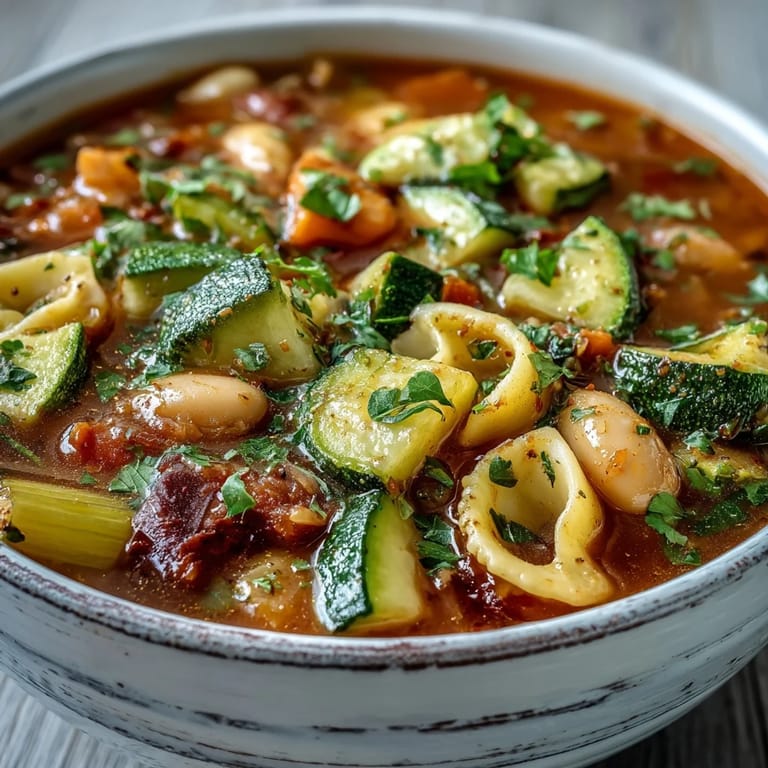
Save There was a snowy Tuesday when the power went out and we had to finish this soup over a camping stove. We sat on the floor by candlelight sharing one large bowl and laughing about the shadows on the wall. The warmth of the bowl against our palms felt like the only thing keeping the winter at bay. That simple meal felt more luxurious than any fancy restaurant dinner I have ever had.
Seasonal Vegetable Swaps
Minestrone is a living recipe that breathes with the changing seasons in your backyard. In the height of summer I love using yellow squash and fresh peas for a lighter version. When the frost hits the ground I lean into heavy greens like savoy cabbage or Swiss chard.
Perfecting the Texture
The way you chop your vegetables determines the final character of your soup. I prefer a small dice for the carrots and potatoes so every spoonful offers a bit of everything. If you like a more rustic feel you can leave the pieces larger for a chunky farmhouse style.
Serving and Storage
A bowl of minestrone is never truly complete without the right accompaniments to round out the meal. I always keep a crusty loaf of bread nearby for dipping into the herb flecked broth. A final drizzle of extra virgin olive oil right before serving adds a silky finish.
- Keep an extra bottle of hot sauce on the table for those who like a spicy kick.
- Rub a raw garlic clove on toasted bread for an instant flavor upgrade.
- Store leftovers in glass jars for a quick and healthy lunch the next day.
 Save
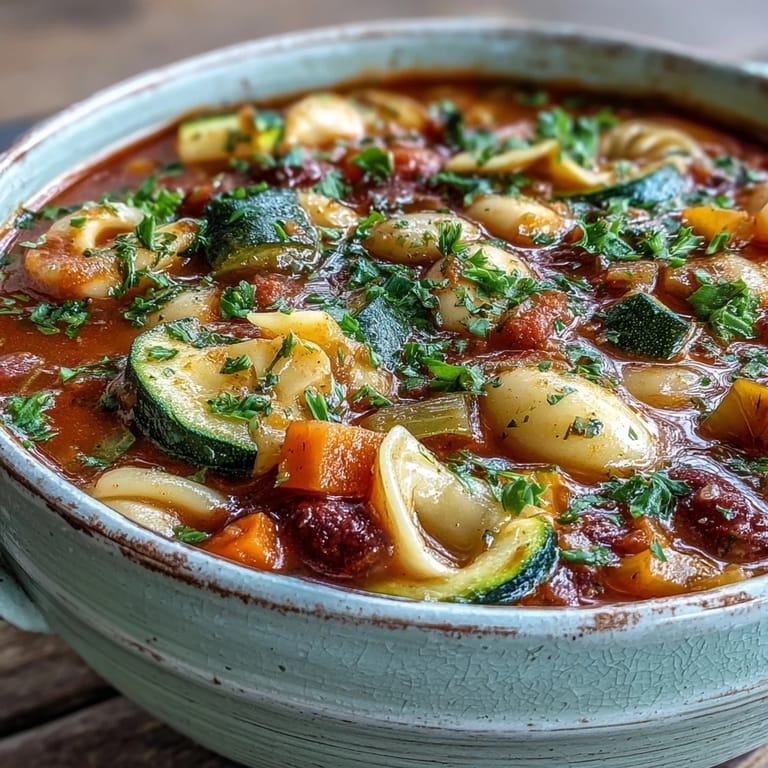
Save This soup is a testament to the beauty of simple ingredients coming together in harmony. I hope it brings as much warmth to your table as it does to mine.
Recipe FAQs
- → What vegetables work best in minestrone?
Classic minestrone includes onions, carrots, celery, and tomatoes. Seasonal variations welcome zucchini and green beans in summer, while butternut squash, kale, or spinach work beautifully in winter months.
- → Can I make this minestrone gluten-free?
Absolutely. Simply substitute regular pasta with gluten-free alternatives like rice pasta, corn-based shapes, or quinoa pasta. The rest of the ingredients naturally contain no gluten.
- → How do I store leftover minestrone?
Cool completely and refrigerate in airtight containers for up to 4 days. The pasta will absorb liquid, so add extra broth when reheating. Freeze for up to 3 months without pasta, adding fresh pasta when reheating.
- → What type of beans are traditional in minestrone?
Cannellini or borlotti beans are authentic Italian choices, offering creamy texture and mild flavor. Great Northern beans or navy beans make excellent substitutes depending on availability.
- → Can I make minestrone in a slow cooker?
Sauté vegetables first, then transfer everything except pasta to your slow cooker. Cook on low for 6-7 hours or high for 3-4 hours. Add pasta during the last 30 minutes of cooking time.