 Save
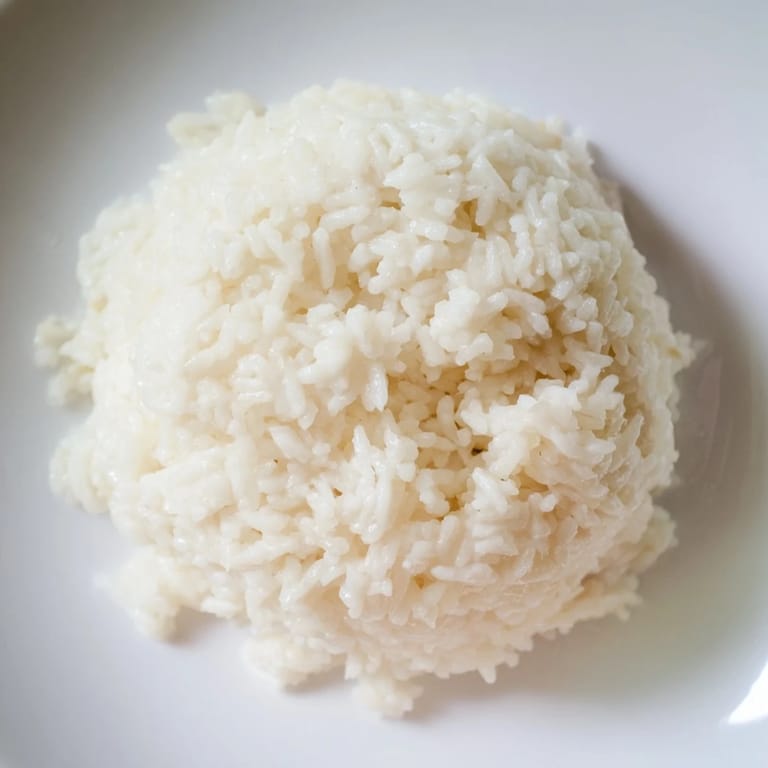
Save There's something almost meditative about the sound of jasmine rice hitting the bottom of a pot—a gentle patter that reminds you something good is about to happen. I discovered coconut jasmine rice during a particularly rainy afternoon when a friend brought over a container of leftover Thai curry, and I realized I had nothing but plain rice to serve alongside it. That simple pairing changed everything for me: the creamy coconut milk transformed ordinary rice into something aromatic and almost luxurious, proof that sometimes the best dishes emerge from small kitchen improvisions.
I made this rice for a dinner party once and watched my usually picky eater ask for thirds—not because it was fancy, but because it just tasted right. When jasmine rice is properly cooked in coconut milk, it stops being a side and becomes something people actually want to eat on its own. That's when I knew this recipe had earned its place in my regular rotation.
Ingredients
- Jasmine rice: One cup of good jasmine rice makes all the difference; its natural floral notes already complement coconut beautifully.
- Full-fat unsweetened coconut milk: Don't skip the full-fat version—the richness is exactly what makes this special, and unsweetened means you control the sweetness.
- Water: One cup balances the coconut milk so the rice stays fluffy rather than becoming a pudding.
- Salt: Just half a teaspoon brightens everything and keeps the coconut from feeling one-dimensional.
- Sugar: Completely optional, but one teaspoon adds a whisper of sweetness if you like your rice slightly on that side.
Tired of Takeout? 🥡
Get 10 meals you can make faster than delivery arrives. Seriously.
One email. No spam. Unsubscribe anytime.
Instructions
- Rinse your rice properly:
- Run cold water over the jasmine rice, stirring gently with your fingers until the water runs clear—this removes excess starch and keeps your rice from turning gluey. It feels almost like giving it a little bath before the big event.
- Build your cooking liquid:
- Combine the rinsed rice, coconut milk, water, salt, and sugar (if using) in a medium saucepan and give it a good stir so everything meets. This is your only real mixing moment; after this, the rice will do its own thing.
- Bring it to a gentle boil:
- Medium heat is your friend here—a violent boil can cause splattering and uneven cooking. You'll know it's ready when you see steam rising and small bubbles breaking the surface.
- Lower the heat and cover tightly:
- Once boiling, immediately turn the heat down to low and clamp that lid on firmly. Fifteen minutes of undisturbed simmering is where the magic happens—the liquid absorbs into each grain and the coconut perfumes everything.
- Let it rest:
- Remove from heat and keep it covered for 10 minutes; this finishing period allows the rice to absorb any remaining moisture and become beautifully tender. Resist the urge to peek—patience pays off here.
- Fluff and serve:
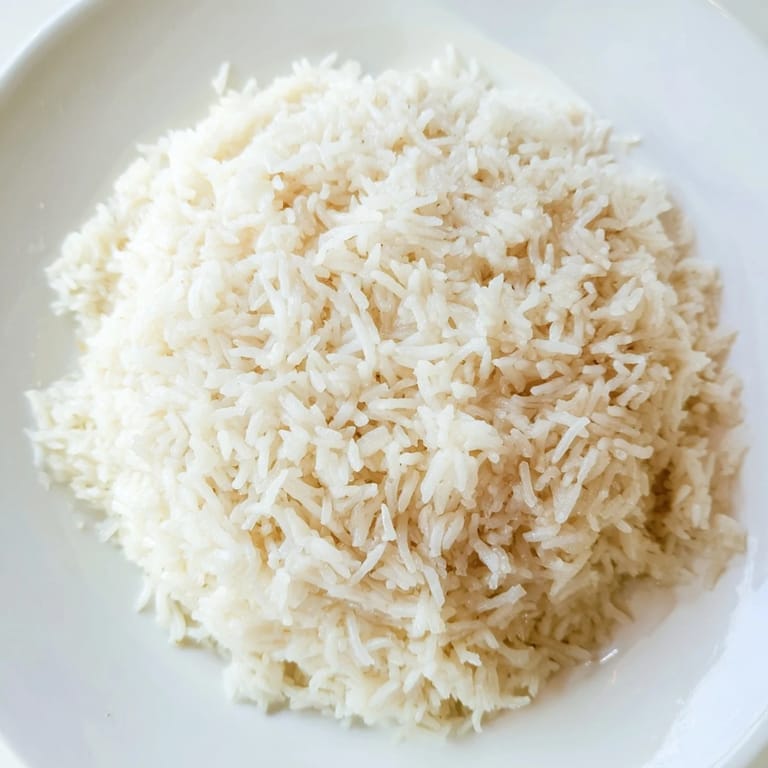
- Use a fork to gently separate the grains, which releases steam and keeps the rice light and airy rather than clumpy.
 Save
Save My favorite moment with this rice came when my daughter, who was going through a phase of rejecting anything unfamiliar, asked if she could have the coconut rice instead of regular rice with dinner. Sometimes the simplest dishes sneak past our defenses and become genuine favorites.
Flavor Boosters You Can Add
If you want to take this rice a step further without complicating things, consider adding pandan leaves or a small piece of ginger while the rice cooks—just remove them before serving. These additions intensify the aromatic quality and add subtle complexity that makes people ask what the secret ingredient is. I've also had success adding a tablespoon of finely minced shallot or a pinch of ground turmeric for a warmer flavor profile.
Pairing This Rice with Your Meals
This rice is genuinely versatile despite sounding specific to Southeast Asian cuisine. Thai curries are the obvious pairing, but it also balances the richness of grilled meats, soaks up the sauce from stir-fried vegetables beautifully, and even works as a bed for simple roasted fish. I've even served it alongside Latin spiced chicken, and the coconut's subtle sweetness played well against the heat.
Scaling and Storage
This recipe scales beautifully if you need to feed more people—just maintain a 1:1 ratio of rice to combined liquids. Leftover coconut jasmine rice keeps in the refrigerator for up to three days, and you can reheat it gently in a covered pot over low heat with a splash of water.
- If you want richer flavor, replace some or all of the water with additional coconut milk.
- Make sure your saucepan has a tight-fitting lid or the rice won't cook properly.
- Unsweetened coconut milk is crucial; sweetened versions will throw off the subtle balance completely.
 Save
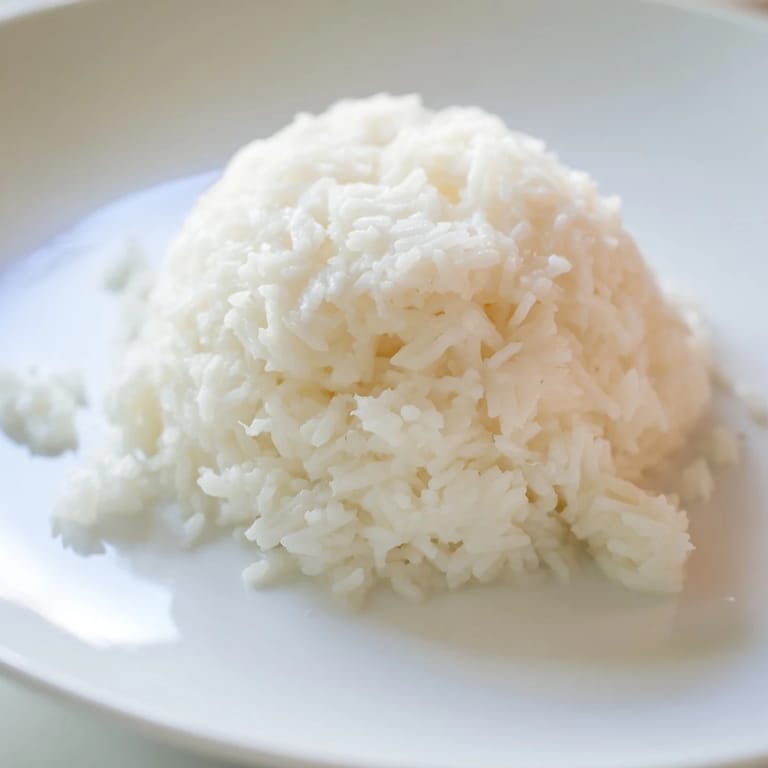
Save This rice became a staple in my kitchen not because it's complicated, but because it's consistently delicious and adds warmth to almost any meal. Once you've made it a few times, it becomes as automatic as regular rice, but with far more personality.
Recipe FAQs
- → How do I prevent the jasmine rice from becoming sticky?
Rinse the jasmine rice under cold water until it runs clear to remove excess starch, then avoid stirring during simmering to keep grains separate.
- → Can I use light coconut milk instead of full-fat?
Full-fat coconut milk offers a richer, creamier texture, but light coconut milk can be used for a lighter flavor and fewer calories.
- → What can I add to enhance the aroma?
Add 1–2 pandan leaves or a small piece of ginger during cooking, then remove them before serving to boost fragrance naturally.
- → Is it necessary to let the rice sit after cooking?
Letting the rice rest covered for 10 minutes after simmering allows it to absorb remaining liquid and results in fluffier grains.
- → What dishes pair well with coconut jasmine rice?
This side complements Asian-inspired dishes like Thai curries, grilled meats, and stir-fried vegetables beautifully.