 Save
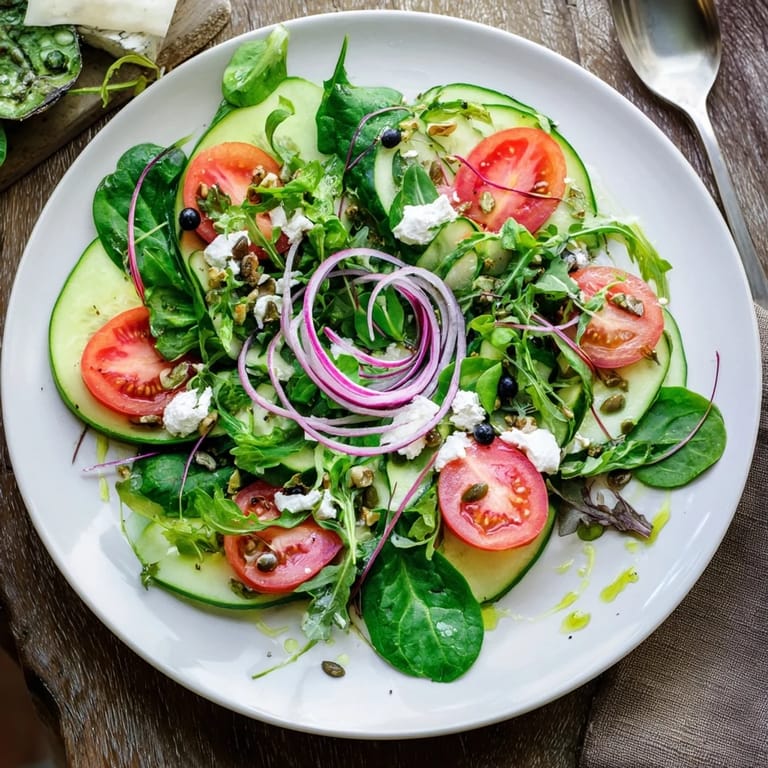
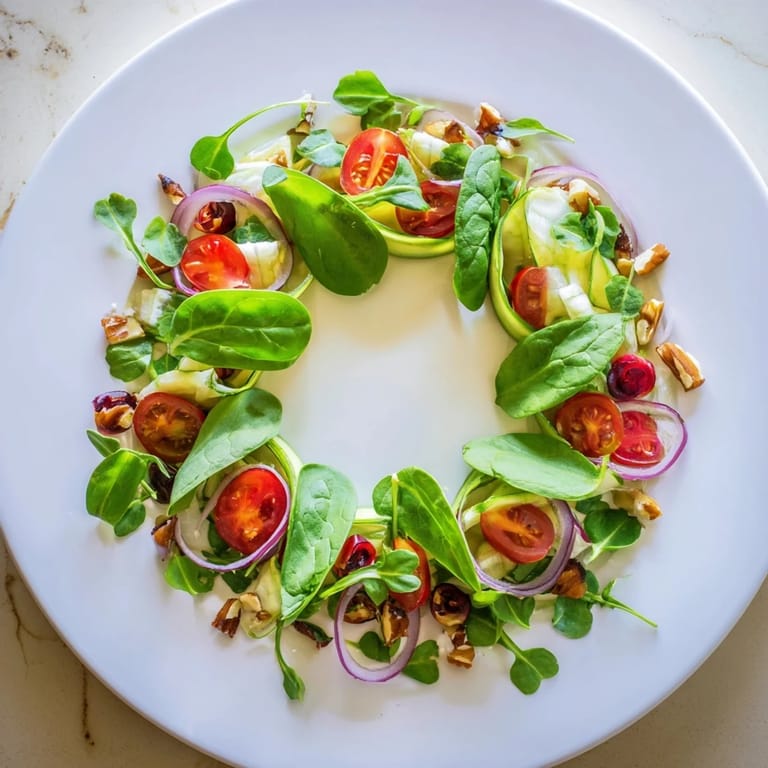
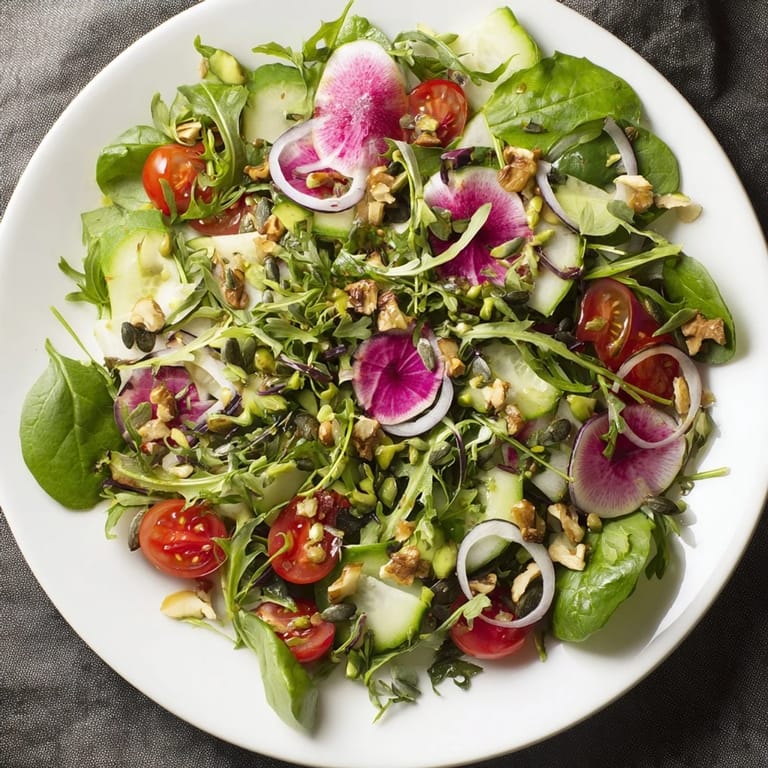
Save I stumbled onto the Fibonacci Fan while flipping through a math book someone left at a café, and honestly, the golden spiral diagram stopped me cold. There was something almost meditative about the proportions, the way each section expanded perfectly into the next. That evening, I found myself staring at my vegetable drawer, wondering if I could eat mathematics. The result was this salad—ingredients arranged in expanding arcs across a big white plate, each one slightly larger than the last. It's become my favorite way to prove that food can be beautiful and delicious without fussing.
I made this for my neighbor when she mentioned feeling stuck in a cooking rut, and watching her eyes light up when she saw the spiral arrangement made my whole week. She called it "salad you'd actually want to photograph," which feels like the highest compliment a vegetable dish can receive.
Ingredients
- Baby spinach leaves: The tender base that anchors the innermost arc—milder than mature spinach and just sturdy enough to hold the dressing without wilting instantly.
- Arugula: Peppery and slightly bitter, it cuts through the sweetness of everything else and adds real personality to that second spiral ring.
- Cherry tomatoes, halved: Choose the sweetest ones you can find and halve them so the cut side faces up, catching light and dressing.
- Cucumber, thinly sliced: A mandoline makes this effortless, and the thin slices drape beautifully across the spiral without breaking.
- Radishes, thinly sliced: They stay crisp and peppery, adding both crunch and a shock of pink that makes the whole thing visually sing.
- Red onion, finely sliced: Just a whisper of sharpness near the outer edge—use a very light hand or soak the slices in cold water for 10 minutes if you want to soften their bite.
- Avocado, sliced: Half an avocado is all you need; slice it just before assembling so it doesn't brown, and nestle the pieces into the spiral for creamy pockets.
- Blueberries: Tart and slightly sweet, they surprise people and add unexpected color variation that breaks up the greens.
- Toasted walnuts, chopped: Toast them yourself if you can—the smell is incredible and they taste infinitely better than pre-toasted versions.
- Crumbled feta cheese: Salty and tangy, it's the anchor that ties all these separate flavors together into something cohesive.
- Extra-virgin olive oil: Use something you'd actually drizzle on bread; quality matters here since the dressing is so simple.
- Lemon juice: Fresh-squeezed if you have the energy; bottled works but tastes noticeably thinner.
- Honey: Just a teaspoon balances the tartness and adds a subtle sweetness that makes you wonder what the secret ingredient is.
- Dijon mustard: It emulsifies the dressing slightly and adds a whisper of depth that nobody consciously tastes but everyone subconsciously notices.
Tired of Takeout? 🥡
Get 10 meals you can make faster than delivery arrives. Seriously.
One email. No spam. Unsubscribe anytime.
Instructions
- Set your stage:
- Use your largest, flattest platter—the kind you'd bring out for company. White or neutral works best because the vegetables are the stars here.
- Start at the center:
- Arrange baby spinach leaves in a crescent shape, slightly overlapping like roof shingles. This is your spiral's heartbeat.
- Build the second arc:
- Layer arugula in a fan pattern, each leaf slightly larger and further out than the last, expanding the spiral outward. You're creating movement.
- Continue the rhythm:
- Add cherry tomatoes in a gentle arc next—this is where the dressing will pool, so leave a tiny gap between each piece. Then cucumber slices in the next ring, slightly overlapping for that cascading effect.
- Add radishes and onion:
- Thin radish slices create a vibrant pink arc, then barely-there red onion slivers form that delicate outer ring. Step back and look—you're building something worth looking at.
- Nestle the delicate bits:
- Tuck avocado slices and blueberries into the spiral where they look good, not where logic says they should go. This is where you trust your eye.
- Crown it:
- Sprinkle walnuts and feta over the entire arrangement—enough to taste, not so much that they hide the colors underneath.
- Make the dressing:
- Whisk olive oil, lemon juice, honey, and Dijon mustard in a small bowl, tasting as you go. Season with salt and pepper until it makes your mouth happy.
- Final drizzle:
- Pour the dressing slowly over the salad just before serving, letting it cascade across the spirals. This is the moment it all comes together.
 Save
Save What surprised me most was how this salad turned eating into an event. People slow down when food is beautiful, noticing flavors they'd normally rush past, talking more, lingering at the table.
The Golden Ratio in Your Kitchen
The Fibonacci sequence appears everywhere in nature—sunflower spirals, nautilus shells, the way fern fronds unfurl—and bringing it to your plate feels like you're cooking in harmony with something ancient. You don't need to be a mathematician to feel that rightness, that sense of balance. The beauty is that this structure creates natural portion control too; each ingredient has its moment, its arc, its perfect amount.
Playing with Presentation
Once you nail the spiral, you can swap ingredients endlessly. Summer version leans into tomatoes, berries, and delicate herbs. Winter version goes deeper with roasted beets, pomegranate, and candied nuts. The structure remains beautiful no matter what, which means this salad grows with you through the seasons.
Make It Your Own
The magic of this recipe is that it's a framework, not a cage. If you don't have walnuts, use pecans or pine nuts. No feta? Goat cheese or even a sprinkle of parmesan works. The core idea—fresh vegetables arranged with intention—is what makes it shine.
- For extra protein without fussing, grill some chicken or chickpeas and tuck them into the outer rings.
- Make the dressing ahead and store it separate; the salad components can sit prepped in containers for a day if you arrange them just before serving.
- This is a vegetarian and gluten-free salad as written, so it's perfect for mixed tables where people have different needs.
 Save
Save Bring this to the table and watch what happens—conversations shift, people put their phones down, everyone wants the recipe. That's when you know you've made something worth making again.
Recipe FAQs
- → How should the greens be arranged for visual effect?
Arrange spinach leaves in a crescent arc, followed by layers of arugula expanding outward to mimic a golden spiral fan for balance and aesthetics.
- → What nuts work best in this salad?
Toasted walnuts provide a crunchy texture that complements the soft avocado and creamy feta cheese beautifully.
- → Can the dressing be adjusted for sweetness?
Yes, the honey in the dressing can be increased or reduced to suit personal taste preferences without compromising the flavor harmony.
- → Are there suitable protein options to add?
Grilled chicken or chickpeas can be included to boost protein content while maintaining the dish’s light, fresh character.
- → How to keep the salad fresh before serving?
Arrange the ingredients just before serving to preserve the textures and vibrant colors; keep dressing separate until ready to serve.