 Save
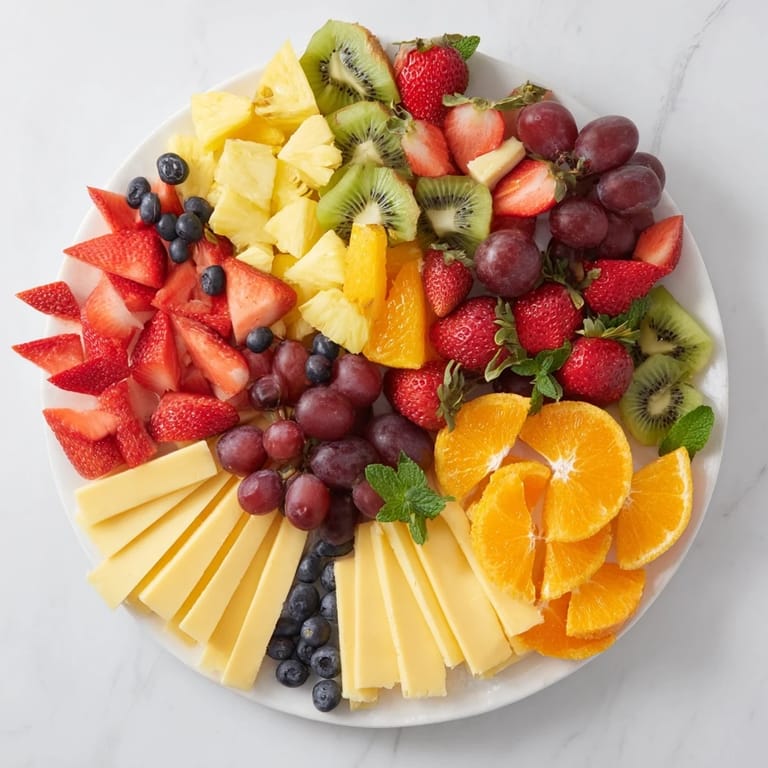
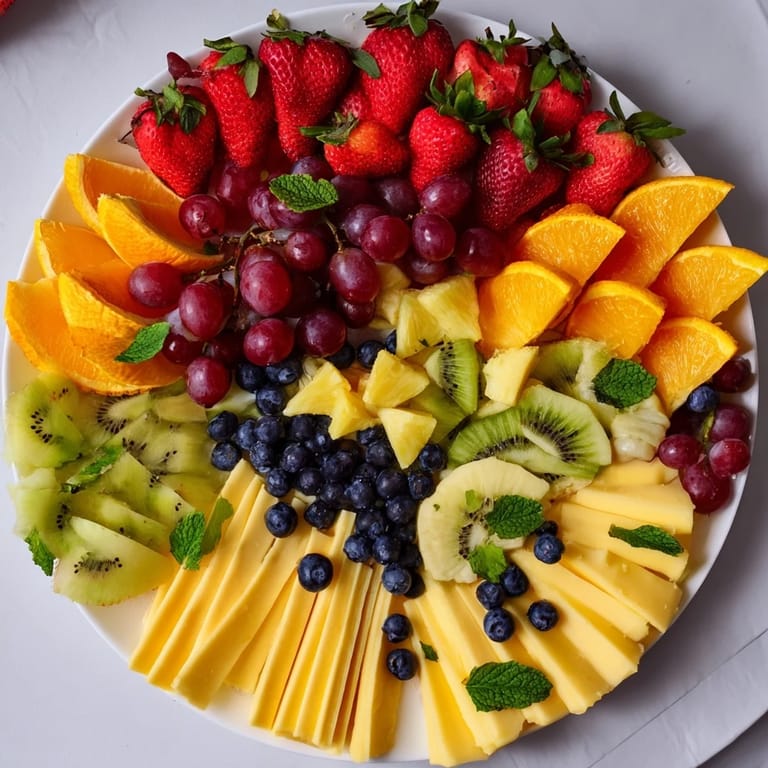
Save I discovered the magic of building food into patterns by accident, really—at a dinner party where I'd set out fruit and cheese on a round board almost carelessly, and my friend circled around it saying it looked like a mandala. Something clicked. Now when I build one of these kaleidoscope platters, I'm not just feeding people; I'm giving them something to admire before they eat, a small edible art piece that happens to taste delicious.
The first time I made this for my sister's engagement party, I was terrified the colors would somehow clash or the symmetry would fall apart. But as I spiraled the fruit and cheese outward, each person who arrived early stopped to take a photo. That's when I realized a beautiful platter isn't just about hunger—it's about creating a moment people want to remember.
Ingredients
- Seedless red grapes (1 cup): Their perfect round shape and jewel tone anchor the pattern—choose ones that are deep red, almost burgundy, for maximum contrast.
- Fresh strawberries, hulled and halved (1 cup): Halving them keeps the shape consistent with other wedges and their bright coral-red becomes a natural focal point.
- Kiwi, peeled and sliced into wedges (1 cup): The vibrant green and tiny seeds catch the light beautifully; cut them into thin triangular wedges so they sit flush against each other.
- Pineapple, cut into small wedges (1 cup): The pale yellow and geometric shape add structure; I cut mine thinner than you'd normally serve to make the pattern tighter.
- Blueberries (1 cup): These are your pattern fillers, the tiny details that bridge gaps and intensify color contrast in unexpected ways.
- Orange, peeled and segmented (1 small): The translucent quality of orange segments glows under light—they're worth the extra peeling time.
- Aged cheddar, cut into triangular wedges (100 g): The deep golden-orange of aged cheddar echoes pineapple tones but with a sharper visual bite; triangle shapes help them pack together.
- Manchego, sliced into thin wedges (100 g): Pale and mild-flavored, it provides visual breathing room between bolder colors and won't overpower the fruit.
- Brie, cut into small wedges (100 g): The creamy off-white creates visual contrast and a moment of soft luxury when someone reaches for it.
- Goat cheese, sliced into rounds (100 g): Tangy and bright white, it's the visual anchor that makes every other color sing—don't skip it.
- Fresh mint leaves (optional): A few scattered mint leaves at the end add living color and hint at the freshness people are about to taste.
Tired of Takeout? 🥡
Get 10 meals you can make faster than delivery arrives. Seriously.
One email. No spam. Unsubscribe anytime.
Instructions
- Prepare Everything First:
- Wash and cut all fruits and cheeses before you begin arranging—this takes pressure off once you're building the pattern and ensures everything is uniform in size. I lay them out in separate small bowls so I can grab what I need without fumbling.
- Choose Your Canvas:
- A large round platter or board is essential; the circular shape guides your eye and makes symmetry feel natural. I usually use a wooden board because the warm tone makes every color pop.
- Start at the Edge:
- Place your first fruit or cheese wedge at the very edge of the platter, pointing outward like a compass needle. This becomes your anchor and sets the rhythm for everything that follows.
- Build the Repeating Pattern:
- Alternate fruit and cheese as you move clockwise around the edge, using the same shape and size for each type. The pattern should feel like it could repeat forever—metronomic and satisfying.
- Layer Inward:
- Once the outer ring is complete, move inward and repeat with different fruits or cheeses, creating concentric circles. Each new ring should still feel like an echo of the one before it, same rhythm, different colors.
- Fill the Gaps with Intention:
- Use blueberries, grapes, or smaller segments to soften harsh angles and intensify color clusters where the eye naturally lingers. This is where the platter becomes a real kaleidoscope rather than just organized.
- Finish with Mint:
- Tuck a few fresh mint leaves into gaps or cluster them in the center—they add aroma and a living element that makes the whole thing feel like it was just assembled.
- Serve with Confidence:
- Bring it out immediately while everything is bright and dewy, or refrigerate covered if you need to make it ahead. Either way, watch people pause before eating—that's the real victory.
 Save
Save My neighbor once told me she spent twenty minutes just looking at one of these before taking a single bite, and I think that's the highest compliment I've ever received. It's a platter that honors both appetite and aesthetics, which is rarer than it should be.
Choosing Your Cheeses
The magic of this platter lives partly in the cheese selection—each one brings a different texture and flavor note that rounds out the sweetness of fruit. Aged cheddar is bold and nutty, Manchego is mild and buttery, brie offers creaminess, and goat cheese brings tang and visual pop. If you can't find one of these, substitute with a cheese of similar color and texture rather than trying to do all the same type.
Seasonal Swaps
The beauty of this platter is its flexibility—in summer I lean toward berries and stone fruits, in autumn I add apple slices and dried apricots, and in winter I reach for citrus and pomegranate seeds. The formula stays the same; only the players change. Your platter should reflect what's at its peak right now, which is when colors will be truest anyway.
Building Rhythm and Symmetry
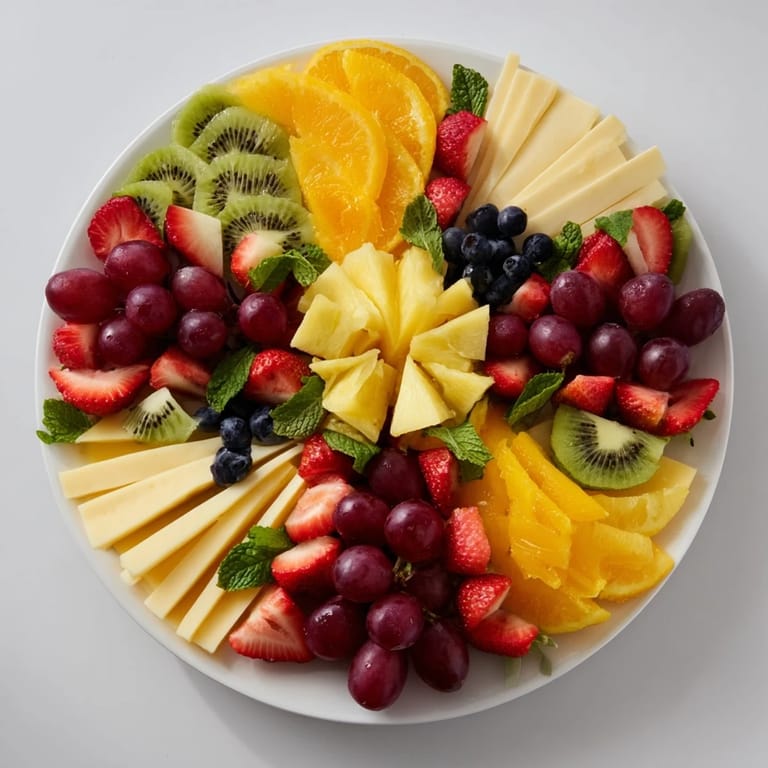
The pattern itself is what transforms fruit and cheese from a simple snack into something that stops people mid-conversation. Think of it less as a puzzle and more as a spiral or mandala—your eye should be able to follow one color or shape around the entire circle without losing the thread. This is why repetition matters more than perfection; a slightly crooked cheddar wedge is fine, but if your pattern suddenly breaks or changes rhythm, people feel it even if they can't say why.
- Stand above the platter occasionally and look down—this is what guests see, and it changes how symmetry reads.
- Use odd numbers of each fruit or cheese if you can; it creates a sense of movement rather than static balance.
- Don't overthink the center; a generous cluster of blueberries or a handful of mint works beautifully as a focal point.
 Save
Save This platter teaches that beautiful food doesn't need to be complicated—it just needs intention and a willingness to slow down long enough to arrange it thoughtfully. That's a lesson worth learning again and again.
Recipe FAQs
- → What fruits work best for this kaleidoscope platter?
Choose colorful fruits with varying textures like grapes, strawberries, kiwi, pineapple, blueberries, and orange segments for a balanced, vibrant display.
- → How should cheeses be prepared for this arrangement?
Slice cheeses into uniform wedges or rounds to match the fruit pieces, ensuring a harmonious and symmetrical presentation.
- → Can I prepare this platter ahead of time?
Yes, you can prepare and assemble the platter a few hours in advance. Keep it covered and refrigerated until serving to maintain freshness.
- → What garnishes complement the flavors and presentation?
Fresh mint leaves add a pop of color and refreshing aroma, enhancing both taste and visual appeal of the platter.
- → Are there suggestions to customize this platter for different occasions?
Seasonal fruits and cheeses can be swapped in as desired. Adding olives or roasted nuts in the gaps provides a savory touch and additional textures.