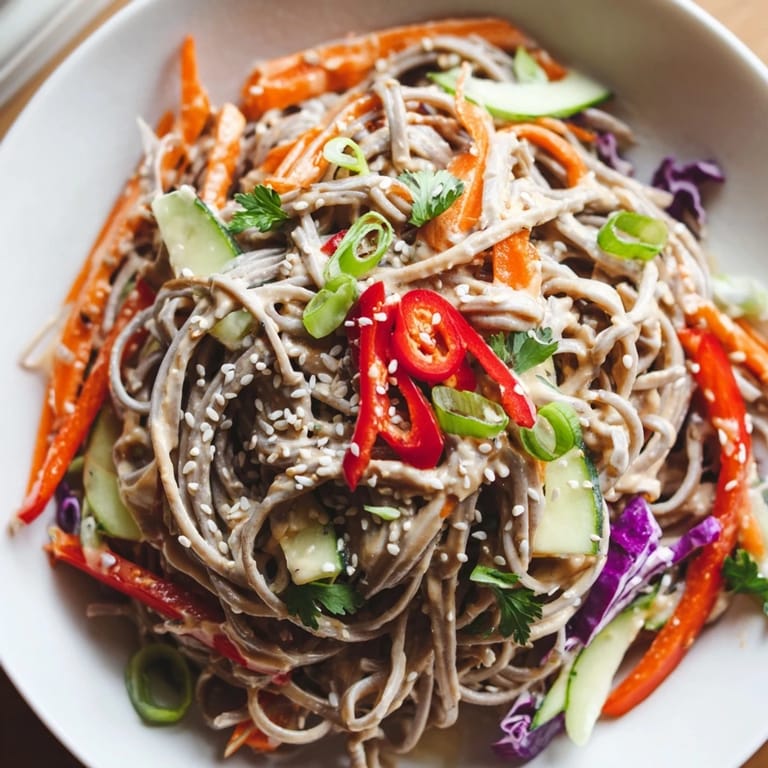
 Save
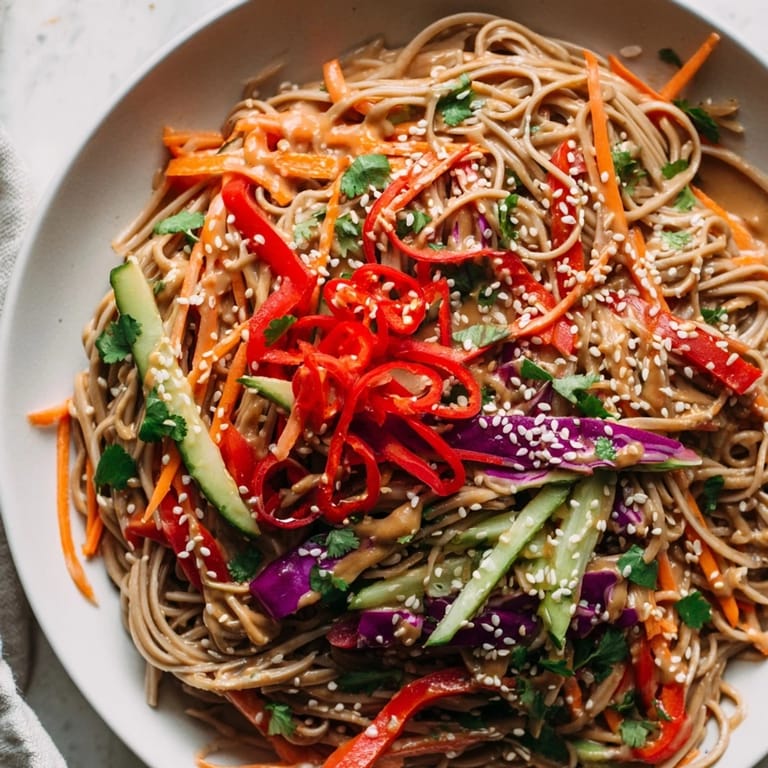
Save There's something about soba noodles that stopped me in my tracks the first time I tried them at a tiny restaurant tucked between two apartment buildings. The noodles had this earthy, slightly nutty taste I couldn't place, and they were served cold with a dressing that tasted like it held secrets. That afternoon, I became obsessed with recreating it at home, and after some experimentation, I realized the magic was in not overcomplicating it—just good noodles, fresh vegetables, and a dressing that whispered rather than shouted. This version has become my go-to lunch when I want something that feels light but completely satisfying.
I made this for a potluck once on a sweltering summer evening, and I watched people go back for seconds without even realizing what they were doing. Someone asked if it was a fancy takeout situation, and I remember feeling oddly proud standing there at the kitchen counter with my colander. That's when I understood this wasn't just a salad—it was a small act of generosity that happened to be delicious.
Ingredients
- Soba noodles: The star of the show—look for buckwheat ones if you can, though you can also find blended varieties that still taste lovely and cook in about the same time.
- Carrot: Julienne them thin so they soften just slightly into the dressing rather than staying crunchy and separate.
- Cucumber: Slice it into thin strips like you're trying to catch the light between each piece, and pat it dry before tossing so it doesn't water down your dressing.
- Red bell pepper: The color matters here almost as much as the taste—it's what catches your eye first and promises something fresh.
- Spring onions: These add a whisper of sharpness that keeps everything from feeling too heavy.
- Red cabbage: The secret texture player that gives you something to bite down on without being obvious about it.
- Peanut butter: Use the smooth kind here; it emulsifies better into a silky dressing than the chunky stuff would.
- Soy sauce: The umami foundation that makes this taste like something you'd pay for.
- Rice vinegar: This is gentler than regular vinegar and it knows its place in the background.
- Toasted sesame oil: Even a little bit transforms everything—don't skip this, and don't use the regular kind by accident like I once did.
- Maple syrup or honey: Just enough to round out the sharp notes without making this a dessert situation.
- Fresh ginger: Grate it right before you add it so the flavor is bright and immediate.
- Garlic: One small clove is enough; this isn't about overpowering anyone.
- Sesame seeds: Toast them yourself if you have time—the difference between toasted and raw is the difference between noticing them and loving them.
- Fresh cilantro: Some people hate it, and that's fine; for everyone else, it's the final touch that makes this feel intentional.
Tired of Takeout? 🥡
Get 10 meals you can make faster than delivery arrives. Seriously.
One email. No spam. Unsubscribe anytime.
Instructions
- Bring the noodles to life:
- Fill a large saucepan with water and bring it to a rolling boil, then add your soba noodles and stir gently so they don't stick together. They'll take about 5 to 7 minutes—you'll notice the water getting cloudy with starch as they cook.
- Cool them down properly:
- Drain them into a colander and run cold water over them while you stir gently with your fingers, rinsing away all that starchy coating. This stops them from cooking further and keeps them from clumping together later.
- Build your dressing:
- In a large mixing bowl, whisk together the peanut butter, soy sauce, rice vinegar, sesame oil, maple syrup, ginger, and minced garlic until it's mostly smooth. Add your water one tablespoon at a time, whisking as you go, until the dressing flows off the whisk in a smooth ribbon rather than clumping.
- Bring it all together:
- Add your cooled noodles and all the vegetables to the bowl with the dressing and toss everything with your hands or two wooden spoons—you need to be thorough here because every strand should be coated. It might look like there's too much dressing at first, but the noodles will absorb it and become even more flavorful.
- Finish and serve:
- Divide the salad among your bowls and scatter sesame seeds and cilantro over the top like you're trying to make it look like someone skilled made it. Serve immediately with lime wedges on the side for people who want to squeeze brightness over everything.
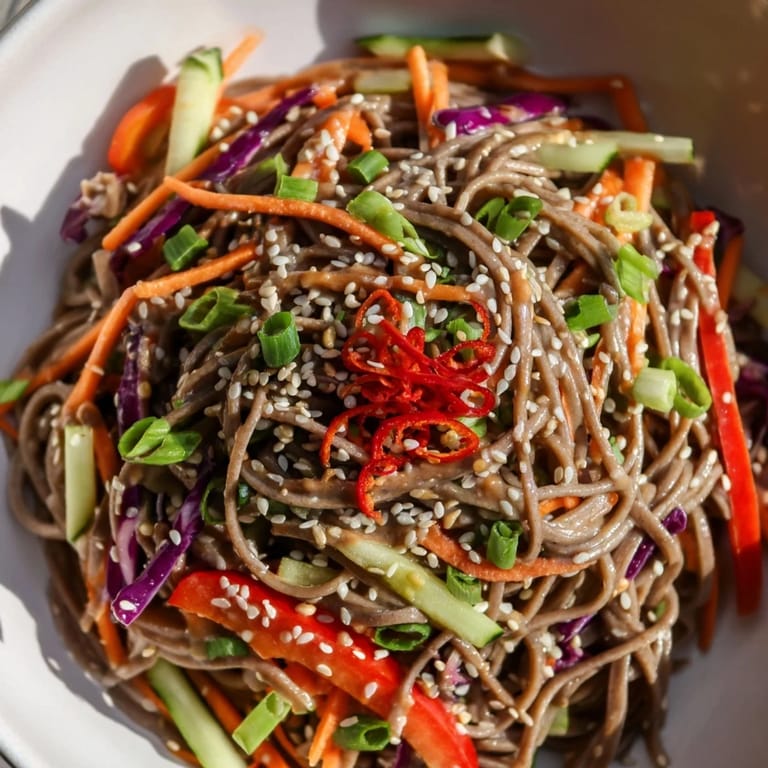 Save
Save There's a moment when someone takes a bite of this and their whole face softens, and they forget to talk for a second because they're too busy thinking about how something this simple tastes this good. That moment is worth every vegetable you julienned.
The Sesame Oil Secret
I learned this the hard way after buying cheap sesame oil and wondering why my dressing tasted flat. Toasted sesame oil is not something to skimp on—it's the difference between a nice salad and a salad that tastes like you care. Buy a small bottle of good quality oil and keep it in the back of your cabinet where it stays cool, because sesame oil gets rancid faster than you'd expect. It's expensive for a reason, and one tablespoon does the work of much larger quantities of other oils.
Making It Ahead
This salad actually improves after a day in the fridge because all the flavors have time to get to know each other, but the vegetables don't hold up forever if they're all mixed together. If you're meal prepping, keep your noodles and dressing in one container and your vegetables in another, then combine them right before eating. The cucumber will last about two days before it starts to get soft, but the cabbage and carrots will stay crisp for up to four days if you keep them separate.
Variations and Add-Ons
This is one of those recipes that plays well with others—it's a blank canvas that welcomes whatever you have on hand or whatever you're hungry for. A handful of edamame adds protein and a pop of brightness, grilled tofu cubes turn this into something more substantial, and shredded rotisserie chicken makes it feel like an actual dinner rather than a side dish. Even a fried egg on top somehow makes perfect sense, cracking into the salad and making everything richer. You can also swap out the peanut butter for tahini if nuts aren't your thing, and the dressing will become more neutral and let the sesame oil do the talking.
- Keep extra lime wedges on the table because everyone will want to add brightness at the last second.
- If the dressing gets too thick in the fridge, whisk in a little water or squeeze of lime juice to bring it back to life.
- Don't be afraid to taste and adjust—more soy sauce for salt, more vinegar for brightness, more maple syrup if your dressing feels sharp.
 Save
Save This salad has become my answer to so many kitchen questions: what to make when you're hungry but don't want anything heavy, what to bring to a potluck that tastes like you tried, what to eat when you want something that feels good from the first bite all the way through. It's proof that sometimes the best meals are the ones that don't require you to think too hard.
Recipe FAQs
- → How can I ensure soba noodles don't stick together after cooking?
Rinse the cooked soba noodles thoroughly under cold running water to remove excess starch and stop the cooking process, preventing clumping.
- → What can I use as a peanut butter substitute in the dressing?
Tahini works well as a sesame-flavored alternative, maintaining creaminess while offering a different nutty profile.
- → Can I make this dish gluten-free?
Yes, use 100% buckwheat soba noodles and substitute soy sauce with tamari to avoid gluten.
- → How do I adjust the dressing consistency if it’s too thick?
Add water gradually, one tablespoon at a time, whisking until the dressing becomes smooth and pourable.
- → What garnishes enhance the flavor and texture?
Toasted sesame seeds, fresh cilantro, and thinly sliced red chili add crunch, freshness, and a touch of heat.
- → How long can the salad be stored after preparation?
The salad keeps well refrigerated for up to 2 days; refreshing with a squeeze of lime before serving helps revive flavors.