 Save
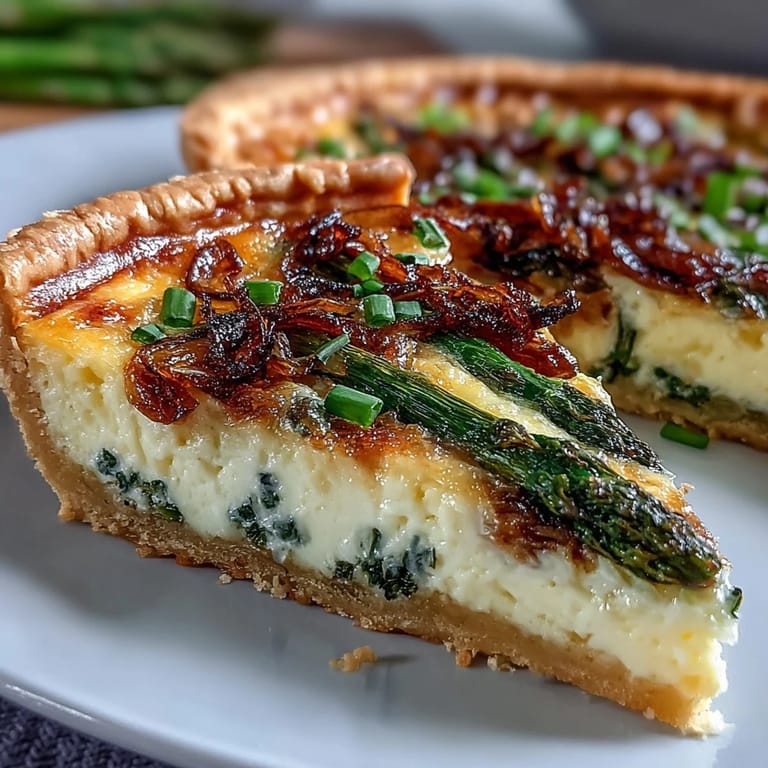
Save There are certain dishes that nudge me out of my weekday routine and make me slow down, and this spring asparagus quiche is one of them. The first time I made it, a spring breeze came in through the kitchen window, mingling with the scent of buttery crust and caramelized shallots. I remember the lively sizzle as the asparagus hit the pan, the kitchen table scattered with flour and laughter from a friend who dropped by unexpectedly. It’s not just the flavors—it’s the ritual, the quiet joy in folding seasons into something shared. This isn’t a special occasion dish for me, just an ordinary day turned a bit brighter.
I once baked this quiche for a Sunday potluck when I’d barely managed to drag myself out of bed on time. The kitchen looked like chaos, but the quiet focus of shaving shallots and hearing the crack of an egg settled my nerves. When I pulled the quiche from the oven—edges golden, center puffed—everyone crowded around before it even had time to set. We ate it in the backyard, plates balanced on knees, and someone asked for extra slices to go. That’s the moment this recipe became more than just a brunch standby for me.
Ingredients
- All-purpose flour: Gives the crust its delicate crumb; I always fluff it up before measuring for good luck.
- Unsalted butter: Cold and cubed, it’s what makes the crust so shatteringly flaky—don’t let it get too warm.
- Salt: Just enough to make the crust sing without overpowering the filling.
- Ice water: The trick for keeping the dough tender and easy to work, added just until it holds together.
- Olive oil: Coaxes sweetness from the shallots during their slow caramelization.
- Shallots: When thinly sliced and coaxed golden, they anchor the filling with a mellow, savory base.
- Fresh asparagus: Look for firm stalks; slicing them to one-inch pieces ensures every bite catches a bit of spring.
- Gruyère cheese: Its nutty flavor is a luxe match for asparagus, but feel free to riff with what’s on hand.
- Eggs: The backbone of the custard—room temperature eggs whisk more smoothly.
- Heavy cream: Adds body and richness for a filling that’s never rubbery.
- Whole milk: Balances the richness and keeps the texture light.
- Fine sea salt: Helps the flavors bloom without tasting overtly salty.
- Freshly ground black pepper: Cracked just before adding for a welcome, subtle bite.
- Ground nutmeg: Only a pinch, but it’s the tiny detail that rounds out the filling’s warmth.
Tired of Takeout? 🥡
Get 10 meals you can make faster than delivery arrives. Seriously.
One email. No spam. Unsubscribe anytime.
Instructions
- Make the crust:
- Sift flour and salt into a big bowl, then rub in the cold butter until it all looks like coarse sand. Trickle in ice water and bring it together gently by hand, then wrap and chill the dough so it’s easier to roll.
- Roll and bake:
- On a lightly floured surface, roll the cold dough to fit your tart pan, pressing it gently into the edges. Dock the bottom with a fork, line with parchment, and blind bake with weights for a crisp, golden shell.
- Caramelize the shallots:
- Heat olive oil in a pan over medium heat, add the shallots, and let them gently turn golden and sweet as you stir and chat for about 8 minutes.
- Blanch the asparagus:
- Bring a pot of salted water to a lively boil, toss in the asparagus, and let them go bright green—just two minutes—then plunge into cold water so they stay vibrant and snappy.
- Whisk the custard:
- In a big bowl, beat together eggs, cream, milk, salt, pepper, and nutmeg until smooth and a little frothy.
- Assemble and fill:
- Spread the silky golden shallots in the cooled crust, scatter over the asparagus and cheese, then pour the custard on top, making sure every nook gets filled.
- Bake the quiche:
- Bake at 375°F (190°C) for 35–40 minutes, or until the quiche is just set in the center and the top has a gentle bronze glow.
- Rest and serve:
- Let the quiche rest for at least 10 minutes; it slices more easily and the flavors seem to settle beautifully during that time.
 Save
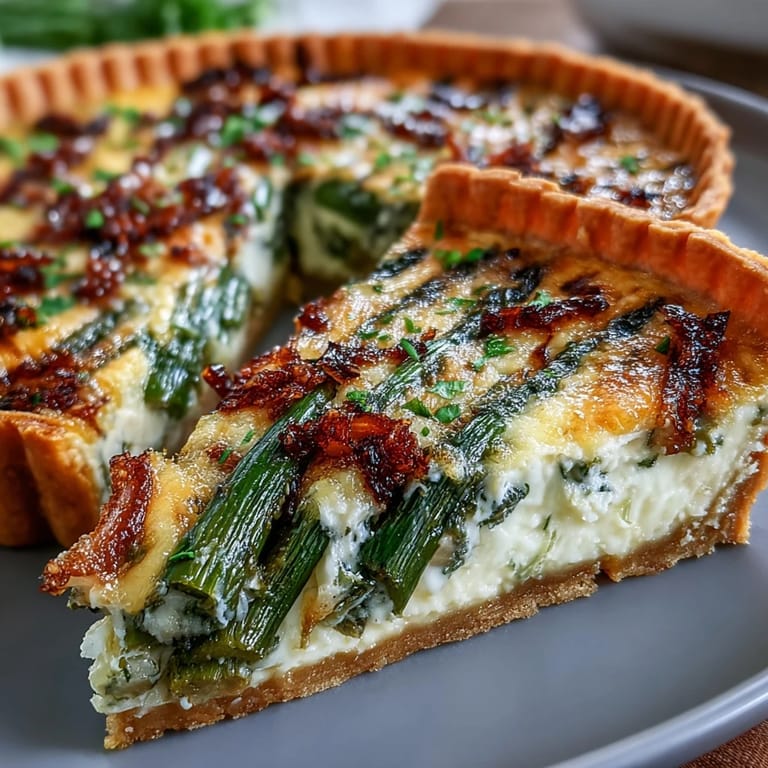
Save One afternoon, a friend stopped by with a surprise armful of lilacs just as the quiche came out of the oven; the whole house smelled of butter, flowers, and spring. We sliced wedges of quiche and sat together, grateful for small luxuries that feel like celebrations.
A Crust That’s Worth the Extra Step
I know it’s tempting to grab a store-bought crust when you’re short on time, but taking a few minutes to make your own transforms this quiche into something extraordinary. The chill and rest period lets the dough relax, so it won’t fight back when you roll it out. If you notice jagged edges, just patch them gently with extra dough—nobody will know once it’s baked. And if you’re making it ahead, the crust can be blind-baked and cooled the night before.
Getting the Textures Just Right
It might seem fussy to separately caramelize the shallots and blanch the asparagus, but it keeps the flavors bright and layered instead of muddled. Blanching lets the asparagus keep its snap and vivid color, while the shallots become meltingly sweet and golden. Gruyère is my classic pick, but I’ve swapped in sharp white cheddar or Swiss when needed and loved the result each time. The real secret is making sure your custard just barely jiggles in the center when finished.
Easy Variations For Any Season
Once you have the basics down, this quiche is a blank canvas for whatever’s in season or lingering in your veggie drawer. Try tossing in crisp sautéed mushrooms, add some fresh herbs like dill or chives, or use broccolini for a twist. When asparagus is out of season, spinach holds up beautifully here too.
- Herbs sprinkled on top right before baking make it shine.
- Let it cool before cutting to avoid a runny mess.
- Don’t be afraid to play with the cheeses on hand.
 Save
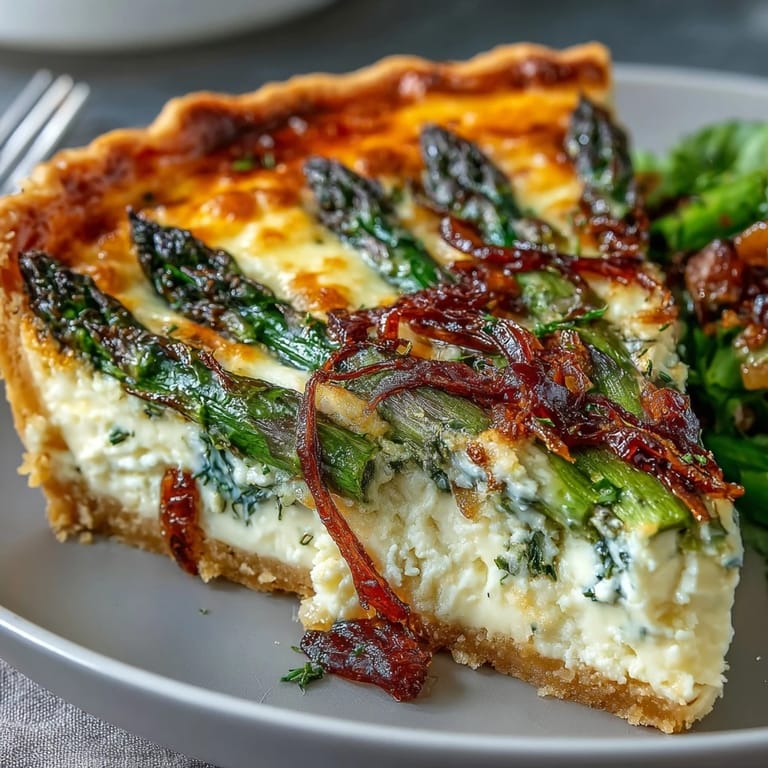
Save I hope this recipe fills your kitchen with the promise of spring, no matter the weather outside. Enjoy every buttery, tender bite with someone who needs a little sunshine in their day.
Recipe FAQs
- → Can I use frozen asparagus?
Yes — thaw and pat dry before blanching. Blanch briefly to remove excess moisture, then cool and drain well to avoid a soggy filling.
- → How do I prevent a soggy crust?
Blind-bake the crust until lightly golden and use parchment with weights. Chill the dough before rolling and avoid over-wetting when lining the pan.
- → What indicates the quiche is done?
The center should be just set with a slight wobble; edges will be a touch firmer and the top lightly golden. It firms up more as it rests.
- → Can I substitute the Gruyère?
Yes — Emmental, Swiss or a sharp white cheddar work well. Choose a cheese that melts smoothly and complements the asparagus and shallots.
- → How long can I make it ahead?
Prepare the crust and filling in advance: assemble and refrigerate up to 24 hours before baking. Rewarm gently or serve at room temperature.
- → Any tips for caramelizing shallots?
Cook shallots slowly over medium-low heat with a pinch of salt and occasional stirring until soft and deep golden to develop sweet, savory flavor without burning.