 Save
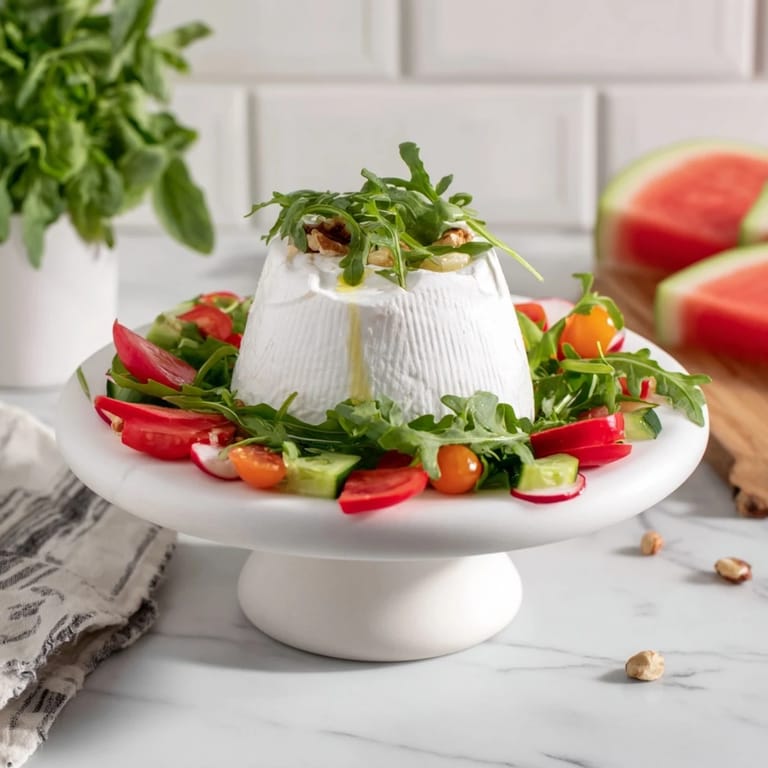
Save I discovered the power of a composed salad during a dinner party that almost didn't happen. My carefully planned appetizer fell through, and with guests arriving in an hour, I found myself staring at a gorgeous cheese wheel I'd bought on impulse at the market that morning. Rather than panic, I started arranging vegetables around it like petals, and something magical happened—the chaos became ceremony. That single wheel of soft cheese transformed from an ingredient into a focal point, and suddenly I was serving art.
What struck me most that evening wasn't the compliments about taste, though those came. It was watching people slow down around the table, studying the arrangement before reaching for their plate. Someone asked about the watermelon radish—they'd never seen one before. The salad became a conversation starter, a reason to linger and notice the colors, the textures, the intention behind what I'd arranged.
Ingredients
- Fresh baby arugula: Use the youngest, most tender leaves you can find—they have a peppery bite without being tough or bitter, and they're delicate enough to arrange without bruising.
- Cherry tomatoes: Halving them exposes their sweetness and makes them nestle perfectly into the geometric pattern you're creating.
- Cucumber: Slice paper-thin so it has almost a translucent quality that catches light beautifully when arranged.
- Watermelon radish: This is your visual secret weapon—slice it thin to show off those crimson rings, and it adds an elegant complexity to the presentation.
- Pomegranate seeds: Their jewel-like quality and slight tartness provide both visual drama and flavor contrast that brightens everything around them.
- Toasted walnuts: Toast them yourself if you can—they gain such a deeper, richer flavor that transforms from background note to something memorable.
- Extra-virgin olive oil: This is where quality matters; use something smooth and grassy that you'd taste on its own.
- White balsamic vinegar: It's gentler than dark balsamic and won't muddy the vibrant colors you've arranged so carefully.
- Honey: Just a touch rounds out the dressing and adds a whisper of warmth without making it sweet.
- Dijon mustard: The smallest amount acts as an emulsifier and brings sophistication to what might otherwise feel plain.
- Artisanal cheese wheel: Choose one that's soft enough to cut easily but sturdy enough to hold its shape—the cheese isn't just flavor, it's your focal point and deserves respect.
Tired of Takeout? 🥡
Get 10 meals you can make faster than delivery arrives. Seriously.
One email. No spam. Unsubscribe anytime.
Instructions
- Position your centerpiece:
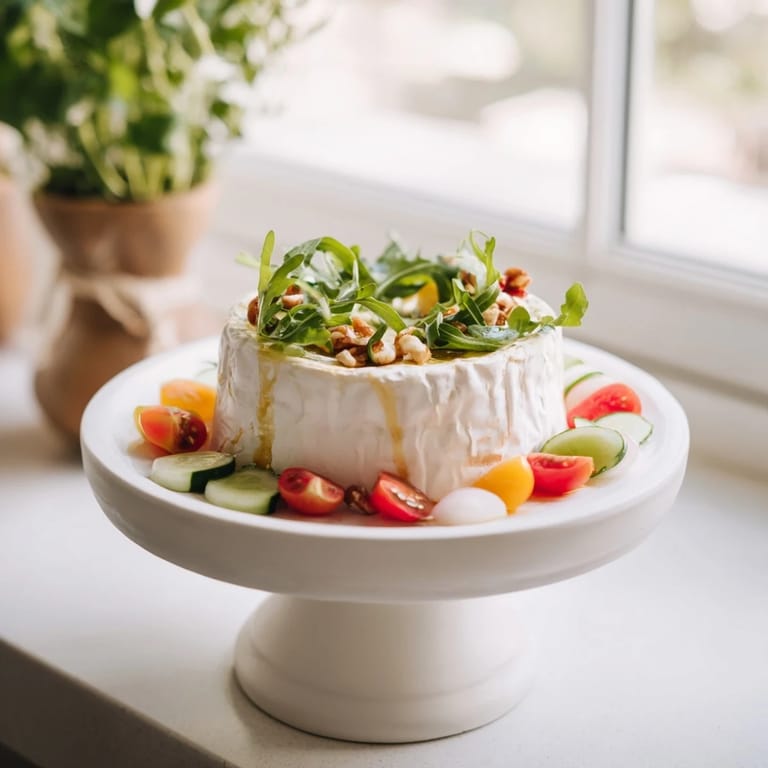
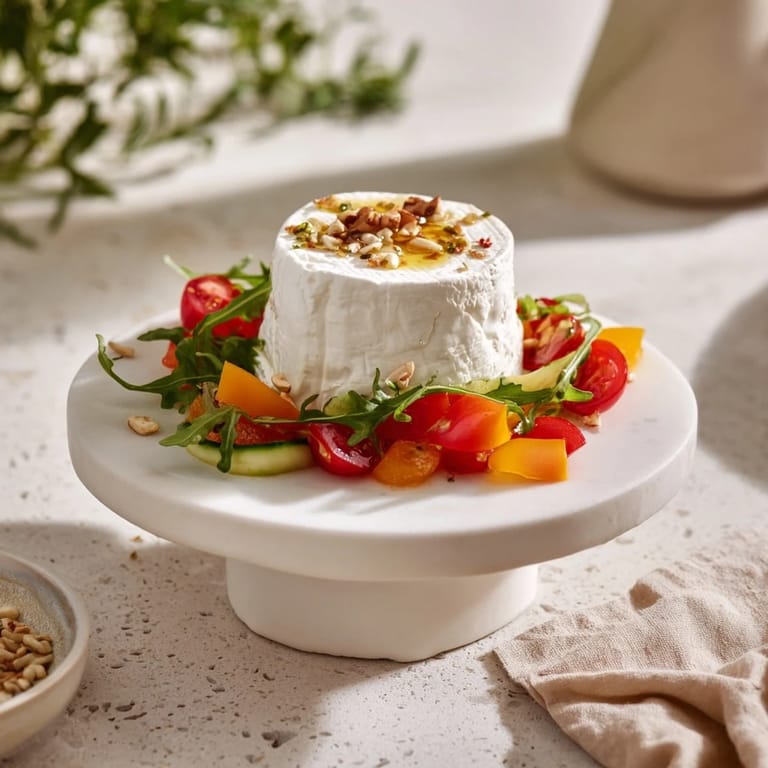
- Place the cheese wheel on a small pedestal or nestled plate toward one corner of your serving board, slightly elevated so it commands attention and light catches its surface beautifully.
- Create the arc of greens:
- Arrange the arugula in sweeping, deliberate strokes that radiate outward from the cheese like compass lines pointing toward true north. This is where precision becomes poetry—the eye should naturally follow every leaf back to that center.
- Layer in geometric harmony:
- Place tomato halves in a neat row angling toward the cheese, then cucumber slices overlapping slightly in another direction, and finally watermelon radish rounds in between, each one oriented like an arrow pointing inward. The pattern matters because it transforms the plate from scattered ingredients into intention.
- Scatter jewels strategically:
- Drop pomegranate seeds and walnuts along the arranged lines, not randomly but as if they're highlighting the pathways you've created. They should feel like they're conducting traffic toward the center.
- Build the dressing:
- Whisk oil, vinegar, honey, and mustard together with salt and pepper until it's silky and emulsified, tasting as you go because the balance between acid and richness is what brings everything alive. If it tastes a little sharp, add another touch of honey; if it feels flat, a crack more pepper will wake it up.
- Final touch:
- Drizzle the dressing lightly and deliberately across the vegetables, carefully avoiding the cheese wheel so it stays pristine and ready for tearing at the table. The dressing should glisten, not pool.
- Serve with intention:
- Bring it to the table and let guests see it whole for a moment before inviting them to cut into the cheese and build their own bite with the arranged vegetables surrounding it.
 Save
Save Later that night, after everyone had left and I was clearing the table, I found the cheese had been eaten down to the rind, the vegetables nearly finished, and a trail of oil and crumbs across the board that proved people had simply reached in and kept going. That feeling—having made something so good that formality dissolved and people just wanted more—is worth every careful arrangement.
Building Your Personal Composition
The beauty of this salad is that it's flexible even as it demands precision. The architecture matters more than the exact vegetables—you can swap in thinly sliced beets, paper-thin fennel, radish rounds, or whatever is at peak season and colors your table dramatically. The principle is the same: choose ingredients that offer visual contrast and arrange them with intention, so the plate becomes a map that leads the eye inward toward that treasured cheese wheel at the heart of it all.
Choosing Your Centerpiece Cheese
The cheese you choose sets the tone for the entire salad, so think about flavor, texture, and how it speaks to your guests. A creamy Brie is luxurious and familiar, while a Saint-Marcellin adds earthiness and a slightly funky elegance. Humboldt Fog brings a striking visual moment with its dark vegetable ash layer running through white cream, and if you want to be bold, a crumbly goat cheese or even a soft-ripened blue introduces unexpected richness. Let the cheese guide your vegetable choices—delicate cheeses pair beautifully with bright, acidic elements like pomegranate and radish, while richer cheeses can handle earthier vegetables or a wider range of flavors.
Variations and the Joy of Improvisation
This salad thrives on personal touches and the ingredients calling to you at the market. Drape thin ribbons of prosciutto or smoked salmon across the pattern for non-vegetarians, creating another layer of visual drama and salty richness. Edible flowers—nasturtiums, pansies, microgreens—transform the plate into something almost impossibly beautiful without adding much flavor, just pure visual poetry. If you want to lean into seasons, add shaved pear in autumn, thinly sliced citrus in winter, or fresh herbs like dill and basil in summer, always maintaining that directional flow toward the center.
- Toast your own nuts moments before serving so they stay crisp and vivid in flavor rather than tasting stale.
- Keep a small dish of finishing salt and a pepper grinder nearby so guests can season their own bites exactly as they like them.
- If you're making this ahead of guests' arrival, arrange everything but the dressing, then drizzle just before serving so the vegetables stay bright and crisp.
 Save
Save This salad reminds me that sometimes the most impressive meals aren't about complicated techniques or rare ingredients—they're about seeing beauty in what you have and sharing it with intention. Serve it warm, serve it with joy, and watch how people respond to something that feeds both the eyes and the spirit.
Recipe FAQs
- → What cheese varieties work best for this dish?
Soft cheeses like Brie, Saint-Marcellin, Camembert, or Humboldt Fog make excellent choices due to their creamy texture and mild flavors.
- → Can this dish be prepared ahead of time?
It's best served immediately to preserve the freshness of the produce and the texture of the cheese wheel, though prepping ingredients in advance is helpful.
- → What dressing complements the salad components?
A light mixture of extra-virgin olive oil, white balsamic vinegar, honey, and Dijon mustard enhances the ingredients without overpowering them.
- → Are there suitable protein additions?
Thinly sliced prosciutto or smoked salmon can be added for a non-vegetarian option, enhancing flavors and texture.
- → What nuts are included and how are they prepared?
Toasted walnuts add crunch and richness, scattered strategically around the arranged salad elements.