 Save
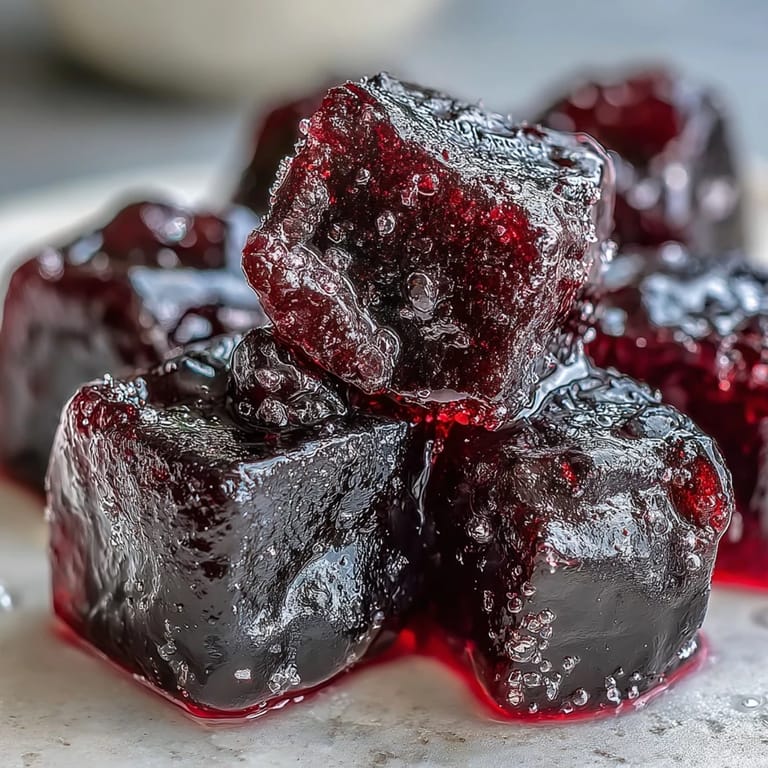
Save My kitchen smelled like a berry farm the afternoon I first made these black currant gummies, except better—because I was turning those tart little spheres into something that made my hands sticky and my taste buds sing. A friend had left a bag of frozen black currants on my counter with a cryptic note: "Trust me." I did, and within an hour I had chewy jewels that tasted nothing like the artificial candy I'd grown up with. There's something quietly magical about watching fruit juice transform into something you can hold in your palm.
I brought a batch to a book club meeting last spring, and someone actually paused mid-sentence to ask what the secret ingredient was. When I told her it was just black currants, gelatin, and sugar, she looked genuinely disappointed that there wasn't more mystery to it. That's the beautiful part though—simplicity sometimes creates the best surprises.
Ingredients
- Fresh or frozen black currants (1 cup, 150 g): Frozen works just as well as fresh and honestly saves you the hunt at the market; they'll release their juice more easily when thawed and heated.
- Water (1/3 cup, 80 ml for cooking): This is just enough to coax the berry flavor out without diluting it into oblivion.
- Lemon juice (2 tablespoons from about 1 lemon): The secret weapon that makes the tart shine and stops these from tasting one-note sweet.
- Granulated sugar (3/4 cup, 150 g): Use regular sugar here; it dissolves cleanly and won't cloud your gorgeous gummy color.
- Unflavored powdered gelatin (3 tablespoons, 30 g): This is what gives them that satisfying chew; don't skip the blooming step or they'll seize up.
- Cold water (1/3 cup, 80 ml for gelatin): Cold is non-negotiable—warm water will start cooking the gelatin prematurely.
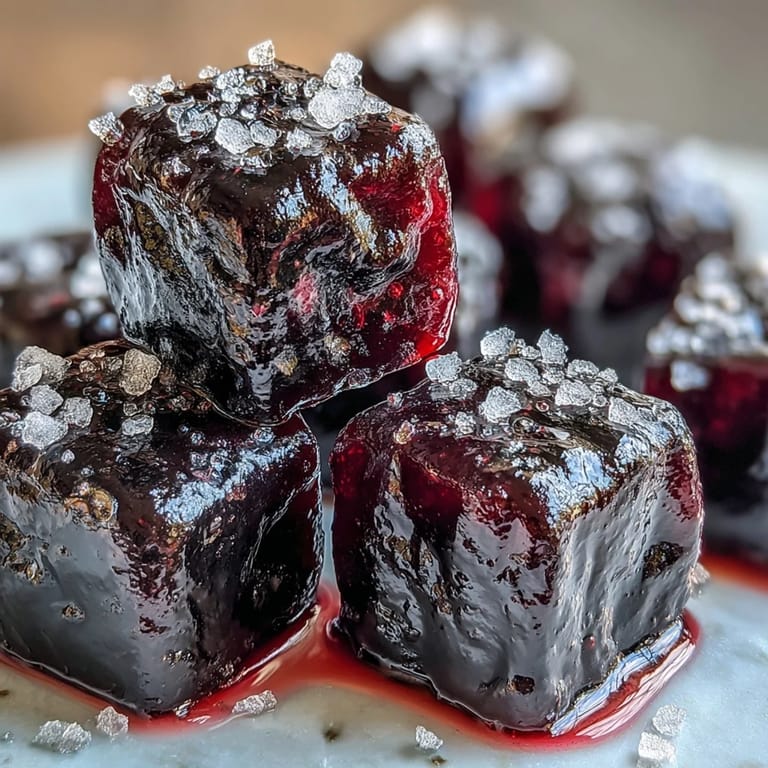
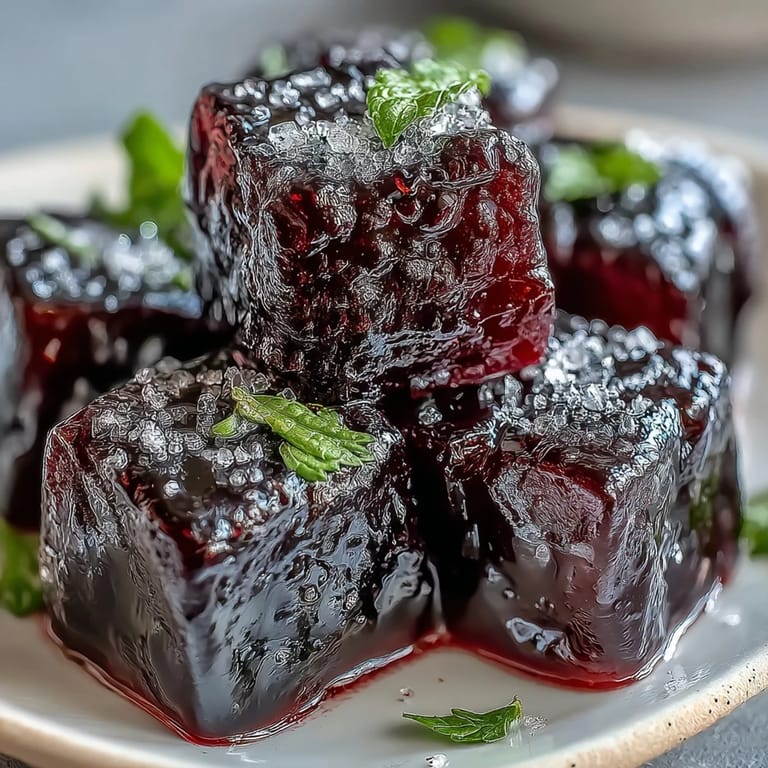
- Granulated sugar (1/4 cup, 30 g for coating, optional): A final dusting that catches the light and makes them look like jewels on a plate.
Tired of Takeout? 🥡
Get 10 meals you can make faster than delivery arrives. Seriously.
One email. No spam. Unsubscribe anytime.
Instructions
- Soften the berries:
- Pour your black currants and water into a saucepan and set it over medium heat. Let them bubble gently for 5 to 7 minutes, watching as they start to collapse and release their deep purple juice—you'll actually see the color bloom into the water like watercolor bleeding across paper.
- Extract the puree:
- Once they're soft, remove the pan from heat and pour everything through a fine mesh strainer, pressing gently with the back of a spoon to coax out all the liquid and pulp. You're looking for about 2/3 cup of puree; what stays behind in the strainer (the skins and seeds) gets discarded.
- Build the flavor:
- Stir the lemon juice and sugar into your strained puree until the sugar dissolves completely. Taste it—it should make your mouth water with that beautiful balance of sweet and tart.
- Bloom the gelatin:
- Sprinkle your gelatin powder over the cold water in a separate bowl and let it sit untouched for 5 minutes. It'll look grainy and sad, but that's exactly what you want; this blooming step prevents lumps from forming later.
- Combine everything:
- Return your berry mixture to the saucepan over low heat and add the bloomed gelatin, stirring constantly until it's completely dissolved. This takes about 2 to 3 minutes, and you'll notice the mixture becomes glossy and slightly thicker—do not let it boil or you'll damage the gelatin's setting power.
- Pour into molds:
- Carefully pour your mixture into silicone candy molds or a parchment-lined 8x8-inch pan, then give the pan a few gentle taps on the counter to release any trapped air bubbles that would make your gummies look speckled.
- Let time do the work:
- Refrigerate for at least 2 hours until they're set completely; overnight is even better because they'll firm up beautifully. You can actually test one by gently pressing the edge—it should bounce back with a slight wobble.
- Release and finish:
- Pop your gummies out of silicone molds or cut the pan into squares with a sharp knife dipped in water to prevent sticking. If you want the optional sugar coating, toss them gently in a bowl of granulated sugar and let them sit for a few minutes to let it adhere.
 Save
Save My neighbor knocked on the door one evening asking what I was making because the smell had drifted into her yard. When I offered her a finished gummy to try, she closed her eyes and just said, "That tastes like summer in my mouth." That's when I realized these weren't just candy—they were something that connected back to memory and place.
The Black Currant Question
Black currants aren't as common in American supermarkets as raspberries or blueberries, which initially frustrated me. But once you find them—frozen at a good grocery store, online, or at farmers markets in late summer—you'll understand why they're worth seeking out. They have this sophisticated tartness that reminds you of cassis, and they make gummies that taste grown-up without being precious about it.
Texture and Timing
The chew factor depends entirely on how long you refrigerate these. Two hours gives you a softer gummy that's still bouncy; overnight produces something firmer that holds its shape better and feels more like what you'd buy in a fancy candy shop. I've left them uncovered in the fridge for a night and the sugar dusting actually crystallizes slightly, creating this pleasant little crunch on the outside before you hit the chewy middle.
Beyond Black Currants
Once you've mastered this base, you can absolutely riff on it. Raspberries create a lighter, more delicate gummy; blueberries give you something deeper and earthier; even a mix of red currants and strawberries works beautifully. The method stays exactly the same, but each fruit brings its own personality to the final candy. I've also experimented with adding a tiny pinch of cardamom to the berry mixture, which sounds strange until you taste it and suddenly everything feels more sophisticated.
- You can strain the mixture through cheesecloth for an ultra-smooth texture, though the pulp adds nice body.
- If you're making these vegan, swap the gelatin for agar-agar at about 1.5 tablespoons, though you may need to adjust your ratios slightly since it sets more firmly.
- Store these in an airtight container in the fridge; they'll last about two weeks if they don't disappear first.
 Save
Save There's something deeply satisfying about making candy at home—it feels like a small act of creativity and care that somehow tastes better than anything store-bought. These gummies taught me that sometimes the best treats come from the simplest combinations and a little patience.
Recipe FAQs
- → How long do homemade black currant gummies last?
Stored in an airtight container in the refrigerator, these gummies stay fresh for up to 2 weeks. They may become firmer over time but remain perfectly edible.
- → Can I use frozen black currants instead of fresh?
Yes, frozen black currants work beautifully. Thaw them slightly before simmering, and adjust the cooking time by a few minutes to ensure they're soft enough for pureeing.
- → What's the best way to coat gummies with sugar?
After unmolding, toss individual gummies in a bowl with granulated sugar until evenly coated. Shake off excess sugar and let them dry briefly on parchment paper before storing.
- → How do I make these gummies vegan?
Replace gelatin with 1.5 tablespoons agar powder. The setting process differs slightly — agar sets at room temperature and becomes firmer. Follow package instructions for best results.
- → Why are my gummies too soft or sticky?
Soft gummies usually need more refrigeration time. Sticky texture means they weren't fully set before coating or stored in humid conditions. Ensure they're completely firm before sugar coating.
- → Can I use other fruit juices instead of black currants?
Absolutely. Raspberry, blueberry, or cherry puree work well. Adjust sugar based on fruit tartness. The gelatin ratio remains consistent across different fruit bases.