 Save
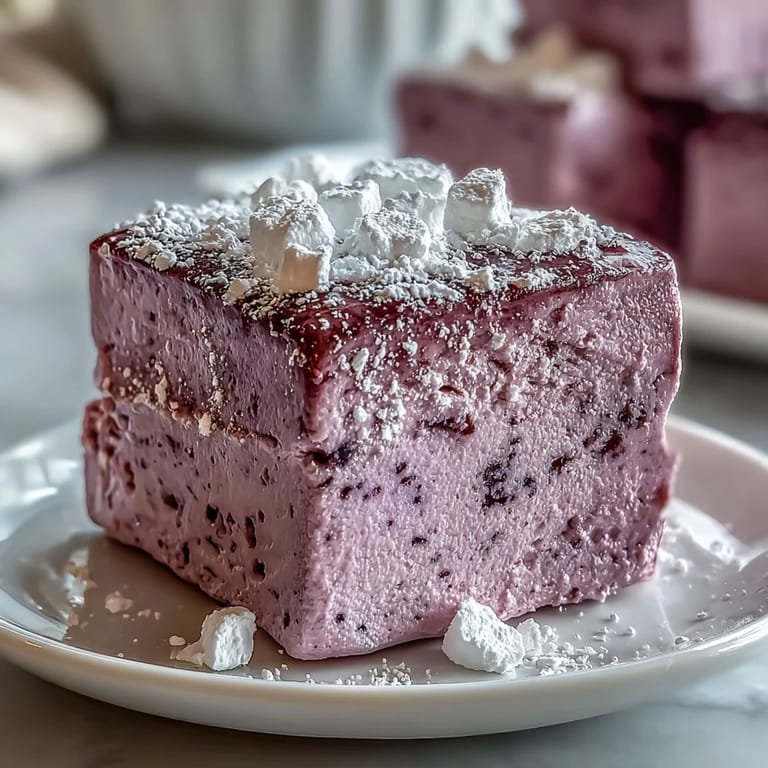
Save There's something about homemade marshmallows that feels like edible magic—that moment when you whip gelatin and hot sugar syrup together and watch it transform into a cloud. I discovered blackcurrant marshmallows almost by accident, really, while experimenting with a jar of blackcurrant purée that sat in my fridge looking lonely. The tartness of the fruit paired against all that fluffy sweetness created something unexpectedly elegant, and suddenly I was making batch after batch, dusting them like edible snowflakes.
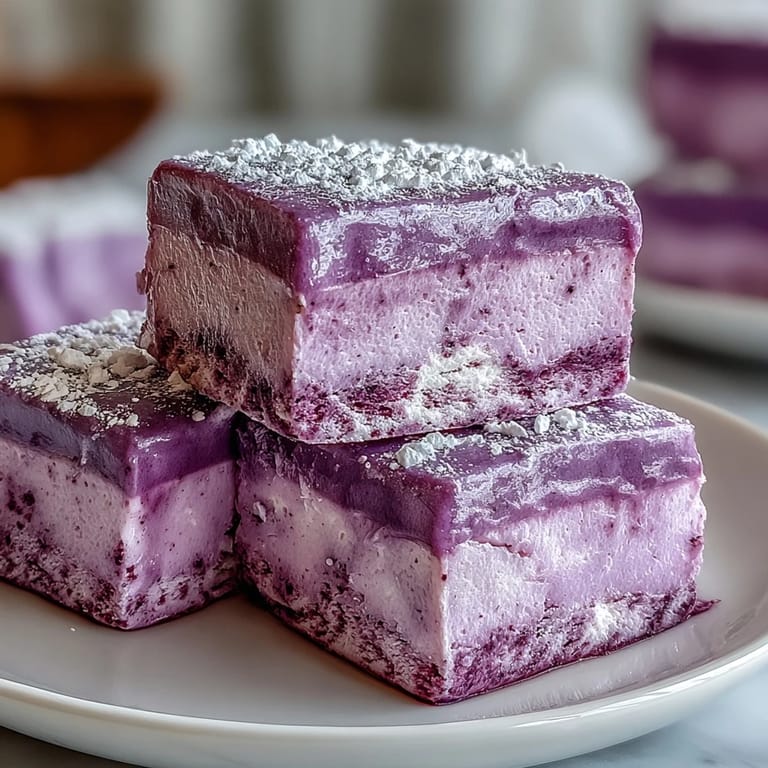
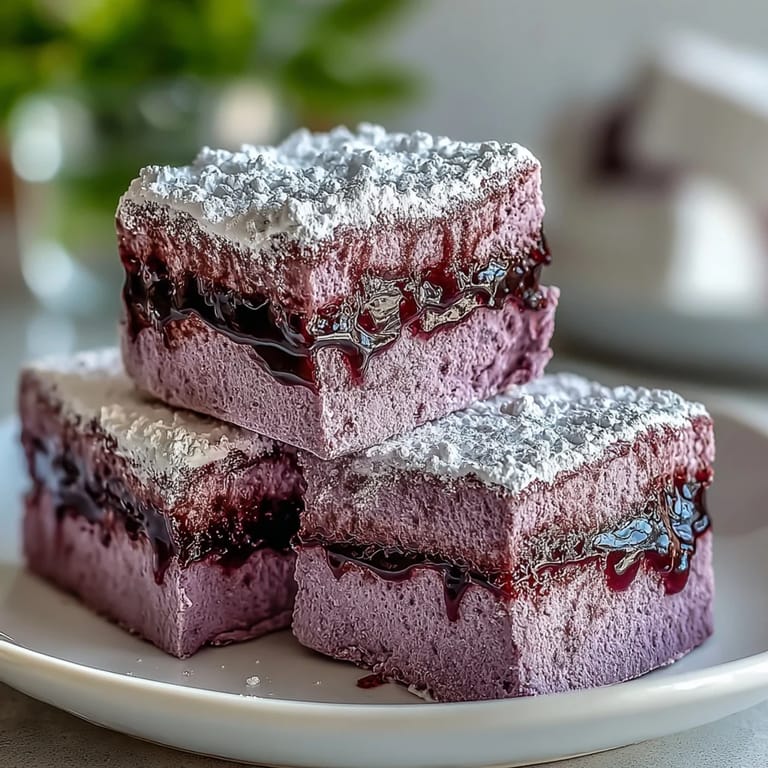
I made these for a friend's dinner party once, nervous they wouldn't hold up during travel, but they arrived perfect and became the talking point of dessert. Someone dunked one in their coffee and proclaimed it was better than anything from a fancy chocolatier, which probably sounds exaggerated until you actually taste that lavender-pink cloud melting on your tongue.
Ingredients
- Blackcurrant purée (2/3 cup): Fresh or frozen works equally well; straining removes the seeds and gives you a smooth base that integrates beautifully into the marshmallow without any grittiness.
- Water and sugar for the purée (2 tbsp each): This brief simmer concentrates the flavor and mellows any sharp edges without cooking off the fruit's personality.
- Powdered unflavored gelatin (3 packets, 21 g): This is your structural foundation; blooming it properly prevents lumps and ensures silky, even texture throughout.
- Cold water for blooming (1/2 cup): Temperature matters here—cold water helps gelatin bloom evenly, which is why the next hot syrup transforms it so dramatically.
- Granulated sugar and corn syrup (1 1/2 cups and 1/2 cup): Corn syrup adds moisture and chewiness; pure sugar alone would result in a drier, more brittle marshmallow.
- Water for syrup (1/4 cup): This dissolves your sugar and syrup into a liquid that reaches the precise temperature needed for proper marshmallow structure.
- Salt (1/4 tsp): Don't skip this tiny amount—it amplifies the blackcurrant tartness and prevents the sweetness from becoming cloying.
- Vanilla extract (1 tsp): A gentle presence that rounds out the flavor without competing with the fruit.
- Confectioners sugar and cornstarch for dusting: This 2:1 mixture prevents sticking and creates that signature marshmallow finish that feels nostalgic and elegant at once.
Tired of Takeout? 🥡
Get 10 meals you can make faster than delivery arrives. Seriously.
One email. No spam. Unsubscribe anytime.
Instructions
- Prep your pan like you mean it:
- Line an 8x8 inch baking pan with parchment paper, leaving slight overhang so you can lift the whole slab out later. Dust generously with your confectioners sugar and cornstarch blend—this prevents the marshmallow from sticking and becomes part of the final texture.
- Reduce and cool the blackcurrant:
- Combine the purée with water and sugar in a small saucepan and let it bubble gently for 4–5 minutes, stirring occasionally until slightly thickened. The mixture should smell concentrated and fruity, and cooling it completely prevents the hot syrup from cooking off those precious blackcurrant aromatics.
- Bloom the gelatin properly:
- Sprinkle gelatin over cold water in your stand mixer bowl and wait 10 minutes without stirring—this lets each granule absorb water evenly. You'll notice the mixture looks like wet sand; resist the urge to rush this step because uneven blooming creates grainy texture.
- Cook the syrup to exactly 240°F:
- Combine sugar, corn syrup, and water in a medium saucepan over medium-high heat, stirring until the sugar dissolves completely. Once you stop stirring and insert your candy thermometer, watch it climb steadily to 240°F (soft-ball stage)—this specific temperature creates that pillowy, not-too-firm texture that makes marshmallows melt on your tongue.
- The magical transformation:
- With your mixer running on low, pour the hot syrup slowly into the bloomed gelatin, letting it incorporate gradually. Increase speed to high and whip for 6–8 minutes; you'll see the mixture transform from thin and golden to thick, glossy, and tripled in volume—it's genuinely hypnotic to watch.
- Fold in the blackcurrant soul:
- After the mixture has tripled, add salt, vanilla, and your cooled blackcurrant purée, whipping for just 1–2 minutes until you see that soft lavender-pink color throughout. Over-mixing at this stage won't ruin it, but stopping once you see uniform color means you're not deflating those precious air bubbles.
- Pour and smooth immediately:
- Transfer the marshmallow to your prepared pan right away and use a spatula to spread it evenly. If you wait too long it starts setting in the bowl, making it harder to achieve a smooth top.
- The hardest part—patience:
- Sift confectioners sugar and cornstarch generously over the top and let it sit uncovered at room temperature for at least 4 hours, preferably overnight. This drying time is non-negotiable; it allows the marshmallow to firm up enough to cut cleanly without collapsing.
- Release and cut with confidence:
- Turn the whole slab onto a cutting board and carefully peel away the parchment paper. Dust all exposed sides with your sugar-cornstarch mixture, then use a sharp knife (dusted in the same mixture) to cut into squares; wiping your knife between cuts keeps edges clean and prevents dragging.
- Store like treasure:
- Transfer finished marshmallows to an airtight container where they'll keep for up to a week, though they rarely last that long.
 Save
Save What surprised me most was how this simple technique opened doors to understanding candy-making itself—how temperature and timing matter more than ingredients. Once you understand why each step exists, making marshmallows stops feeling intimidating and becomes something you genuinely look forward to doing.
Why Blackcurrant Specifically
Blackcurrant's tartness is its superpower here; it cuts through the sweetness in a way that feels sophisticated rather than cloying. Most store-bought marshmallows rely on pure sugar flavor, which can feel one-dimensional after a few bites, but that tart-sweet balance keeps your palate interested and makes you reach for another piece without guilt.
Flavor Variations That Actually Work
Once you master the base technique, you can swap the fruit purée for blackberry, raspberry, or even cherry without changing anything else. I've experimented with all three, and they each bring their own personality—raspberries feel brighter and more summery, while cherry adds an almost elegant, subdued flavor that pairs beautifully with dark chocolate.
Serving and Pairing Ideas
These marshmallows shine in unexpected moments, whether you're dunking them in morning coffee, melting them over dark chocolate, or even crowning a mug of hot cocoa. The tartness makes them surprisingly versatile—I've served them at dessert courses, tea parties, and casual late-night kitchen moments, and they feel equally at home everywhere.
- Dark chocolate pairs so naturally that it feels like the flavors were made for each other.
- Hot cocoa becomes something memorable when you use one of these instead of regular marshmallows.
- Coffee appreciates the tartness; the fruit cuts through the bitterness in the best possible way.
 Save
Save Making these marshmallows taught me that some things in the kitchen are worth the time investment because they taste genuinely different from anything you can buy. There's real joy in that first bite of something you made yourself, especially when it tastes this good.
Recipe FAQs
- → How long do black currant marshmallows need to set?
Allow the marshmallows to set uncovered at room temperature for at least 4 hours, though overnight setting produces the firmest texture. The mixture needs this time to fully stabilize and develop the characteristic chewy consistency.
- → Can I use frozen blackcurrants instead of fresh?
Absolutely. Frozen blackcurrants work excellently when blended and strained into a purée. Thaw them completely before processing, and you may need to simmer slightly longer to achieve the same thickened consistency as fresh fruit.
- → Why do I need a candy thermometer for this preparation?
The sugar syrup must reach exactly 240°F (115°C) to achieve the proper marshmallow structure. This temperature ensures enough water evaporates for the marshmallows to set correctly while maintaining a fluffy, not sticky, texture.
- → Can I substitute other fruits for blackcurrants?
Yes, blackberry, raspberry, or cherry purée work beautifully as alternatives. Each fruit will impart its unique flavor profile and natural color. Adjust the sugar in the fruit reduction based on the tartness of your chosen fruit.
- → What gives these marshmallows their lavender color?
The natural deep purple hue of blackcurrant purée creates a soft lavender shade when whipped into the white marshmallow base. No artificial coloring is needed—the vibrant fruit provides all the beautiful coloration naturally.
- → How should I store these marshmallows?
Keep in an airtight container at room temperature for up to 1 week. The dusting of confectioners sugar and cornstarch helps prevent them from sticking together. Avoid refrigerating as this can make them overly dense and affect their fluffy texture.