 Save
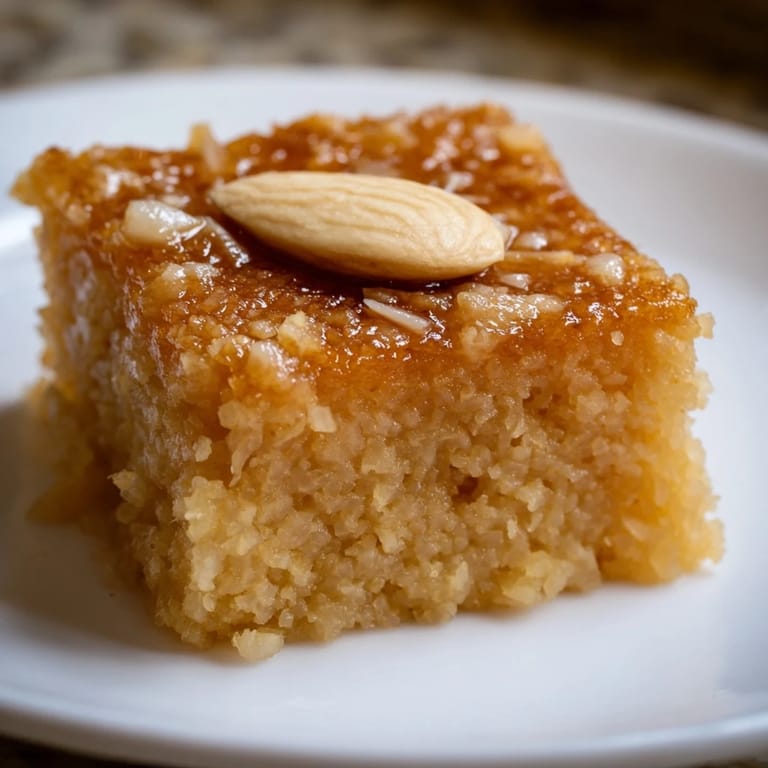
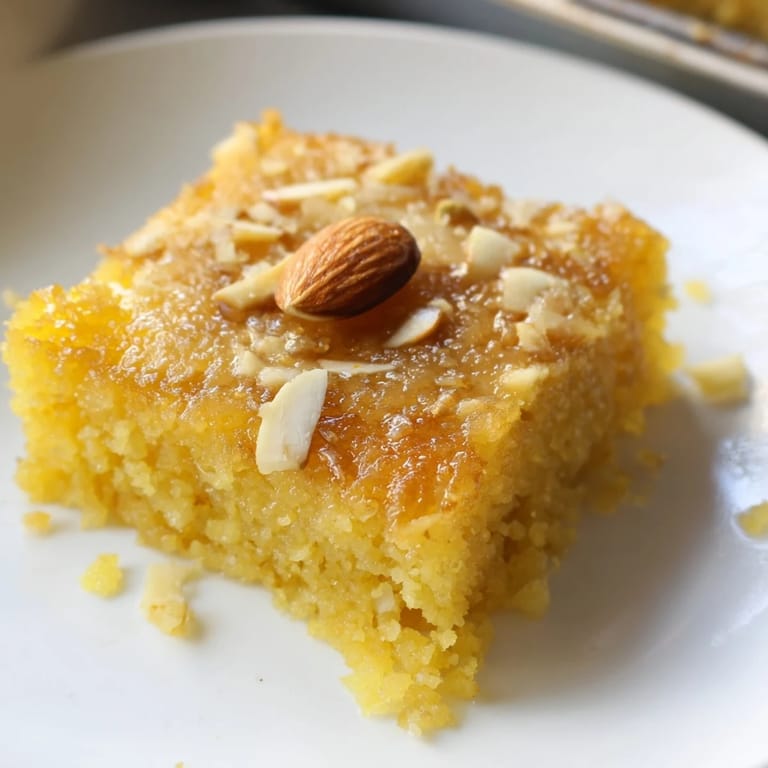
Save My neighbor brought over a tin of basbousa one afternoon, still warm from her kitchen, and I bit into that golden square expecting something ordinary. Instead, the semolina crumbled softly on my tongue, the coconut whispered sweetness, and that syrup pooled into every crevice like liquid honey. She laughed at my expression and said every Egyptian grandmother has a slightly different way of making it, but the magic is always the same. That's when I understood this wasn't just a dessert—it was an invitation into someone's kitchen tradition, and I needed to learn it properly.
The first time I made it myself was a quiet Sunday morning when my partner was still asleep. The kitchen smelled like toasted coconut and butter, and I kept tasting the batter, adjusting the vanilla, second-guessing everything. When those squares came out of the oven with their almond-crowned tops turning amber at the edges, I felt something shift—not just pride, but a small ownership of something beautiful that had traveled through generations to reach my kitchen counter.
Ingredients
- Fine semolina: This is the backbone—make sure it's the finely ground kind, not coarse polenta, or your texture will be gritty instead of tender and moist.
- Desiccated coconut: Unsweetened is key because the syrup brings all the sweetness you need, and it lets the coconut flavor shine without overwhelming everything else.
- Plain yogurt: This keeps the cake impossibly moist and adds a subtle tang that balances the sweetness and prevents it from feeling one-dimensional.
- Melted butter or ghee: Ghee gives an extra richness if you can find it, but good melted butter works beautifully and browns the cake just right.
- Baking powder: Just enough to give the cake a slight lift so it's tender, not dense or heavy.
- Whole blanched almonds: These aren't just decoration—they add a whisper of bitterness and anchor each piece so it holds together when you cut.
- Rose water or orange blossom water: Optional but worth seeking out, as a teaspoon transforms the syrup from sweet to subtly floral and memorable.
Tired of Takeout? 🥡
Get 10 meals you can make faster than delivery arrives. Seriously.
One email. No spam. Unsubscribe anytime.
Instructions
- Mix the dry foundation:
- Combine semolina, sugar, coconut, baking powder, and salt in a large bowl and stir until everything is evenly distributed. The mixture should look like fine sand with flecks of white coconut throughout.
- Bring it together:
- Add yogurt, melted butter, and vanilla, then stir until you have a thick, cohesive batter that holds together when you squeeze it but still feels soft. If it seems too crumbly, add another tablespoon of yogurt.
- Spread and score:
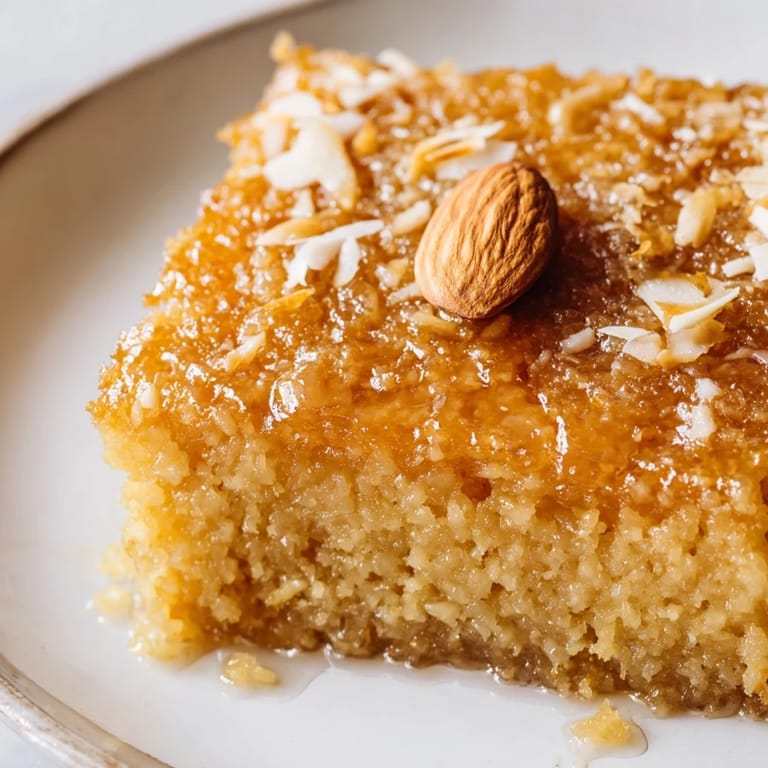
- Press the batter firmly and evenly into your greased pan, then use a sharp knife to score the surface into 12 even squares or diamonds, cutting all the way to the bottom so they separate cleanly when baked. Press one almond into the center of each piece for that signature look.
- Bake until golden:
- Place in a 350°F oven for 30–35 minutes until the top turns a warm golden brown and a toothpick inserted in the center comes out clean, with maybe just a few moist crumbs clinging to it. The edges will be a shade darker and slightly crispy, which is exactly what you want.
- Prepare the syrup while it bakes:
- In a saucepan, stir together sugar, water, and lemon juice over medium heat until the sugar dissolves, then let it simmer gently for 8–10 minutes until it thickens just slightly and coats the back of a spoon. Remove from heat, stir in rose or orange blossom water if using, and let it cool to room temperature while your basbousa bakes.
- The crucial moment:
- The second the basbousa emerges from the oven, pour the cooled syrup evenly over the hot cake—the contrast in temperatures is what makes the syrup absorb deeply rather than sitting on top. Let it cool completely before re-cutting along your scored lines so the pieces stay intact.
 Save
Save I served this at a small gathering last winter, and watching three different generations of people reach for second pieces without asking permission—that's when I realized the simple sweetness of basbousa transcends any single kitchen or culture. It becomes a quiet conversation starter, a reason to linger at the table with tea, a moment where homemade actually means something.
Why Texture Matters So Much
The magic of basbousa lives in the contrast between its moist, tender crumb and the way the almonds add a slight resistance when you bite through them. Too much yogurt and it becomes cake-like and loses that distinctive semolina graininess; too little and it's dry and crumbly no matter how much syrup you pour. The semolina particles actually hold the syrup within them instead of letting it run off, which is why this dessert tastes even better the next day.
Customizing Your Basbousa
Once you understand the base, you can play with it gently. Some cooks add a tablespoon of rose water directly into the batter, while others dust the top with extra coconut before baking for a more intensely nutty flavor. I've seen versions with pistachios replacing almonds, and one memorable batch where someone added a touch of cardamom to the syrup and it became something entirely new but still recognizably basbousa.
Storage and Serving Wisdom
Basbousa keeps beautifully for up to four days covered loosely on the counter, and it actually improves as the syrup continues to distribute through the cake. Serve it at room temperature with strong tea or coffee, as the slight sweetness of the cake balances perfectly against the bitterness of a good brew. A few final thoughts to set you up for success.
- Keep your knife damp while cutting to prevent the coconut from sticking and tearing at the surface.
- If your oven runs hot, start checking around 28 minutes to avoid over-browning the edges.
- Make the syrup while the cake bakes so everything times perfectly and you're not scrambling at the end.
 Save
Save Every time you make basbousa, you're not just following a recipe—you're joining a long conversation between kitchens and generations. That's the real sweetness.
Recipe FAQs
- → What gives Basbousa its moist texture?
The combination of yogurt in the batter and the syrup poured over the cake after baking keeps it wonderfully moist and tender.
- → Can almonds be substituted?
Yes, whole blanched almonds can be replaced with pistachios or other preferred nuts for garnish and added flavor.
- → How is the fragrant syrup prepared?
The syrup is made by boiling sugar, water, and lemon juice, then simmering until slightly thickened. Adding rose or orange blossom water enhances its aroma.
- → What baking pan size is recommended?
A 9x9 inch (23x23 cm) pan is ideal for even baking and proper thickness of the semolina cake.
- → Are there ways to intensify the coconut flavor?
Sprinkling extra desiccated coconut on top before baking adds more coconut aroma and texture to the finished cake.