 Save
Save My coworker brought one of these bowls to lunch on a Tuesday, and I've been chasing that combination ever since. The way the warm beef settled into the cool rice, how the pickled carrots added this bright tang that made everything taste sharper, more alive somehow. I went home and started experimenting with ratios, realizing the real magic wasn't in any single component but in how they all spoke to each other. This bowl became my answer to wanting something restaurant-quality but entirely doable on a weeknight.
I made this for my neighbor who'd just moved in, and she came over skeptical about dinner. Twenty minutes later, she was asking if she could take notes on how I assembled it, claiming it tasted like the Korean place downtown but better because she knew exactly what was in every element. That's when I realized this bowl wasn't complicated, it was just honest.
Ingredients
- Flank steak or sirloin, thinly sliced (500 g): Slicing against the grain matters more than you'd think; it makes each bite tender instead of chewy, and I learned this the hard way after my first attempt turned into shoe leather.
- Soy sauce (2 tbsp): Use the real stuff, not the light version, because it's the backbone of why this tastes like actual Korean food and not a knockoff.
- Sesame oil (1 tbsp): Don't skip this or substitute it; those toasted sesame notes are what make people ask for the recipe.
- Fresh ginger, grated (1 tbsp): Grate it fresh instead of using the bottled version, trust me on this one, the difference is worth the thirty seconds it takes.
- Garlic, minced (2 cloves): Fresh garlic is non-negotiable here; it's what gives the marinade its punch and depth.
- Brown sugar (1 tbsp): This balances the salty soy and vinegary notes, creating a marinade that tastes complex instead of one-dimensional.
- Rice vinegar (1 tbsp): The mild acidity cuts through the richness of the beef without overwhelming it.
- Gochujang, optional (1 tsp): Add this if you want authentic Korean heat; leave it out if you're serving people nervous about spice.
- Black pepper (1/4 tsp): A small amount adds warmth without making the heat obvious.
- Jasmine or short-grain white rice, cooked (2 cups): Jasmine rice stays tender and absorbs the flavors better than long-grain varieties.
- Carrots, julienned (1 cup): The pickling process transforms them from ordinary to absolutely essential; you'll find yourself eating them straight from the bowl.
- Rice vinegar for pickling (1/3 cup): This mild vinegar won't overpower the carrots the way regular vinegar would.
- Sugar for pickling (1 tbsp): It balances the vinegar and brings out the natural sweetness of the carrots.
- Salt for pickling (1/2 tsp): Salt draws moisture out of the carrots, making them crisp rather than soggy.
- Cucumber, thinly sliced (1 cup): Fresh and cool, it's the element that keeps the bowl from feeling heavy.
- Fresh jalapeño, thinly sliced (1): One fresh jalapeño gives you just enough heat without making it a spicy dish; if you want more, add another.
- Toasted sesame seeds (2 tbsp): Toast them yourself if you can; the difference between toasted and raw is enormous in flavor and texture.
- Green onions, thinly sliced (2): These add a fresh onion bite that ties everything together at the end.
- Mayonnaise (1/3 cup): Use good mayo here because it's visible in the final bowl and makes a difference.
- Sriracha (1–2 tbsp): Start with one tablespoon and taste; you can always add more but you can't take it back.
- Lime juice (1 tsp): This brightens the sriracha mayo and keeps it from tasting one-note.
Tired of Takeout? 🥡
Get 10 meals you can make faster than delivery arrives. Seriously.
One email. No spam. Unsubscribe anytime.
Instructions
- Start the pickled carrots first:
- In a small bowl, whisk together the rice vinegar, sugar, and salt until the sugar dissolves completely. Add your julienned carrots and let them sit for at least twenty minutes, tossing them around halfway through; you want them to soften slightly while staying crisp, which is the whole point of pickling done right.
- Build your marinade:
- In a large mixing bowl, combine the soy sauce, sesame oil, grated ginger, minced garlic, brown sugar, rice vinegar, gochujang if you're using it, and black pepper. Whisk it together until the sugar dissolves and the mixture smells absolutely incredible; you'll know it's right when you smell equal parts salty, sweet, and gingery.
- Get the beef in the marinade:
- Add your thinly sliced beef to the marinade and toss it around with your hands or two forks until every piece is coated. Let it sit for fifteen to twenty minutes while you finish everything else; longer isn't better here because the acid in the vinegar can make it mushy if you're not careful.
- Have your rice ready:
- If you haven't already cooked it, do that now according to package directions. If it's been sitting for a while and feels cold or stiff, give it a gentle stir and maybe add a splash of water to bring back the fluffiness.
- Make the sriracha mayo:
- In a small bowl, combine the mayonnaise, one tablespoon of sriracha, and the lime juice. Stir it until it's smooth and uniform, then taste it and add more sriracha if you want more heat; the lime juice keeps it from tasting flat and one-dimensional.
- Sear the beef until it's perfect:
- Heat your large skillet or wok over high heat until it's hot enough that a drop of water sizzles immediately on contact. Working carefully, add the marinated beef in a single layer and let it cook undisturbed for two to three minutes per side until it's browned and just cooked through; resist the urge to stir it around too much because that's how you get steam instead of that gorgeous crust.
- Assemble your bowls like you mean it:
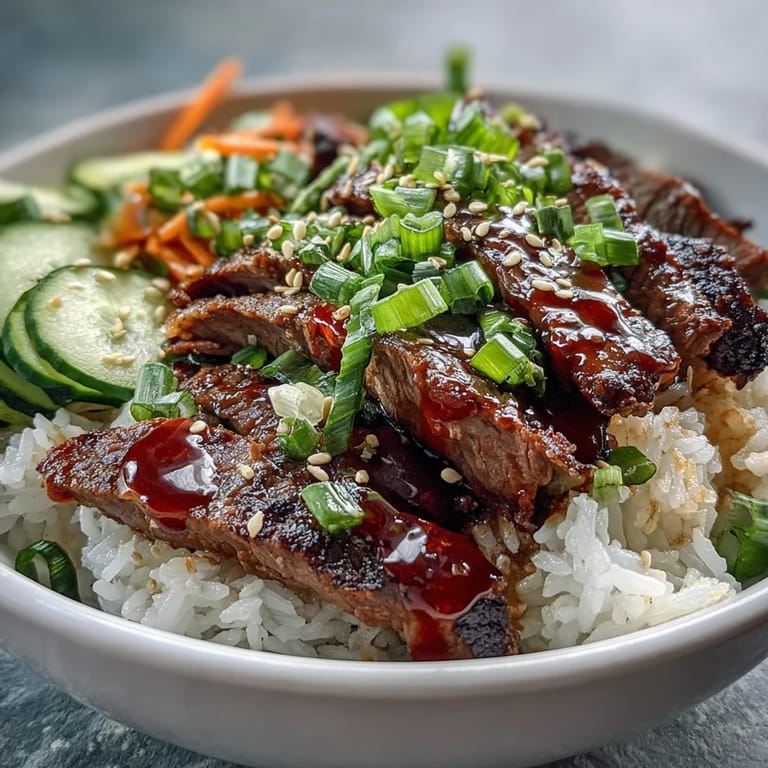
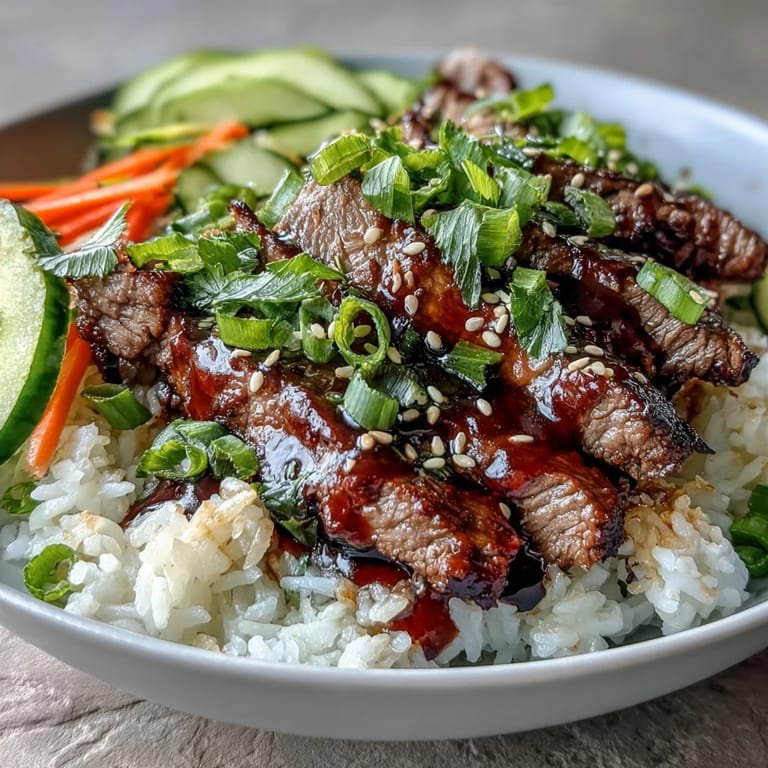
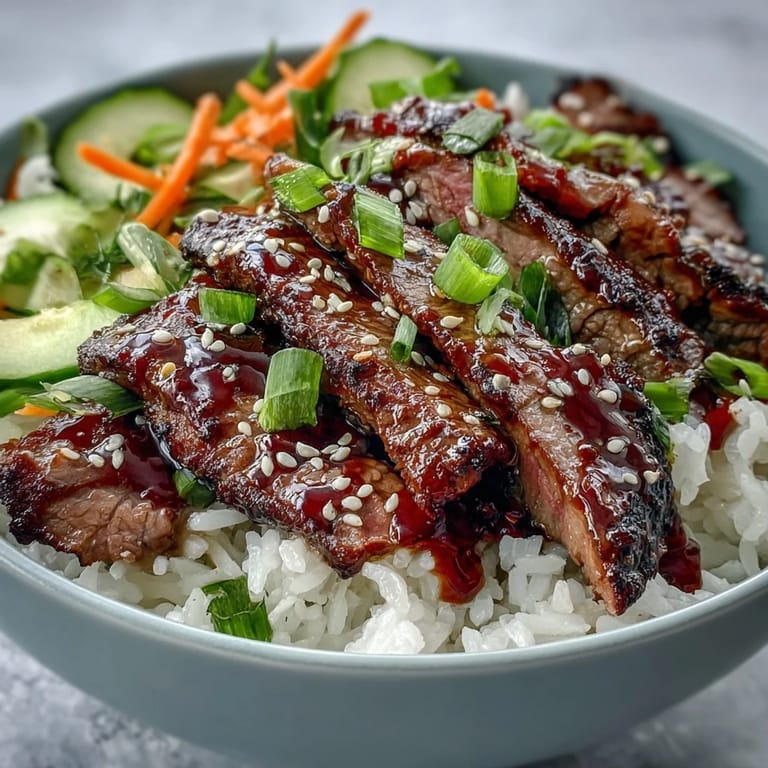
- Divide the warm rice evenly into four bowls, then layer the beef on top, followed by the drained pickled carrots, fresh cucumber slices, jalapeño slices, and green onions. Finish with a generous sprinkle of toasted sesame seeds and a generous drizzle of the sriracha mayo right down the middle; serve immediately while everything is still at the right temperature.
 Save
Save My daughter actually asked for this bowl in her packed lunch three times a week, which meant I had to get really good at assembly and really efficient at prep. But that's when I realized this wasn't just a bowl I made because it was delicious; it had become something she requested, something that made her happy, which is basically the highest compliment a home cook can get.
Why the Marinade Works
The magic of this marinade is that it hits every note your mouth wants: salty from the soy, rich from the sesame oil, sweet from the brown sugar, tangy from the vinegar, warm from the ginger and garlic. I spent one entire Saturday trying different ratios because I was convinced I was missing something, only to realize the recipe was already perfect and I just needed to trust it. The combination is balanced in a way that makes the beef taste like beef but elevated, like someone who knows Korean food cooked it.
Customizing Without Losing the Plot
The beauty of this bowl is that you can adapt it without ruining it; I've made versions with brown rice for people watching their carbs, added avocado for richness, swapped in vegan mayo for dairy-free friends. The core of it stays strong because the beef and its marinade are the foundation everything else builds on. If you want to add edamame for extra protein or use cauliflower rice to lighten it up, that works beautifully because you're adding something complementary, not replacing what makes this bowl work.
The Texture Game
What makes this bowl feel more like a restaurant experience than just lunch is the interplay of textures: warm tender beef, fluffy rice, cool crisp cucumber, tender pickled carrots, sharp jalapeño, creamy mayo, and those toasted sesame seeds that add crunch. Each element has a job, and when they're all working together, you get this complex eating experience that keeps you interested all the way to the bottom of the bowl. I've learned that texture is often what separates a good recipe from one people actually want to eat.
- Toast your own sesame seeds in a dry skillet for three minutes to unlock flavors that pre-toasted seeds can't match.
- Keep all your toppings cold or room temperature so they contrast beautifully with the warm beef and rice.
- Assemble the bowl right before eating so nothing gets soggy or wilts; timing matters as much as technique.
 Save
Save This bowl has become my go-to for impressing people without actually impressing myself because the technique is simple and the timing works out perfectly. It's one of those recipes that reminds me why cooking matters: because a really good meal changes your whole afternoon.
Recipe FAQs
- → What cut of beef works best?
Flank steak or sirloin cut into thin slices against the grain works best. The thin slices absorb the marinade quickly and cook evenly in just a few minutes.
- → Can I make this ahead?
Pickle the carrots up to 3 days ahead. The beef can marinate for up to 24 hours. Cook rice fresh or reheat, and sear beef just before serving for best texture.
- → How do I adjust the spice level?
Reduce or omit gochujang and jalapeños for milder flavor. Add more sriracha to the mayo or serve with extra hot sauce on the side for heat lovers.
- → What rice alternatives work well?
Brown rice adds nutty flavor and extra fiber. Cauliflower rice creates a low-carb option. Quinoa works too and boosts protein content further.
- → Can I use other proteins?
Chicken thighs marinate beautifully with the same flavors. Shrimp cooks even faster, needing just 1-2 minutes per side. For vegetarians, try crispy tofu or tempeh.
- → What other toppings can I add?
Sliced avocado adds creaminess. Edamame brings extra protein and color. Shredded purple cabbage or kimchi offers more crunch and tangy flavor.