 Save
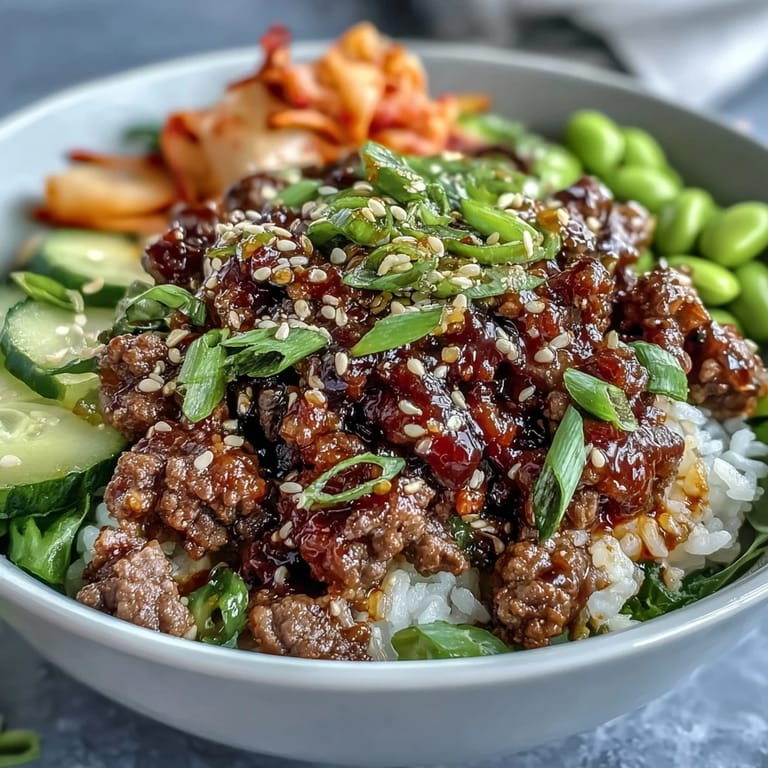
Save My coworker brought a Korean beef bowl to lunch one afternoon, and the whole office smelled like toasted sesame and gochujang within minutes. I watched her eat it so contentedly that I asked for the recipe right there, and she laughed, saying it was her weeknight salvation when she wanted something that tasted like a restaurant but took barely thirty minutes. That bowl changed my after-work cooking routine completely.
I made this for my sister after she'd had a rough day at work, piling everything into a bowl while she sat at the counter telling me about office drama. By the time she took that first bite, she'd already laughed three times and started visibly relaxing, which taught me that good food sometimes heals better than advice.
Ingredients
- Lean ground beef: The leanness matters because you want the gochujang sauce to cling to the meat rather than drowning it in fat, and it cooks faster too.
- Gochujang: This Korean chili paste brings umami and heat in one ingredient; don't skip it or substitute hot sauce, as the fermented depth is irreplaceable.
- Soy sauce: It balances the spice with saltiness and rounds out all the flavors, making everything taste intentional instead of one-note.
- Brown sugar: Just enough to soften the heat and add a subtle caramel note that catches you on the second bite.
- Garlic and ginger: Mince them finely so they dissolve into the sauce and perfume the whole skillet within seconds of hitting the heat.
- Toasted sesame oil: Use this, not regular sesame oil, because the toasting is where all the nutty flavor lives.
- Green onions: Half goes into the sauce, half raw on top, so you get both mellowed and sharp onion flavor in the same bowl.
- Short-grain rice: It's stickier than long-grain, so it holds the sauce better and feels more authentic to how Korean bowls come together.
- Edamame: They add protein, pop when you bite them, and their slight sweetness balances the spicy beef perfectly.
- Cucumber: Keep it thinly sliced and cold for a cooling element that your palate needs between bites of rich, spicy meat.
- Carrot: Julienned so it cooks slightly from the warm rice and beef while keeping a tiny bit of crunch.
- Kimchi: The tanginess and funk anchor the whole bowl; don't hold back on the amount.
- Toasted sesame seeds: Toast them yourself if you can, as the aroma that fills your kitchen is half the joy of this dish.
Tired of Takeout? 🥡
Get 10 meals you can make faster than delivery arrives. Seriously.
One email. No spam. Unsubscribe anytime.
Instructions
- Bloom the aromatics:
- Heat sesame oil in a large skillet over medium heat, then add minced garlic and ginger, waiting about a minute for the fragrance to rise up and hit your face. You'll know it's ready when your kitchen smells like you're cooking something special.
- Brown the beef:
- Crumble the ground beef into the skillet and break it apart with a spatula, letting it cook undisturbed for a minute or two so it actually browns instead of just turning gray. After five to six minutes total, it should be broken into small pieces and mostly cooked through.
- Build the sauce:
- Stir in the gochujang, soy sauce, and brown sugar all at once, watching as the beef gets coated in a deep red-brown glaze. Keep cooking for another two to three minutes, letting the sauce thicken slightly and the raw flavors meld into something cohesive.
- Finish with green onions:
- Remove the skillet from heat and stir in half the green onions, which will wilt slightly from the residual heat and lose their sharp edge.
- Assemble the bowls:
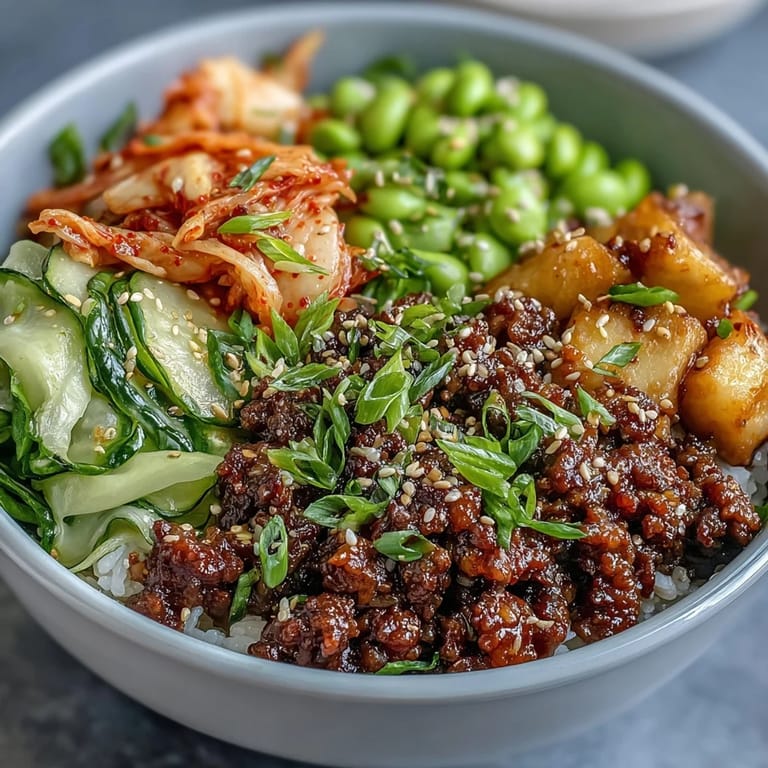
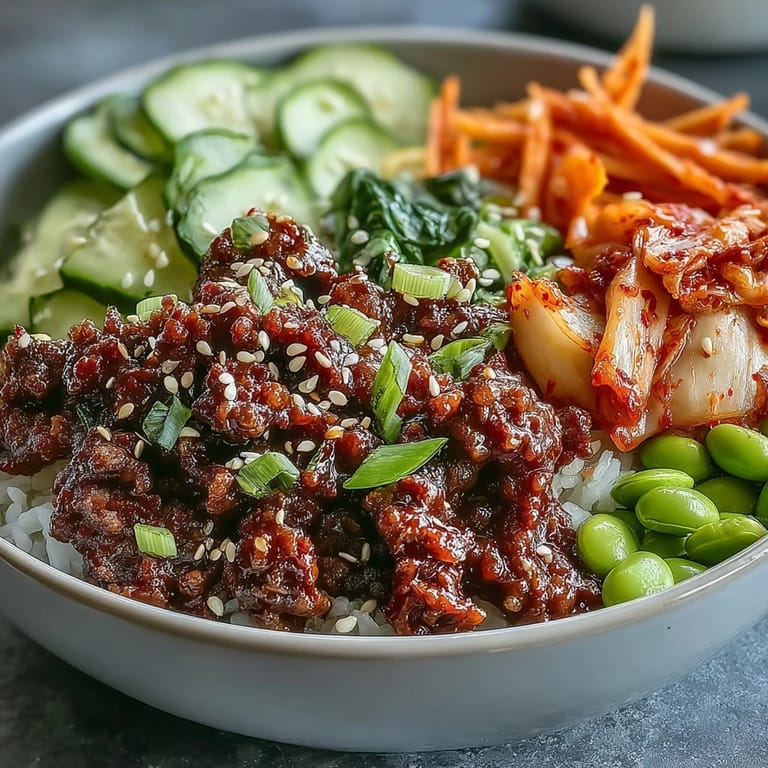
- Divide the rice evenly among four bowls, then arrange the beef, edamame, cucumber, carrot, and kimchi on top of each one in whatever pattern makes you happy. The warm rice will start softening the carrot and warming everything gently.
- Garnish and serve:
- Sprinkle the remaining green onions and toasted sesame seeds over the top, then eat immediately while the rice is still warm and the cucumber and edamame are still cool.
 Save
Save My ten-year-old nephew asked for seconds unprompted, which almost never happens, and spent the whole time picking out pieces of kimchi to put aside until the very end because he wanted each bite to be a surprise. Watching someone enjoy food so unselfconsciously reminded me why I love cooking in the first place.
The Art of Balancing Heat
Gochujang brings both spice and fermented depth, but it's not the kind of heat that builds and overwhelms you like hot sauce does. The brown sugar mellows it without masking it, and the cool vegetables cool your mouth between bites, so you can enjoy the complexity rather than just endure the fire. Start with the amount the recipe calls for, taste a small bite of sauce on a spoon, and adjust from there if you know your heat tolerance.
Making It Your Own
The beauty of a bowl is that it's endlessly customizable without losing its essential character. I've made it with ground turkey when I was being lighter, added a fried egg on top when I felt fancy, and once tossed in some leftover roasted broccoli because it was there. The beef and sauce are non-negotiable, but everything else is a suggestion, an invitation to use whatever vegetables you have hiding in your crisper drawer.
Timing and Prep Strategy
The thirty-minute total time assumes your rice is already cooked, so the real secret is prepping your vegetables before you turn on the heat. Slice your cucumber, julienne your carrots, and chop your kimchi while the beef is cooking, and the whole process feels effortless rather than rushed. I learned this the hard way the first time I made it, scrambling at the end, and now I treat the vegetable prep as meditation time before the actual cooking begins.
- Have your rice hot and ready before you start the beef so the bowls come together fast.
- Mince garlic and ginger right before cooking so their oils are still volatile and fragrant.
- Prep all vegetables and have them within arm's reach of your stovetop for true ease.
 Save
Save This bowl has become my answer to the question of what to cook when I want something that tastes like care but doesn't require fancy skills or unusual ingredients. Make it once and it'll probably become yours too.
Recipe FAQs
- → What does gochujang taste like?
Gochujang is a Korean chili paste with a complex flavor profile that combines sweet, savory, and spicy notes. It has a deep umami taste from fermented soybeans, a pleasant sweetness from the rice and sometimes added sweeteners, and a moderate heat level that builds gradually. The paste adds rich depth and a beautiful red color to the ground beef.
- → Can I make this bowl vegetarian or vegan?
Yes, you can easily substitute the ground beef with plant-based crumbles, extra-firm tofu crumbles, or diced mushrooms. For a vegan version, use tamari instead of soy sauce to avoid any hidden animal ingredients, and verify that your gochujang and kimchi are vegan-friendly as some traditional varieties contain fish sauce or shrimp paste.
- → What can I serve with this bowl?
This bowl is quite complete on its own, but you can add a fried or soft-boiled egg on top for extra richness. Other nice additions include pickled vegetables, fresh spinach or lettuce leaves, steamed broccoli, or a simple cucumber salad with rice vinegar. A side of miso soup or Korean seaweed soup also complements the meal beautifully.
- → How spicy is this dish?
The spice level depends on your gochujang choice and how much you use. Most commercial gochujang pastes offer a medium heat that's approachable for most palates, with a gentle warming sensation rather than intense burn. You can easily adjust the spice level by using less paste or opting for a mild variety, or increase the heat by adding Korean chili flakes (gochugaru) or fresh chili peppers.
- → Can I prepare the components in advance?
The ground beef mixture reheats beautifully and can be made up to 3 days ahead and stored in the refrigerator. The vegetables are best sliced fresh for optimal crunch, but you can prep them a day in advance and keep them in separate containers. Cooked rice can be refrigerated for 2-3 days and reheated before assembling the bowls, or you can freeze portions for longer storage.
- → Is there a gluten-free option?
Traditional soy sauce contains gluten, but you can substitute with tamari or a certified gluten-free soy sauce alternative. The other ingredients are naturally gluten-free, though it's always wise to check your gochujang and kimchi labels as some brands may include gluten-containing additives or be produced in facilities that process wheat.