 Save
Save My grandmother kept a ceramic honey pot on her kitchen shelf, right next to the window where the afternoon light would turn it golden. Every time family gathered, she'd disappear into the kitchen and emerge with knafeh—that perfect marriage of crispy, buttery phyllo and warm, stretchy cheese that somehow tasted like celebration itself. I watched her hands work the pastry with such ease that I thought it was magic. Years later, I finally understood: it wasn't magic, just confidence earned through countless afternoons perfecting this dish.
I made this for my friend Sarah on a random Tuesday when she was having a rough week. Watching her face light up when she bit through that crackling top layer and hit the warm cheese—that moment reminded me why certain foods matter more than their ingredients suggest. We sat at the kitchen counter, syrup dripping onto our fingers, talking until the knafeh was completely gone.
Ingredients
- Akawi cheese (400 g): This is the soul of knafeh—creamy, slightly salty, and it gets wonderfully stretchy when warm. If you can't find it, unsalted mozzarella works, though the flavor won't be quite as rich. Soak it properly to remove excess salt, or your whole dish will taste off.
- Ricotta cheese (200 g): This adds a delicate sweetness and lightness that balances the Akawi's savory notes—don't skip it or substitute with cream cheese.
- Kataifi pastry (250 g): These shredded phyllo strands are what create that signature crispy texture. Keep them thawed but separate them gently so you get even, delicate layers.
- Unsalted butter (100 g, melted): This coats every strand of pastry and creates the golden crispness—use good quality butter, as it truly makes a difference.
- Granulated sugar (250 g): The foundation of your syrup, which needs to be balanced and not cloyingly sweet.
- Water (180 ml): Dilutes the sugar into a light, penetrating syrup that soaks through without making the pastry soggy.
- Lemon juice (1 tbsp): A secret weapon that brightens the syrup and prevents it from tasting one-dimensional.
- Orange blossom water (1 tbsp): This is where the magic happens—floral, delicate, unmistakably Middle Eastern. Don't go overboard or it becomes perfume-like.
- Rose water (1 tbsp): Paired with orange blossom, it creates a haunting sweetness that makes people ask what's in this.
- Pistachios (2 tbsp, finely chopped): The garnish that adds color, subtle crunch, and a nod to tradition.
Tired of Takeout? 🥡
Get 10 meals you can make faster than delivery arrives. Seriously.
One email. No spam. Unsubscribe anytime.
Instructions
- Prepare your oven and cheese:
- Heat your oven to 180°C (350°F) so it's ready when you need it. Start soaking your Akawi cheese hours ahead—this isn't a step you can rush. Change the water every hour to gradually draw out the salt; it makes the difference between a properly seasoned dish and one that tastes harsh.
- Mix the cheese filling:
- Once your Akawi is soaked and drained, shred or slice it thinly and combine it with the ricotta in a bowl. The mixture should look creamy and slightly chunky—this is perfect.
- Coat the kataifi:
- Pour your melted butter over the separated kataifi strands and toss gently until every strand glistens and is evenly coated. This step determines your crispness, so take your time.
- Build the base layer:
- Grease your baking dish well, then spread half the buttered kataifi across the bottom, pressing gently to create an even, compact base that will support the cheese.
- Add the cheese:
- Spread the cheese mixture evenly over your kataifi base, leaving no bare spots. This is your moment to be generous—the cheese is what people came for.
- Top with pastry:
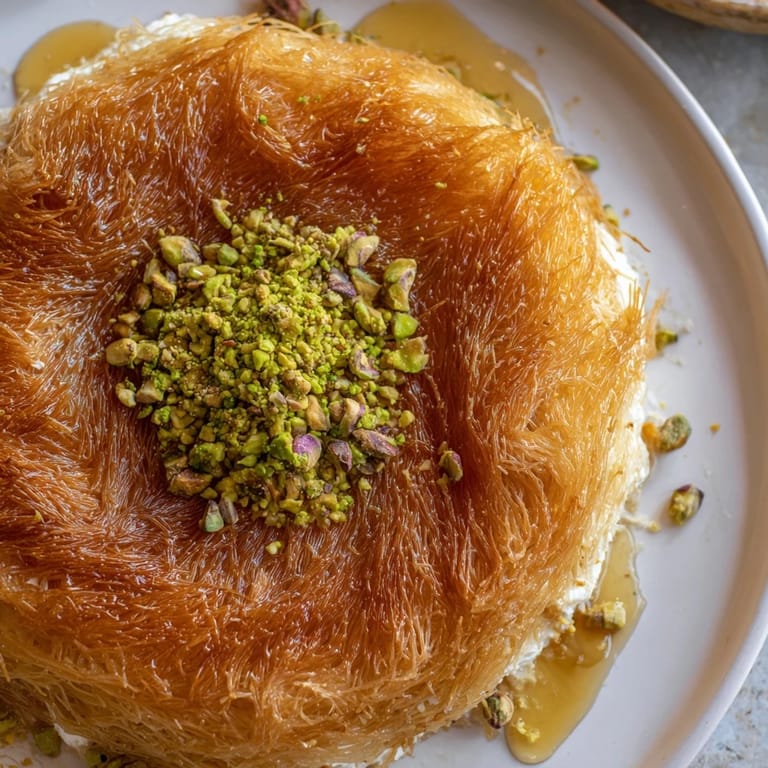
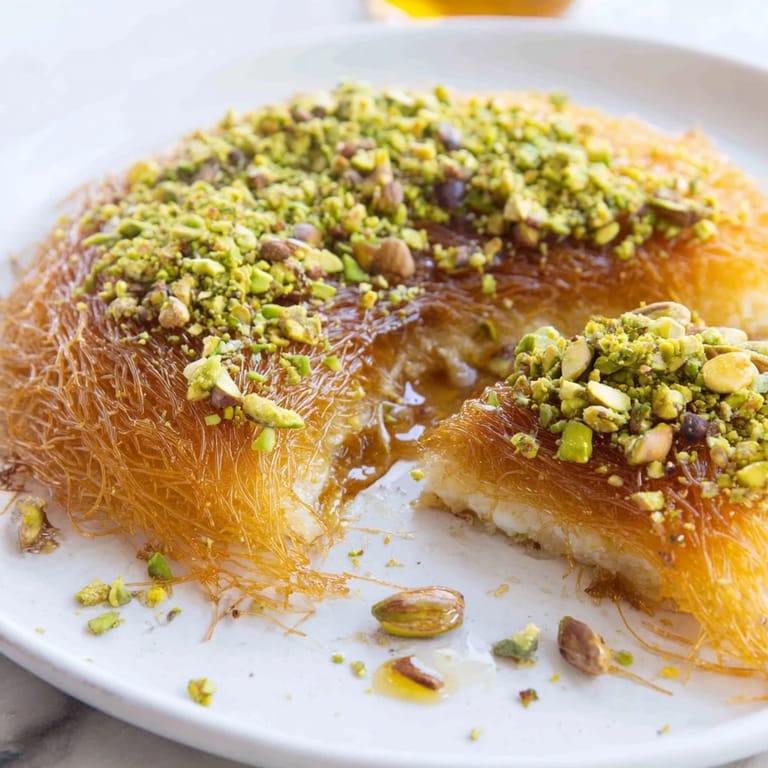
- Distribute the remaining kataifi over the cheese layer and press down gently so everything holds together as it bakes. It should look like a shattered, golden nest.
- Bake until golden:
- Bake for 30–35 minutes until the top is deeply golden and the edges are pulling away slightly from the dish. The kitchen will smell incredible, and that's how you know it's nearly done.
- Make the syrup while it bakes:
- Combine sugar, water, and lemon juice in a saucepan and bring to a boil. Let it simmer for 8–10 minutes until it thickens slightly—it should coat the back of a spoon. Remove from heat, stir in the orange blossom and rose water, then let it cool completely.
- Invert and soak:
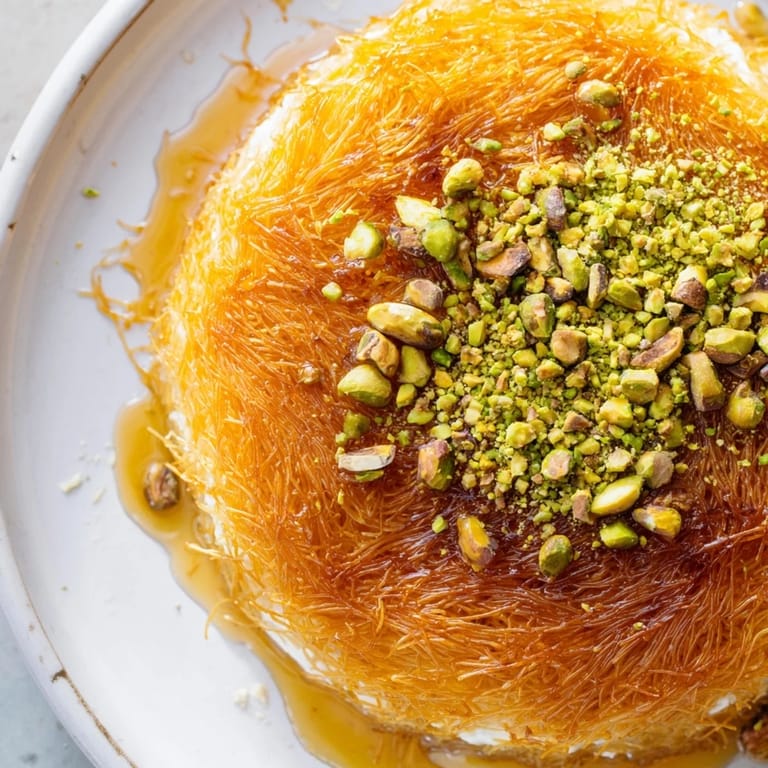
- This is the dramatic moment: remove the knafeh from the oven and quickly invert it onto a serving platter so the crispy side faces up. Pour half the cooled syrup evenly over the hot knafeh—the contrast of temperatures is intentional and perfect.
- Garnish and serve:
- Sprinkle the chopped pistachios over the top and drizzle with honey if you'd like. Serve while it's still warm, with extra syrup on the side for drizzling.
 Save
Save There's a moment, right when you pull knafeh from the oven and the aroma of butter, honey, and orange blossom hits you, where you understand why certain dishes get passed down through generations. It's not just food—it's proof that someone cared enough to spend an hour creating something beautiful for the people they love.
The Cheese Question: Why It Matters
Finding authentic Akawi cheese changed everything about how this dish tasted in my kitchen. When I first made knafeh with mozzarella as a substitute, it was good—crispy, sweet, satisfying—but something was missing. The moment I tracked down proper Akawi from a Middle Eastern market, I understood: the cheese brings a subtle, slightly tangy richness that transforms the whole experience. If you absolutely can't find Akawi, mozzarella will work, but use a block and not the pre-shredded kind, and compensate by being extra generous with the soaking and draining process.
Texture: The Art of Crispy Meets Molten
The magic of knafeh lives in the contrast—that moment when you bite through something shattering and crispy and hit something warm and stretchy. To protect this, timing is everything. A minute too long in the oven and you'll lose the delicate crunch; a minute too short and the cheese won't be fully warm. Watch your oven, trust your senses, and if you want extra insurance, give it a quick broil for 1–2 minutes right at the end—this creates an even more dramatic crust.
Serving and Storage Wisdom
Knafeh is a dish that demands to be eaten immediately, while it's still warm and the textures haven't started to blend together. I learned this the hard way, wrapping up leftovers only to find the pastry had absorbed moisture and turned soft by the next day.
- Always serve within an hour of assembly for the best textural experience.
- If you absolutely must store it, keep leftovers in an airtight container and reheat gently in a low oven to restore some crispness.
- Pair with strong Turkish coffee or fresh mint tea to cut through the sweetness and cleanse your palate between bites.
 Save
Save Making knafeh is its own kind of meditation—there's nothing rushed about it, and that's exactly the point. The first time you pull it from the oven and watch it transform on the platter, you'll understand why people have been making this for centuries.
Recipe FAQs
- → What cheeses work best for making knafeh?
Akawi cheese is traditional for its salty, stretchy texture, but low-moisture mozzarella combined with ricotta can be used as a convenient substitute.
- → How do you prepare the kataifi pastry?
Gently separate the shredded phyllo strands and coat them thoroughly with melted butter to ensure a crisp, golden finish when baked.
- → What flavors are in the syrup used for knafeh?
The syrup is a sweet mix of sugar infused with lemon juice, orange blossom water, and rose water, creating a fragrant and floral sweetness.
- → Can knafeh be made ahead of time?
For best texture and crispness, serve immediately after baking and syruping. Reheating may soften the pastry.
- → What are common garnishes for knafeh?
Chopped pistachios add crunch and color, while a drizzle of honey can enhance sweetness and moisture.
- → What beverages pair well with this dessert?
Traditional pairings include strong Turkish coffee or soothing mint tea, which complement the rich, sweet flavors.