 Save
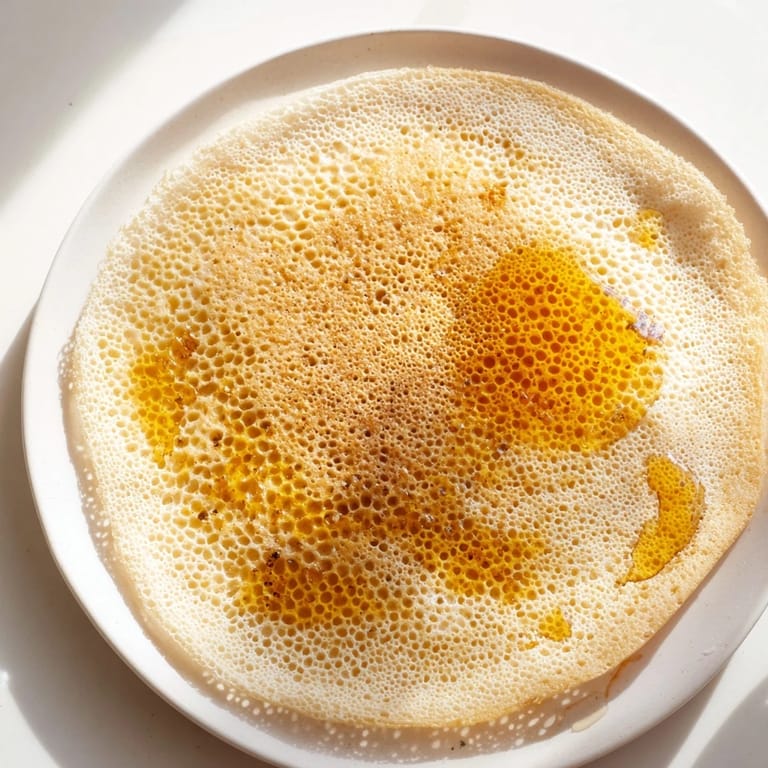
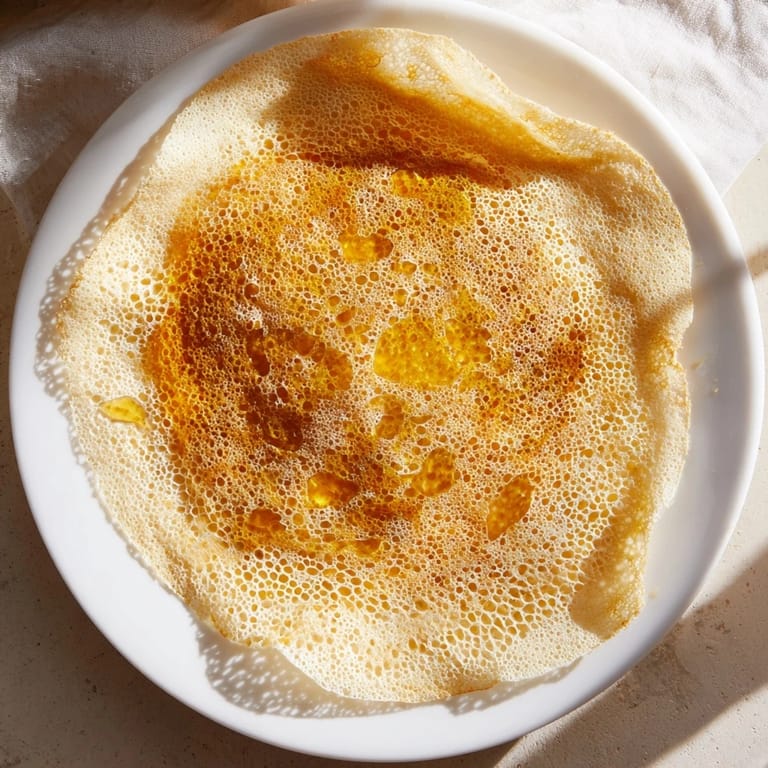
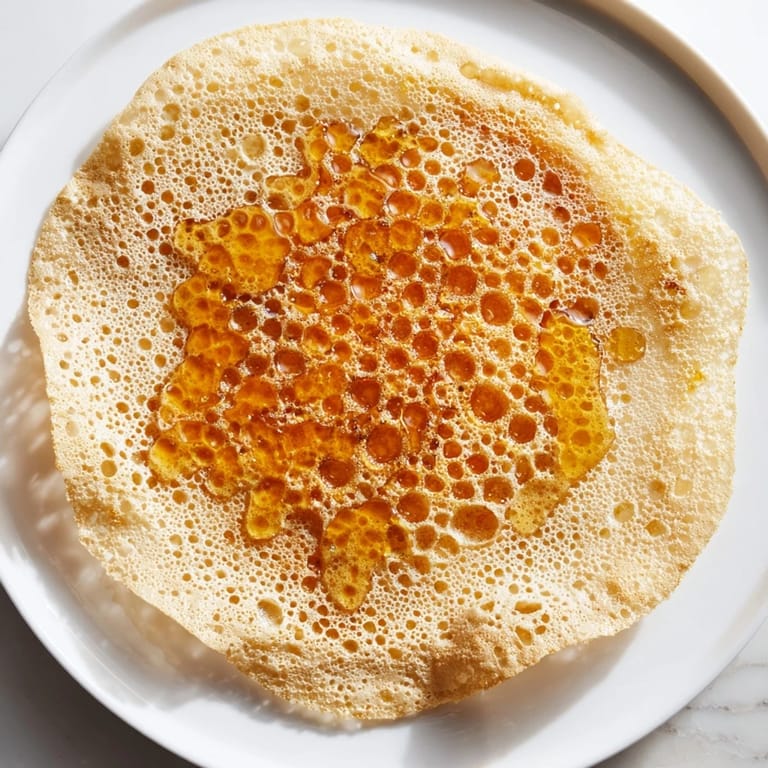
Save The first time I made baghrir, I was standing in a small kitchen in Marrakech, watching my neighbor's hands move with the kind of practiced ease that comes from making something a thousand times. She didn't measure much, just poured and stirred, and when I asked her what made these pancakes so special, she smiled and said it was patience and the right moment. Years later, when I finally understood what she meant, I realized it wasn't just about timing the batter—it was about catching that exact second when the surface transforms into a thousand tiny holes, like edible lace.
I remember making these for a small gathering on a lazy Sunday morning, unsure whether they'd turn out right in front of an audience. When the first one came off the pan and my friend tore into it with that honey-butter mixture still warm and pooling in the holes, the relief on my face must have been obvious. By the third one, everyone was leaning forward, waiting for the next batch, and I realized this simple recipe had become the kind of thing people remember about a morning.
Ingredients
- Fine semolina: This is what gives baghrir its tender crumb and delicate flavor—don't skip it or swap it out, as regular flour won't create that same light texture.
- All-purpose flour: Balances the semolina and helps the batter hold together without making it dense.
- Warm water: Temperature matters here; water that's too hot will kill the yeast, but water that's too cool won't activate it properly.
- Active dry yeast: This is what creates those signature holes, so make sure it's fresh and not expired.
- Baking powder: Works alongside the yeast to ensure a light, airy crumb throughout.
- Sugar and salt: Sugar feeds the yeast and adds subtle sweetness, while salt balances flavors and strengthens the gluten structure.
- Unsalted butter and honey: The finishing touch that turns these into something special; use good quality honey if you can, as it's the star here.
Tired of Takeout? 🥡
Get 10 meals you can make faster than delivery arrives. Seriously.
One email. No spam. Unsubscribe anytime.
Instructions
- Mix your dry ingredients:
- Whisk together the semolina, flour, sugar, yeast, baking powder, and salt in a large bowl, making sure everything is evenly distributed so the yeast works throughout the batter.
- Add water slowly:
- Gradually pour in the warm water while whisking constantly, working out any lumps as you go until you have a smooth batter that looks almost like thick pancake batter.
- Let it rest and bubble:
- Cover the bowl loosely and leave it at room temperature for about 30 minutes; you'll start to see tiny bubbles forming on the surface, which tells you the yeast is doing its job.
- Heat your pan properly:
- Place a nonstick skillet or crepe pan over medium heat, and here's the important part—do not grease it, as the baghrir needs a dry surface to create those holes.
- Pour and let it spread:
- Pour about a quarter cup of batter into the center of the hot pan and let it spread naturally; you can give it a gentle swirl, but don't be too aggressive or you'll flatten the bubbles that are about to form.
- Wait for the holes:
- Cook for 2 to 3 minutes without flipping, watching as the surface transforms into a pattern of tiny holes—this happens as the yeast and baking powder create steam that escapes upward.
- Remove and repeat:
- Slide the finished baghrir onto a plate and start the next one, stirring the batter occasionally so the yeast and semolina stay evenly mixed.
- Warm the honey and butter:
- While you're cooking, gently melt butter and honey together in a small saucepan over low heat, stirring them together until they're glossy and combined.
- Serve while warm:
- Transfer the baghrir to a serving platter and drizzle generously with the honey-butter mixture, which will soak into those holes and create pockets of sweetness throughout.
 Save
Save There's something almost meditative about watching baghrir cook, standing there waiting for those holes to appear across the surface. When you nail it, when you see that transformation happen exactly right, it feels like you've unlocked a small kitchen secret, and suddenly this recipe stops being just breakfast and becomes something you want to share.
The Science Behind Those Holes
The honeycomb texture isn't magic—it's the beautiful result of yeast and baking powder working together to create steam bubbles that rise through a thin batter and escape from the top surface. The batter needs to be thin enough to spread and bubble freely, but thick enough to hold its shape, which is why the water-to-flour ratio matters. I learned this the hard way when I tried to make them with a thicker batter, thinking it would be more forgiving, and ended up with lumpy pancakes instead of lace.
Making Them Ahead and Storing
These are best enjoyed fresh, warm from the pan and still steaming, but life doesn't always work that way. I've made baghrir in the morning and reheated them gently in a low oven for a dinner party, and while they lose some of their initial sponginess, they're still delicious. Stack them between parchment paper to prevent sticking, store them in an airtight container at room temperature for up to a day, and when you're ready to eat them, warm them wrapped in foil in a 300°F oven for about five minutes.
Ways to Serve and Variations
Honey and butter are traditional and non-negotiable, but there's room to play with what comes next. I've dusted them with cinnamon sugar, scattered toasted almonds across the top, drizzled them with orange blossom water mixed into the honey, or served them alongside thick yogurt for a breakfast situation. The structure is sturdy enough to handle toppings, and depending on your mood, baghrir can feel like a light breakfast, an indulgent dessert, or something in between.
- Toasted nuts—almonds, pistachios, or walnuts—add texture and richness to the finished pancake.
- A touch of orange blossom water or rose water mixed into the honey creates an aromatic North African finish.
- Serve alongside thick yogurt or whipped cream if you want something more substantial or want to balance the sweetness.
 Save
Save Baghrir has become one of those recipes I reach for when I want to feel connected to a place and a memory, but also when I just want something warm and comforting in my kitchen. Once you make them a few times, they'll feel like second nature, and you'll find yourself defending their honor to anyone who tries to flip them.