 Save
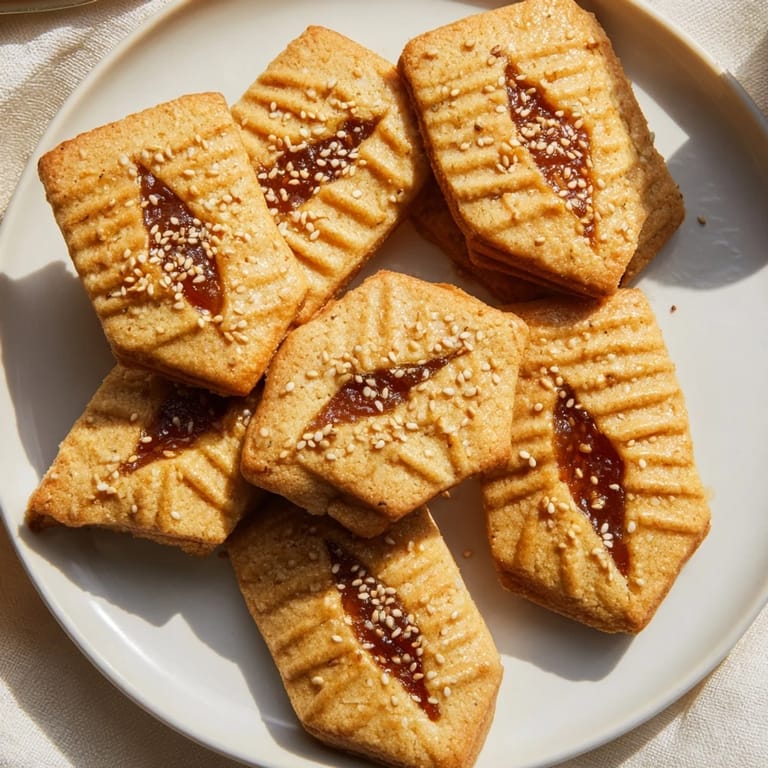
Save My first encounter with makroudh was at a neighbor's kitchen in a sun-dappled apartment, the air thick with the smell of honey and cinnamon. She pressed one into my palm still warm from the oil, its exterior catching the light like amber, and I bit into that unexpected contrast—the crispy, golden shell giving way to the soft, spiced dates inside. I spent the next hour watching her hands work the dough with a practiced ease that made it look deceptively simple, and I realized then that this wasn't just a cookie; it was a small ritual wrapped in pastry.
Years later, I made these for a small gathering, nervous that my version wouldn't capture what I remembered. But the minute the oil hit the pan and that unmistakable aroma filled the kitchen, my friends gathering around, asking what I was making—I knew I'd gotten it right. There's something about fried pastries that brings people close, that makes them pause and actually taste what's in front of them.
Ingredients
- Fine semolina: The foundation of everything—it creates that distinctive sandy texture that toasts to golden crispness when fried.
- Unsalted butter and olive oil: Together they keep the dough tender without overpowering the delicate spice notes.
- Warm water: Add it gradually; you want a soft dough that holds together without getting sticky.
- Cinnamon: Subtle but essential—it threads through both dough and filling for warmth.
- Pitted dates: Quality matters here; they should be soft enough to mash into a smooth paste without turning grainy.
- Honey: The final gloss that makes everything shine and adds that floral sweetness.
- Orange blossom water: A whisper of it transforms these from good to memorable, but don't use a heavy hand.
Tired of Takeout? 🥡
Get 10 meals you can make faster than delivery arrives. Seriously.
One email. No spam. Unsubscribe anytime.
Instructions
- Soften the dates into a spiced paste:
- Heat butter in a saucepan and add your chopped dates, letting them break down into something almost jammy over low heat. The cinnamon and nutmeg should bloom in that warmth, filling your kitchen with a scent that instantly feels festive. Stir in orange blossom water at the end—you'll notice the whole mixture becomes more fragrant, almost floral.
- Build the dough foundation:
- In a large bowl, mix semolina with sugar, salt, and cinnamon, then pour in your melted butter and olive oil. Using your fingertips, rub it all together until it resembles wet sand—this is the crucial moment where you're incorporating fat evenly without creating a dense dough. Add warm water in small amounts as you knead gently, aiming for something soft and pliable that doesn't stick to your hands.
- Rest and compose yourself:
- Cover your dough and give it 20 minutes—this pause lets the semolina absorb the moisture and makes everything more cooperative.
- Shape the logs and fill them:
- Divide the dough in half and roll each portion into a thick log, then use your finger to press a deep groove down its length. Nestle your date log into that groove and fold the dough over to seal, then gently roll to smooth everything out and create a unified shape. Cut diagonally into diamond shapes—the angle matters because it gives you those beautiful facets that catch the honey.
- Fry until golden and glorious:
- Heat your oil to 170°C—a thermometer makes this easier, but you can test with a small piece of dough; it should sizzle and float immediately. Fry in batches so they have room to color evenly, about 5 to 7 minutes until they're a deep honey-gold, then drain them on paper towels to shed excess oil.
- Coat in warm honey and finish:
- Warm your honey gently, stirring in orange blossom water if you have it, then quickly dip each fried makroudh into that sweet glaze. A wire rack is your friend here—it lets them drip beautifully while setting. A sprinkle of sesame seeds adds texture and a subtle nod to tradition.
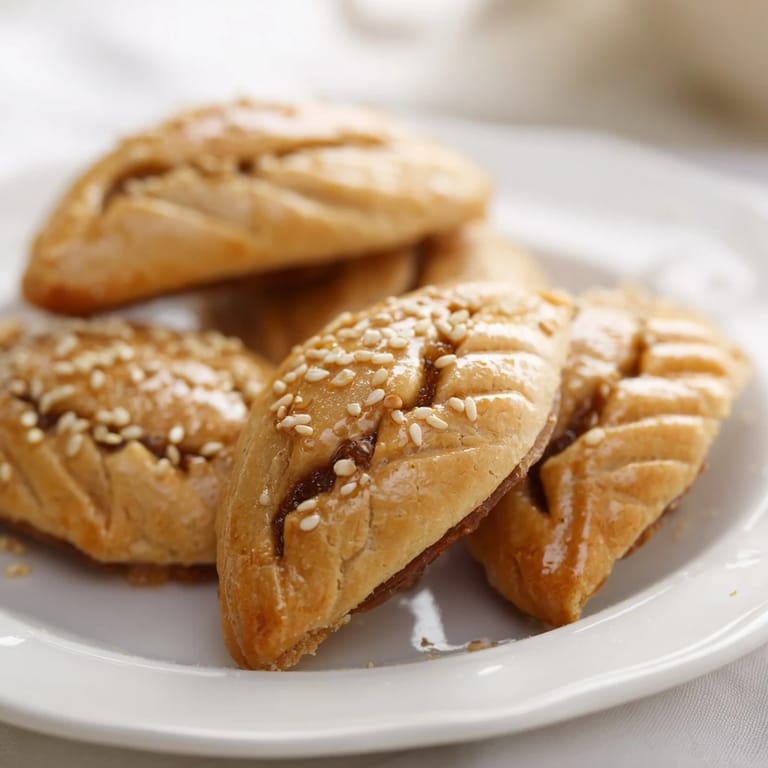 Save
Save I remember my friend's grandmother taking a makroudh, breaking it in half to show me how the filling should look—evenly distributed, never leaking—and then telling me that a cookie that breaks before it's eaten is a happy accident, not a failure. That moment shifted something for me about cooking; it was permission to enjoy the process rather than obsess over perfection.
When Texture Is Everything
The contrast in makroudh is what makes it unforgettable. That initial crunch as your teeth break through the fried, honey-glazed exterior, followed immediately by the soft, jammy warmth of spiced dates—it's a tiny sensory journey in one bite. Some cooks try to rush this by baking instead of frying, and while that works for a lighter version, you lose that essential crackle that makes people reach for a second one.
Adapting the Filling
Once you understand the basic technique, you can play with the filling in ways that feel personal to you. Some cooks add a touch of rose water instead of orange blossom, or mix in a handful of ground nuts for texture. I've seen versions where someone added a pinch of clove or even a thread of saffron to the date mixture. The semolina dough and frying method stay the same, but the filling becomes your signature.
Storage and Second-Life Possibilities
Makroudh actually improves slightly over the first few days as the flavors settle and the honey syrup distributes evenly through the cookie. Store them in an airtight container at room temperature, and they'll keep for about a week—though in my experience, they rarely last that long. They also freeze beautifully before frying, so you can prepare the shaped cookies ahead and fry them fresh whenever you want that just-made warmth and crispness.
- Freeze unbaked makroudh on a tray before transferring to a bag, and add an extra minute or two to frying time straight from frozen.
- If your honey seems too thick for dipping, warm it gently with a splash of water to loosen it without cooking it.
- A wire rack is worth using instead of paper towels—it prevents one side from getting soggy as they cool.
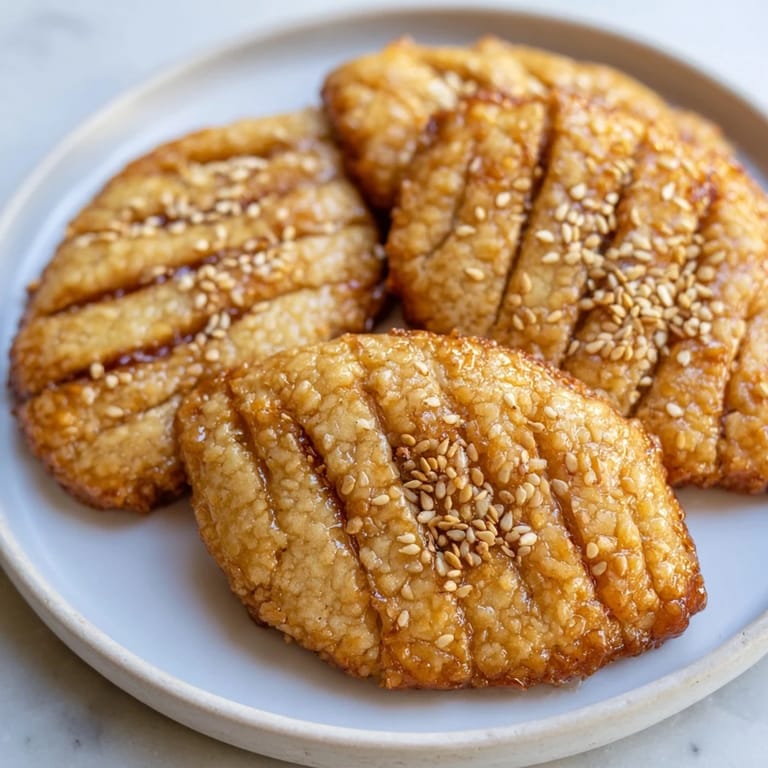 Save
Save Making makroudh is less about following rules and more about understanding the rhythm—how soft dough should feel, when oil is ready, what that perfect golden color looks like. Once you've made them once, they become almost meditative, a small act of care you can offer to people you love.
Recipe FAQs
- → What type of semolina works best for this pastry?
Fine semolina creates a smooth, tender dough with the right texture for these pastries, ensuring crispness after frying.
- → Can I bake these instead of frying?
Yes, baking at 180°C for 25–30 minutes until golden is an option for a lighter result, followed by dipping in the honey syrup.
- → What spices enhance the date filling?
A mix of ground cinnamon, nutmeg, and optionally orange blossom water gives the filling a warm and fragrant flavor.
- → How is the dough prepared to achieve the right consistency?
The dough is made by blending semolina with melted butter, olive oil, sugar, and a pinch of salt, then gently kneaded with warm water to form a pliable but not sticky texture.
- → What is the purpose of the honey syrup glaze?
The honey syrup adds moisture, sweetness, and a glossy finish that balances the crisp semolina exterior and enriches the date filling.