 Save
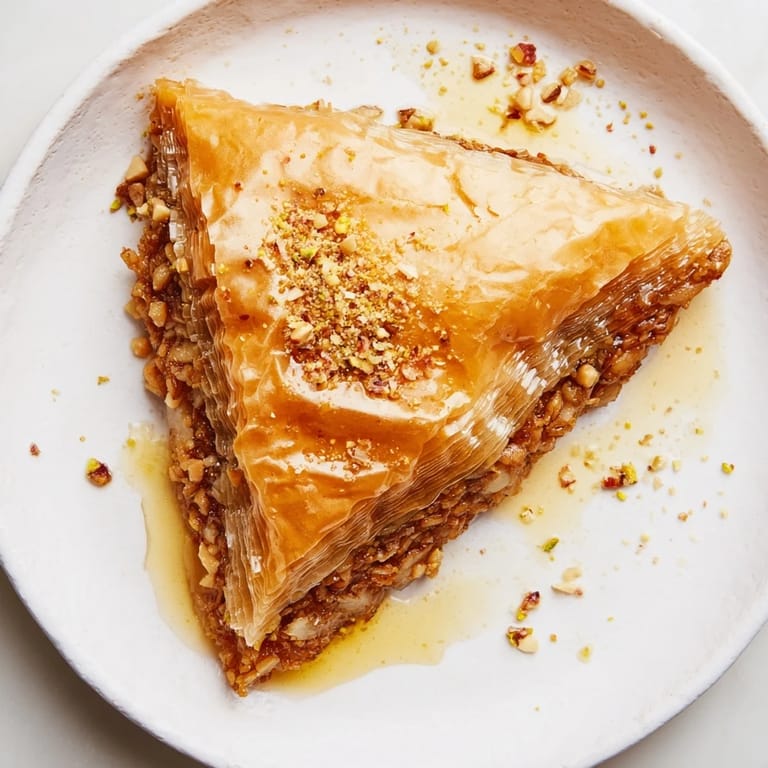
Save My first baklava came from a small Istanbul bakery tucked beside a spice market, and I still remember the crackle of phyllo between my teeth, that exact moment when honey hit my tongue. Years later, I finally decided to make it myself, terrified I'd destroy something so delicate. But there's something about layering paper-thin sheets with melted butter that feels less like cooking and more like assembling edible architecture, and somehow it all comes together golden and perfect.
I made this for my neighbor's book club last fall, and watching everyone go quiet mid-conversation when they took that first bite told me everything. Someone asked for the recipe before they'd even finished their piece, and that's when I knew this version had earned its place in my kitchen.
Ingredients
- Walnuts, pistachios, and almonds: Use a mix because each nut brings its own personality—walnuts give earthiness, pistachios add color and subtle sweetness, almonds keep everything balanced. Chop them finely so they stay put between the layers.
- Phyllo dough: Thaw it slowly in the fridge the night before, and keep it under a damp towel while you work or it'll dry out and crack before you even get it in the pan.
- Unsalted butter: Melt it gently so it stays clear and doesn't brown, then let it cool just slightly before brushing so it doesn't make the phyllo soggy.
- Honey, water, sugar, lemon, and cinnamon: This syrup is your secret weapon—the lemon keeps it from being one-note sweet, and the cinnamon stick adds warmth that makes people wonder what the mystery ingredient is.
Tired of Takeout? 🥡
Get 10 meals you can make faster than delivery arrives. Seriously.
One email. No spam. Unsubscribe anytime.
Instructions
- Set up and prepare:
- Preheat to 350°F, grease your baking dish, and get your nut mixture ready by tossing walnuts, pistachios, almonds, sugar, and cinnamon together in a bowl. Unroll the phyllo and drape a damp kitchen towel over it—this single step saves you from the frustration of brittle sheets.
- Build the phyllo foundation:
- Lay one sheet of phyllo in the dish and brush it with melted butter using gentle, even strokes. Repeat this 7 more times, letting each layer get its coat of butter before the next one lands. You're creating a golden cushion for everything to sit on.
- Layer in the nut mixture:
- Sprinkle one-third of your nut filling evenly over the buttered phyllo base. Don't skimp—this is what makes baklava sing.
- Build the middle section:
- Lay 5 more phyllo sheets over the nuts, buttering each one as you go, then sprinkle another third of the nut mixture over top. The repetition might feel tedious, but you're creating pockets of flavor that hit differently at every bite.
- Complete the layers:
- Add the final set of 5 phyllo sheets with butter between each, then crown the whole thing with 8 to 10 more buttered phyllo sheets, treating them like you're tucking in something precious. This top layer is what gets that shatter-crackle sound you're after.
- Score before baking:
- With a sharp knife, cut all the way through into diamonds or squares—about 24 pieces total. Cutting before baking means you won't have exploding pastry shards flying everywhere when you try to portion it after, and the syrup will soak into every nook more evenly.
- Bake until golden:
- Slide it into the oven and let it sit for 45 minutes, until the top is deep golden brown and you can hear it crackling slightly when you move closer. The smell at minute 40 will make you question your life choices—in the best way.
- Make the syrup while it bakes:
- In a saucepan, combine honey, water, sugar, lemon juice, lemon zest, and a cinnamon stick. Bring it to a boil, then lower heat and let it simmer gently for 10 minutes so the flavors meld. Remove the zest and cinnamon stick, then let it cool just slightly—you want it warm but not scalding when it meets the hot baklava.
- Pour the syrup immediately:
- The moment baklava comes out of the oven, pour the warm syrup slowly and evenly over the entire surface. This is the critical moment—the hot pastry absorbs the syrup like it's been waiting for it, and that's where the magic happens.
- Let it rest:
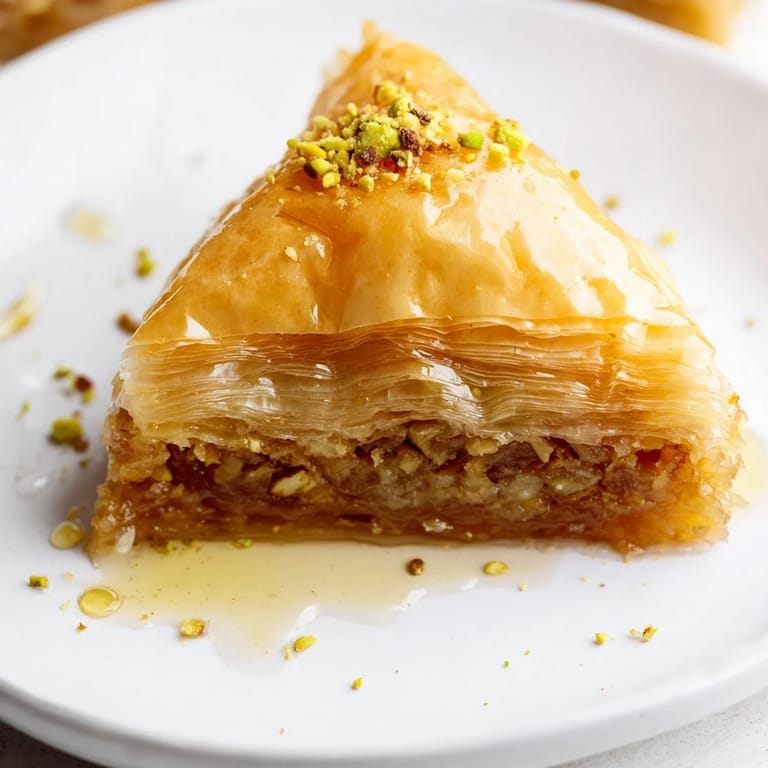
- Set it on a cooling rack and resist every urge to eat it for at least 4 hours, ideally overnight. The syrup needs time to soak through all those layers, turning them tender and sticky-sweet.
 Save
Save My sister once tried to eat hers before the four hours were up and burned the roof of her mouth on molten honey while I laughed harder than I should have. But that's also when she understood why this dessert has survived centuries—it's worth waiting for.
Why This Tastes Like Home
Baklava isn't just sweetness layered on sweetness; it's a conversation between textures and flavors that somehow feel both simple and complex at the same time. The cinnamon whispers in the background, the lemon prevents everything from tasting one-dimensional, and those three different nuts each add their own voice to the chorus. When you make it yourself, you realize it's not about following a recipe perfectly—it's about understanding that honey needs time to do its work, and phyllo needs respect but not fear.
Storing Your Baklava
Keep it covered at room temperature—a cake dome, loose foil tent, or even an inverted bowl works beautifully. It actually gets better on day two when the flavors have settled into every corner, and it'll stay fresh for about a week if you don't devour it first. I've kept it a bit longer and never had it go bad, just gradually turn into something even more precious because it's rarer.
Pairing and Serving Ideas
Strong Turkish coffee or a fragrant black tea is the classic pairing, and there's real wisdom in it—the bitterness cuts through the sweetness in a way that feels balanced instead of overwhelming. Some people add a tiny glass of ice water on the side, which cleanses the palate between bites and somehow makes the whole experience feel more intentional.
- Offer smaller pieces than you think people want—baklava is rich and satisfying, so a little goes far.
- If you're serving it at a gathering, keep it in a single layer on a platter so people can admire each piece before choosing.
- For a fun twist, some cooks brush the baked baklava with a bit of orange blossom water before serving instead of (or mixed into) the honey syrup.
 Save
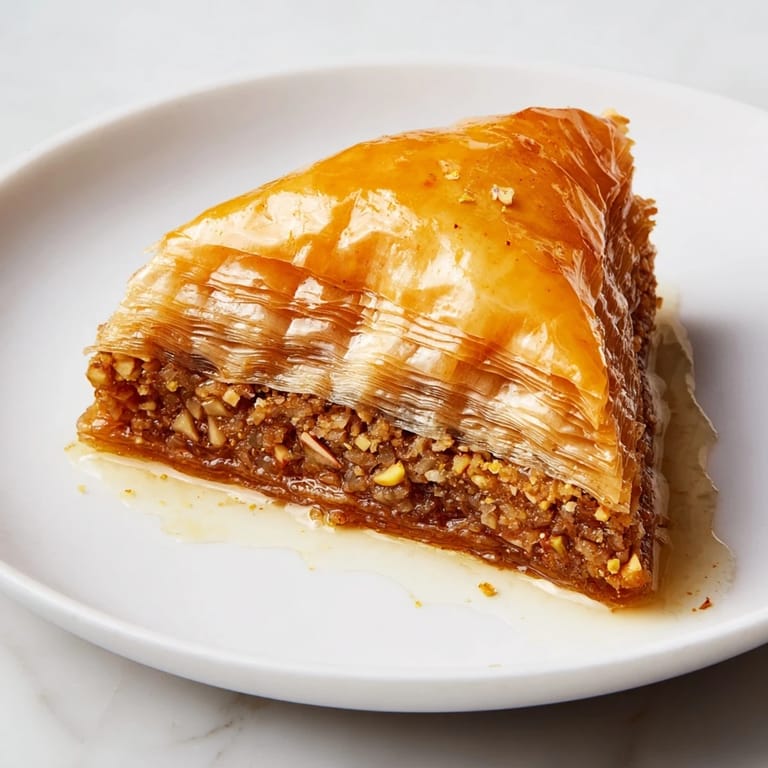
Save Making baklava is a small act of care, really—you're building something layer by layer and trusting the time and heat to transform it into something worth savoring. Every batch teaches you something new, and that's the whole point.