 Save
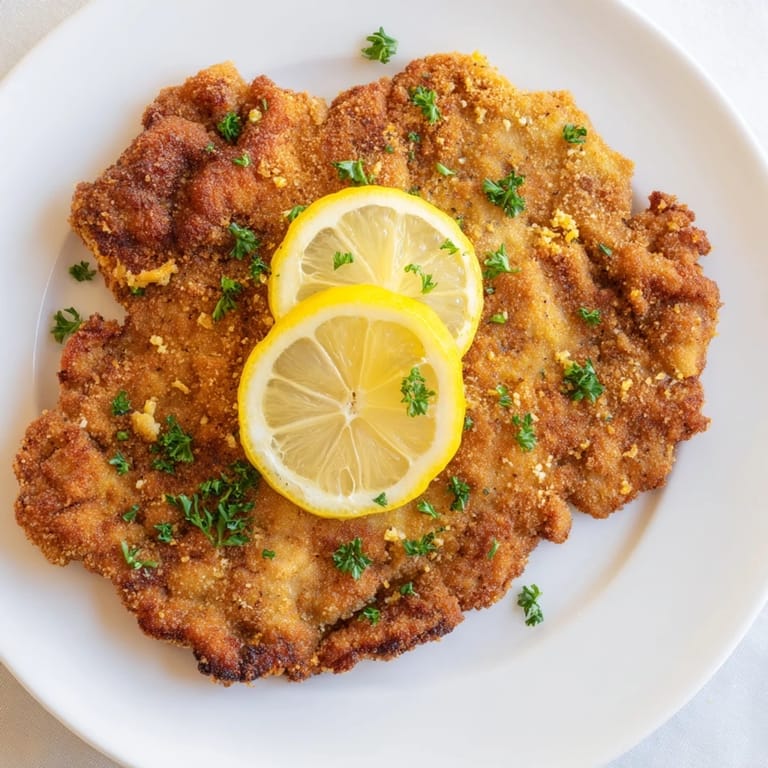
Save My first Wiener Schnitzel came from a small restaurant tucked behind St. Stephen's Cathedral in Vienna, where an elderly woman in a crisp apron slid the plate in front of me with such quiet confidence that I knew I was about to taste something sacred. The schnitzel gleamed golden under the café lights, impossibly thin yet somehow holding together, and when my fork met it, that crackling sound made me understand why this dish has endured for centuries in Austrian kitchens. Years later, when I finally stood at my own stove with a meat mallet in hand, I realized she'd taught me something without saying a word: perfection here means respecting simplicity.
I made this for my partner on a rainy October evening when we needed comfort food but also wanted something that felt special, something that said I tried without saying I fussed all day. The kitchen filled with that distinctive aroma of butter hitting hot metal, and by the time the first schnitzel came out of the pan, we were both standing there like kids waiting for cake to cool. We ate it at the kitchen counter with lemon wedges and crusty bread, barely talking, just listening to that crust crackle under our forks.
Ingredients
- Veal cutlets (4, about 150 g each): The soul of this dish—ask your butcher to pound them or buy them already thinned, and handle them gently because they're delicate things that bruise easily.
- All-purpose flour (100 g): This creates the first barrier between the meat and the heat, and dry flour grips better than wet, so don't skip the patting-dry step.
- Eggs (2 large) and milk (4 tbsp): The glue that holds everything together; the milk makes the wash lighter and less eggy-tasting, which matters more than you'd think.
- Fine dry breadcrumbs (150 g): Panko is too coarse and will crack and separate; hunt down fine breadcrumbs or pulse store-bought ones briefly in a food processor.
- Clarified butter or neutral oil (250 ml): This is where the magic lives—clarified butter browns better and tastes like Vienna itself, but a high-smoke-point oil like grapeseed or refined avocado oil works beautifully too.
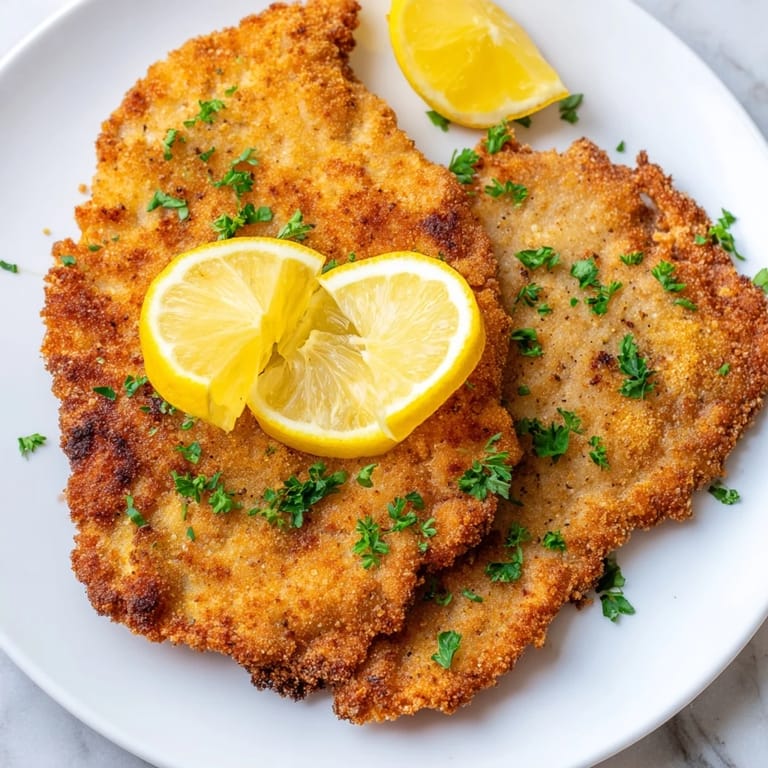
- Lemon wedges and fresh parsley: These aren't garnish; they're essential counterpoints that cut through the richness and remind your palate what brightness tastes like.
Tired of Takeout? 🥡
Get 10 meals you can make faster than delivery arrives. Seriously.
One email. No spam. Unsubscribe anytime.
Instructions
- Pound the veal with intention:
- Place each cutlet between plastic wrap and use steady, even strokes with the mallet to flatten to about 1/4 inch—you're tenderizing and thinning, not annihilating. Pat them completely dry with paper towels afterward because water is the enemy of crispiness.
- Build your breading station like a assembly line:
- Flour in one dish, egg-milk mixture in another, breadcrumbs in a third, arranged left to right so you can move smoothly without backtracking. This small bit of organization changes everything about the experience.
- Bread with a light hand:
- Dredge in flour and tap off the excess, then dip in egg wash, then into breadcrumbs—but here's the secret: don't press or pat the breadcrumbs onto the meat. Let them sit loose and delicate, almost floating on the surface, because that's what creates the shatter.
- Get your fat properly hot:
- The clarified butter should shimmer and move like liquid glass when you tilt the pan; if it's not hot enough, you'll end up with greasy schnitzels, and if it's smoking, you've gone too far. Medium-high heat is your guide, but trust your eyes.
- Fry with patience and presence:
- Slide the schnitzel into the pan and listen—that immediate, confident sizzle tells you everything is right. Don't move it around; let it sit for 2 to 3 minutes per side, and use a spoon to continuously baste the top with the hot fat for even, golden browning.
- Drain and serve right away:
- Use a slotted spatula to lift each schnitzel onto paper towels for just a minute, then transfer to a warm plate and eat it while that crust still crackles. Waiting diminishes the whole point.
 Save
Save I think about that meal with my partner often, how something so straightforward became a small ritual between us, something we still make when we want to feel European on a random weeknight. There's a tenderness in how this dish asks you to move through the kitchen, each step deliberate but never rushed, and by the time you sit down to eat, you've created something that tastes like it took hours.
Why This Dish Endures
Wiener Schnitzel has survived for well over a century because it demonstrates something essential about cooking: that restraint and respect for ingredients create more impact than complexity ever could. Viennese cooks understood that a single, perfectly-prepared piece of veal deserves nothing but flour, egg, breadcrumbs, and fat—anything more would be interference. Every culture has dishes like this, the ones that seem simple until you actually make them and realize that simplicity demands absolute attention.
Serving and Sides
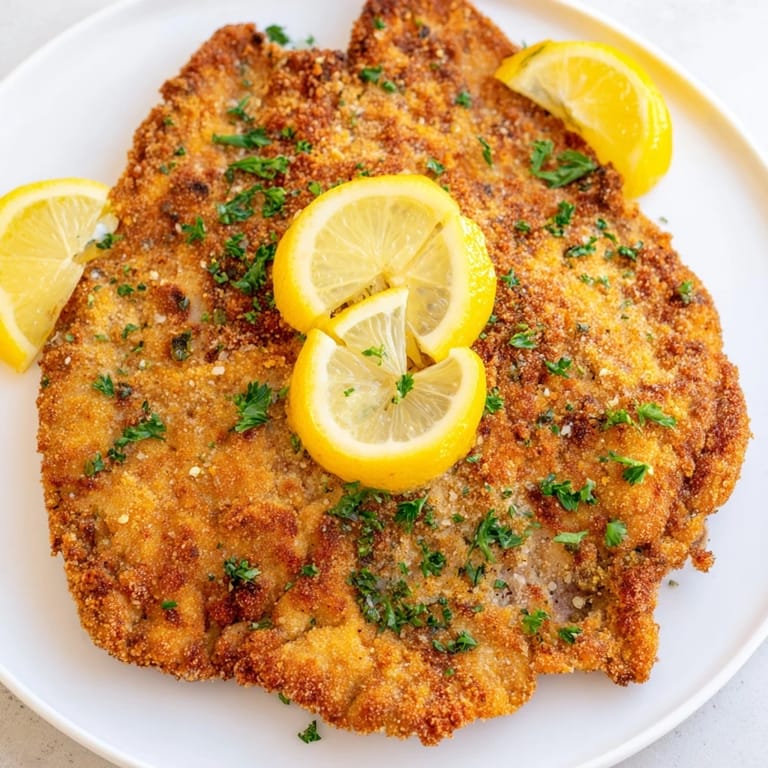
Traditionally this schnitzel arrives at the table with potato salad (the warm vinegar-dressed kind, never mayo-heavy), a crisp cucumber salad, or even a small spoonful of lingonberry jam on the side for a sweet-salty-tangy moment that somehow works. The lemon wedges are non-negotiable—squeeze them over the schnitzel just before eating so the juice seeps into the bread crust and the meat beneath.
The Butter Question
Clarified butter is the preference because it browns without burning and imparts a hazelnut-like richness that oil simply can't match, but finding good clarified butter takes effort in many places. If you have access to it, buy it or make it by melting butter slowly and skimming off the milk solids; if not, reach for a truly neutral oil with a high smoke point—grapeseed, refined avocado, or even plain vegetable oil will serve you well. The fundamentals matter more than the specific fat, though the fundamentals also include honoring tradition where you can.
- Make clarified butter ahead of time if you're planning this meal, and store it in the fridge for weeks.
- If you're uncertain whether your oil is hot enough, drop a tiny breadcrumb into it—if it sizzles immediately and turns golden, you're ready.
- Save the fat after cooking (strain it through a fine mesh) and use it again for future schnitzels or roasted potatoes.
 Save
Save This is a dish that rewards you for showing up, for paying attention, for taking the time to do a small thing well. Make it when you want to taste Vienna in your own kitchen, or when you simply want to prove to yourself that simplicity, executed with care, is a kind of elegance.
Recipe FAQs
- → What cut of meat is used for Wiener Schnitzel?
Veal cutlets are traditionally used, pounded thin to ensure even cooking and tenderness.
- → How do I achieve a crispy coating?
Lightly coat the meat in flour, egg wash, then dry breadcrumbs without pressing, ensuring a loose layer for optimal crispiness.
- → What type of fat is best for frying?
Clarified butter or a neutral oil with a high smoke point works best to achieve golden, evenly fried cutlets.
- → Why should the pan not be overcrowded?
Overcrowding reduces oil temperature, causing soggy coating; fry in batches to maintain crispiness.
- → What is a common traditional garnish?
Lemon wedges for squeezing and fresh chopped parsley add bright, fresh notes to the dish.