 Save
Save The first time I truly understood bouillabaisse was standing in a cramped fish market in Marseille, watching an elderly fishmonger select each piece with the care you'd give to choosing wine. She moved past the obvious choices, pointing instead to lesser-known specimens, explaining that tradition demands diversity, not just quantity. That lesson stuck with me: this stew isn't about showing off; it's about respecting what the sea offers and letting each element shine in the broth.
I made this for my partner on a rainy October evening when we were both exhausted from the week. We sat at the kitchen table while the broth simmered, and suddenly the whole apartment smelled like the Mediterranean—saffron, fennel, and sea spray somehow captured in a single pot. By the time we ladled it into bowls with that golden rouille swirled on top, we weren't tired anymore; we were transported.
Ingredients
- Firm white fish fillets (monkfish, sea bass): These hold their shape through simmering and provide delicate texture; ask your fishmonger for the freshest available and don't skip the quality here.
- Oily fish fillets (red mullet): The richness builds flavor depth that lean fish alone cannot achieve; this is where the soul of bouillabaisse lives.
- Mussels and shrimp: Clean mussels thoroughly and tug gently on their beards to remove them; discard any that don't close when tapped before cooking.
- Saffron threads: Buy whole threads rather than powder, as they stay fresher; the color and aroma should be vibrant, almost crimson.
- Fennel bulbs and seeds: Both parts work together here; the bulb becomes sweet and soft while the seeds release their anise-like perfume into the broth.
- Orange zest: A small touch that feels unexpected but tastes like it was always supposed to be there; strip it with a microplane for the finest flavor.
- Olive oil: Use your best quality here; it's not hiding in a cooked sauce but playing a visible role in every spoonful.
- Fish stock or water: Homemade stock is ideal, but quality matters less than you'd think since the vegetables and saffron do most of the heavy lifting.
Tired of Takeout? 🥡
Get 10 meals you can make faster than delivery arrives. Seriously.
One email. No spam. Unsubscribe anytime.
Instructions
- Build your flavor base:
- Heat olive oil over medium heat and add the onion, leek, fennel, carrot, and garlic, stirring occasionally until they're tender and fragrant but haven't browned, about 8 to 10 minutes. This quiet cooking time is crucial; you're coaxing sweetness out, not creating color.
- Add the aromatics and spices:
- Stir in the tomatoes, orange zest, bay leaf, thyme, parsley, saffron threads, fennel seeds, peppercorns, and salt and pepper, then cook for about 5 minutes to let the spices wake up and marry with the vegetables. You'll notice the aroma shift as the saffron releases its golden color into the oil.
- Deglaze and simmer the broth:
- Pour in the white wine and let it bubble gently for 2 minutes, then add your stock and bring everything to a gentle boil. Lower the heat and let it simmer uncovered for 25 minutes; this is where the magic happens, as flavors meld and deepen.
- Strain and clarify:
- Pour the broth through a fine sieve, pressing gently on the solids to coax out every drop of liquid gold, then discard what's left behind. Return the clear, fragrant broth to your cleaned pot; this step transforms it from vegetable-studded to silky and refined.
- Cook the seafood with precision:
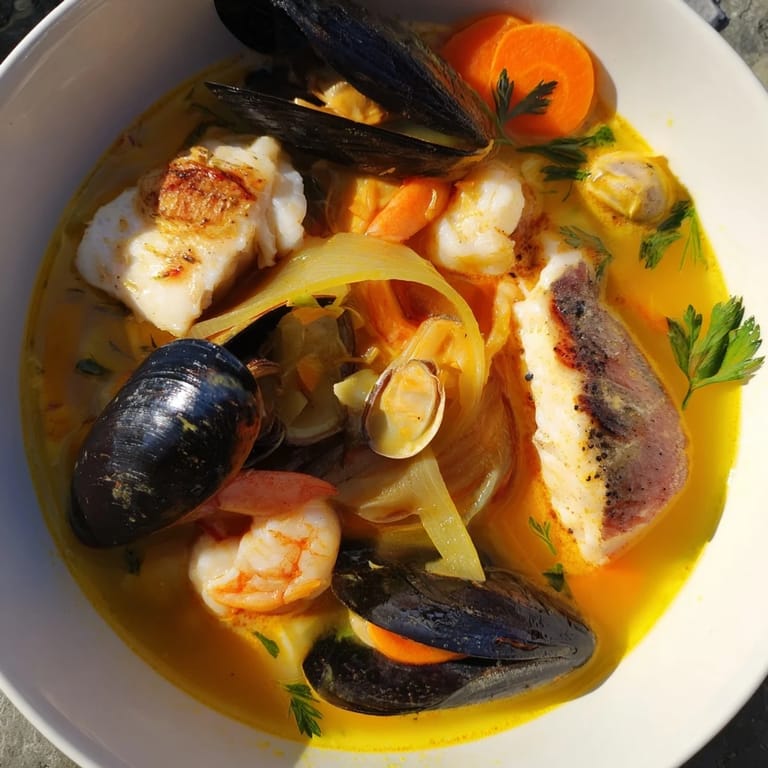
- Bring the broth back to a gentle simmer and add the firm white fish first, cooking for about 5 minutes before adding the oily fish, mussels, shrimp, and scallops. Another 5 to 6 minutes and everything should be just cooked through; the mussels will pop open like tiny gifts, and you'll know to stop when they do.
- Whisk the rouille:
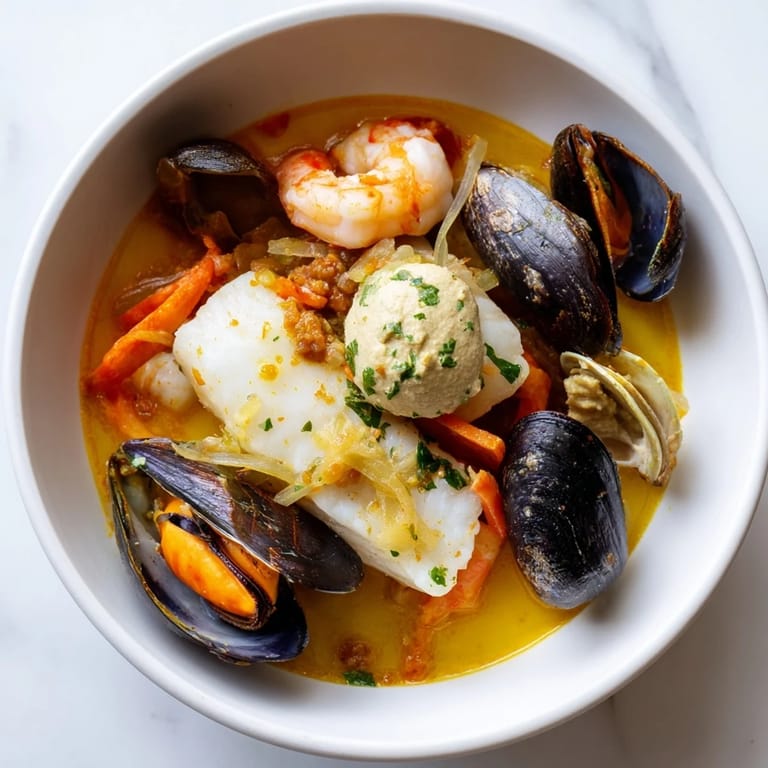
- In a bowl, combine the egg yolk, garlic, chili, saffron with its soaking water, and mustard, whisking until smooth and pale. Drizzle in the olive oil slowly while whisking constantly, as if you're making mayonnaise; the sauce will thicken into a glossy, golden-orange dream that tastes like liquid saffron and garlic.
- Serve with ceremony:
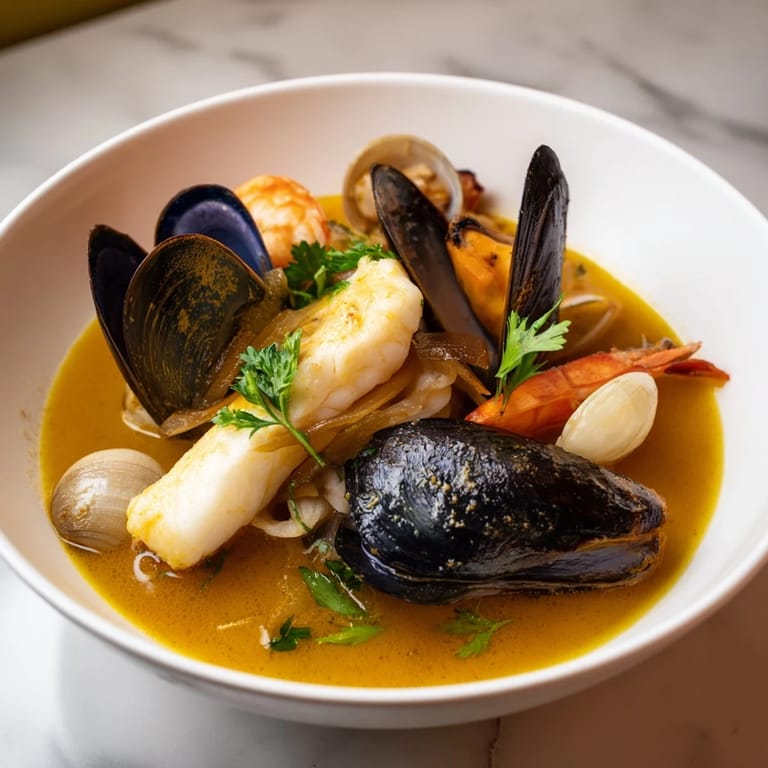
- Ladle the stew into warm bowls, top with fresh parsley, and set out toasted baguette slices brushed with olive oil alongside a generous spoonful of rouille on the side. Let everyone build their own bowl; there's something about that ritual that makes it taste even better.
 Save
Save There's a moment in every good bouillabaisse where someone dips a piece of bread into the rouille, takes a bite, and their eyes close for a second. That's when you know it worked, when food stops being technique and becomes memory.
The Story Behind Bouillabaisse
Bouillabaisse wasn't born from fancy kitchens but from fishing boats and harbor markets, a way to transform the catch that wouldn't sell to wealthy tables into something more valuable than gold. The fishermen's wives would simmer whatever came in, layering flavors with saffron and fennel until even the humblest fish tasted noble. That same spirit lives in every bowl you make; it's not about having rare ingredients but about respecting what you have and treating it with intention.
Choosing Your Seafood
The best bouillabaisse I've had always came from cooks who visited their fishmonger regularly, who knew the names of the boats and what landed that morning. You don't need to be that devoted, but do visit when you can and ask questions; tell them you're making bouillabaisse and watch how their recommendations change based on what looks best that day. Variety matters more than specific species, so if monkfish isn't available, ask what firm white fish is at its peak, and work with that instead.
Wine Pairing and Serving
A chilled Provençal rosé is the natural choice, its crisp acidity cutting through the richness of the saffron and oil while echoing the Mediterranean itself. But a crisp white wine works just as well, especially something with mineral notes that complement the seafood. Serve this on nights when you want the table to linger, when the conversation matters as much as the food, and when someone asks for seconds not because they're still hungry but because they want to taste it again.
- Make the rouille a few hours ahead if you prefer; it actually improves as flavors marry and settles into a deeper golden tone.
- For a gluten-free version, swap the baguette for any good gluten-free bread, toasted until crisp enough to carry the rouille.
- Leftover bouillabaisse keeps for a day in the refrigerator, but reheat it gently over low heat so the seafood doesn't toughen further.
 Save
Save Make this when you want to feel transported without leaving your kitchen, when you want to cook something that tastes like it took all day even though you've only been in the kitchen for just over an hour. That's the real magic of bouillabaisse.
Recipe FAQs
- → What types of fish are best for bouillabaisse?
Firm white fish like monkfish or sea bass combined with oily fish such as red mullet create a balanced texture and rich flavor base for the stew.
- → How is the broth prepared for optimal flavor?
Sautéed aromatics and saffron are simmered with white wine and fish stock, then strained to yield a clear, deeply flavored broth.
- → What is the purpose of the rouille sauce?
Rouille adds a creamy, garlicky, and slightly spicy contrast, enhancing the seafood's natural flavors when spread on toasted baguette.
- → Can this stew be made gluten-free?
Yes, simply replace the traditional baguette with gluten-free bread for a gluten-free alternative.
- → How long does the seafood take to cook in the stew?
Seafood is gently simmered for 5-6 minutes until just cooked through and mussels open, preserving their texture and flavor.
- → What wine pairs well with this dish?
A crisp Provençal rosé or a dry white wine complements the bright, herbaceous notes and seafood richness beautifully.