 Save
Save The first time I watched my Swiss grandmother prepare fondue, I was struck by how she treated it less like cooking and more like a ritual—the way she rubbed that garlic around the pot with such intention, how she stirred in patient figure-eight motions while the kitchen filled with the warm aroma of melting Gruyère and white wine. What started as watching her make dinner became my favorite way to gather people around a table, where the act of dipping bread and vegetables together somehow turns a meal into an event.
I made this for friends during a snowy evening, and halfway through, someone dipped their bread too aggressively and sent a strand of melted cheese flying across the table—we all laughed until our sides hurt, and somehow that small disaster made the whole night feel less formal and more real.
Ingredients
- Gruyère cheese, grated (200 g): This is the backbone of your fondue—nutty, complex, and it melts impossibly smooth, which matters more than you'd think.
- Emmental cheese, grated (200 g): Emmental's sweet and slightly fruity notes balance the earthiness of Gruyère; together they create that creamy texture that coats your bread just right.
- Dry white wine (1 cup / 240 ml): The wine isn't just flavor—it's the foundation that keeps the cheese from clumping and breaking, so don't skip it or substitute with water.
- Kirsch, cherry brandy (1 tbsp / 15 ml, optional): If you can find it, a splash of kirsch adds a subtle warmth and complexity that makes people ask what that mysterious something is in your fondue.
- Cornstarch (1 tbsp / 8 g): This tiny amount is your insurance policy against the cheese breaking and turning grainy—toss it with the cheese before it hits the wine.
- Garlic clove, halved: One clove rubbed inside the pot whispers garlic without overpowering everything else.
- Freshly grated nutmeg (1/4 tsp): Nutmeg in fondue surprised me the first time, but it adds a subtle warmth that rounds out all the sharp, acidic notes.
- Ground white pepper (1/4 tsp): White pepper is milder and less assertive than black, which lets the cheese flavors stay in the spotlight.
- Baguette or rustic country bread, cubed: Slightly stale bread grips the fondue fork better than soft fresh bread—this small detail will save you from embarrassing drips.
- Blanched broccoli and cauliflower florets (1 cup each / 100 g): Blanching them briefly softens them just enough that they're tender to eat but still hold their shape and color.
- Cherry tomatoes (1 cup / 100 g): Their bright acidity cuts through the richness of the cheese and feels refreshing on your palate between bites of bread.
- Baby carrots, blanched (1 cup / 100 g): Raw carrots would be tough to chew with all that melted cheese coating them, so a quick blanch makes them the perfect vehicle.
Tired of Takeout? 🥡
Get 10 meals you can make faster than delivery arrives. Seriously.
One email. No spam. Unsubscribe anytime.
Instructions
- Prepare the Pot:
- Rub the cut garlic clove inside your fondue pot (caquelon) with deliberate, even strokes—you're looking for just a whisper of garlic flavor to line the pot. Discard the garlic clove once you're done.
- Heat the Wine:
- Pour your white wine into the pot and set it over medium-low heat, watching until tiny bubbles start breaking the surface but it never actually rolls to a boil. This gentle heat is crucial—violent boiling will make the cheese seize up later.
- Coat the Cheese:
- While the wine warms, toss your grated Gruyère and Emmental together in a small bowl with the cornstarch, making sure every shred gets a light coating. This starch barrier prevents the proteins in the cheese from bonding too tightly and turning grainy.
- Melt Gradually:
- Once the wine is steaming, add a small handful of the cheese mixture and stir in a slow, continuous figure-eight pattern with a wooden spoon—this motion keeps the emulsion stable. Keep adding cheese gradually, waiting until each addition is mostly melted before adding more, and never stop stirring.
- Season and Add Spirits:
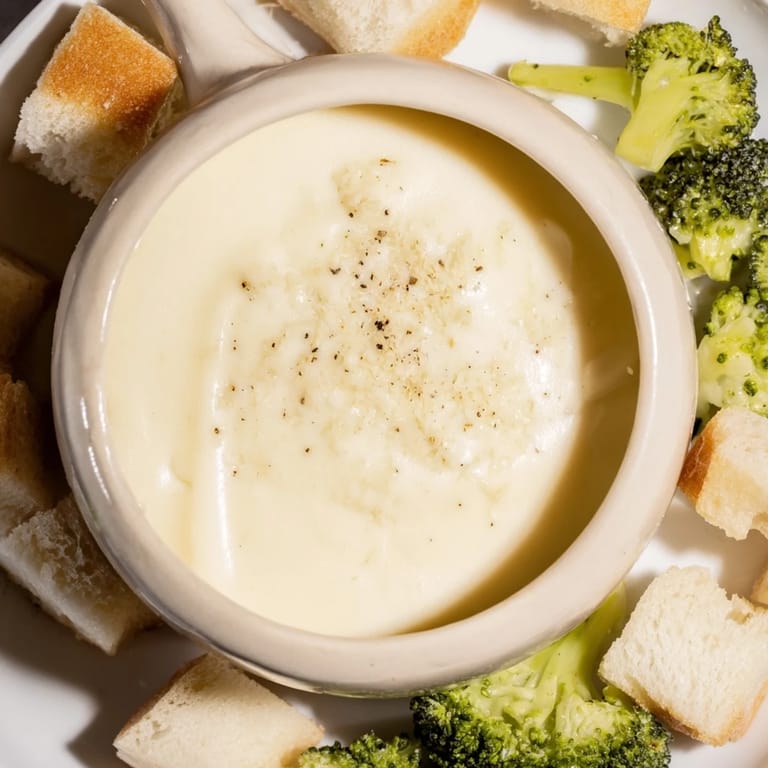
- When all the cheese is melted into a smooth, glossy sauce, stir in the kirsch (if using), nutmeg, and white pepper, tasting as you go to adjust the seasoning. The mixture should feel velvety and flow smoothly off a spoon, not thick or clumpy.
- Keep Warm and Serve:
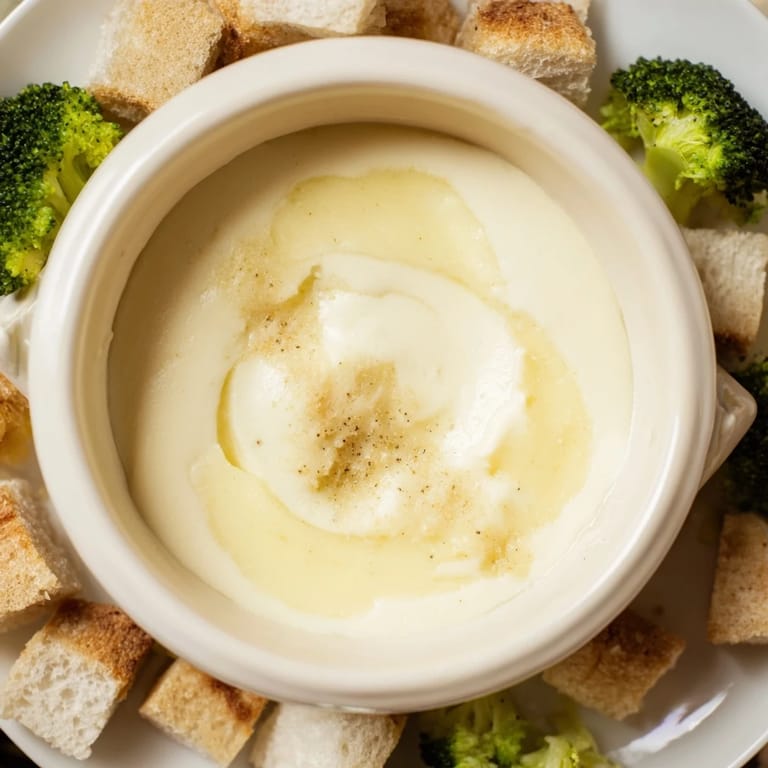
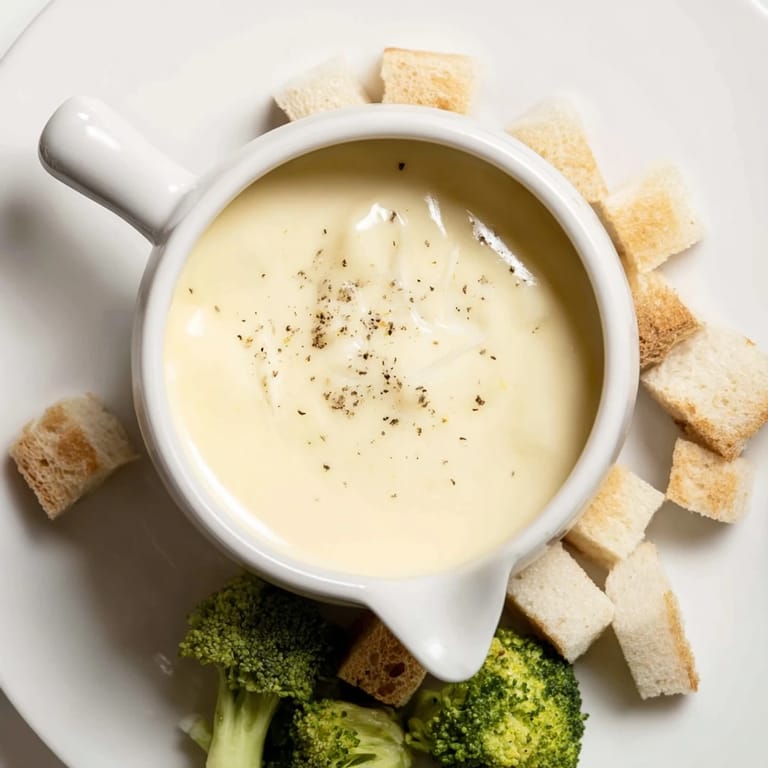
- Transfer the fondue pot to your tabletop burner set to low heat—you want to maintain a gentle warmth that keeps the cheese melted and silky without cooking it further. Arrange your bread cubes and blanched vegetables around the pot and let everyone dip at their own pace.
 Save
Save There's something about fondue that strips away all the pretense from eating together—forks clattering, cheese stretching in golden strings, people leaning in closer because they're all reaching for the same pot. It stopped being about the food and became about the togetherness.
The Secret to Restaurant-Quality Fondue
The difference between fondue that tastes like you tried and fondue that tastes genuinely special comes down to patience and heat control. I learned this the hard way after ruining three consecutive pots by rushing the cheese in or letting the temperature creep too high. The moment you stop stirring or let that pot get too hot, the cheese proteins panic and seize up into a grainy, broken mess that no amount of fixing will save. The magic happens when you give yourself permission to slow down—let the wine heat for a full minute before adding any cheese, let each handful melt completely before reaching for more, and keep that burner low enough that you're never tempted to increase the heat.
Choosing Your Cheeses
Gruyère and Emmental are the classic pair because they complement each other perfectly—Gruyère brings depth and a slightly funky complexity, while Emmental keeps things bright and creamy. If you want to experiment, you can substitute a quarter of the Gruyère with Appenzeller for a sharper edge, or even add a small amount of aged cheddar for extra richness, but I'd stay away from soft cheeses like brie or anything too pungent like aged Gouda, which can overwhelm the delicate balance. The key is choosing cheeses that melt smoothly and have enough acidity to play well with the white wine.
Making It Your Own
Once you master the basic technique, fondue becomes endlessly customizable—I've made it with different vegetables depending on the season, added fresh herbs like thyme or rosemary to the wine, even experimented with smoked paprika instead of nutmeg for a completely different mood. The framework stays the same, but the details are yours to play with.
- If kirsch isn't available, a small splash of cognac or even a good grappa will add similar depth without throwing off the balance.
- For a lighter version, you can replace up to half the wine with vegetable broth, though the wine really does make a difference in flavor and emulsification.
- Pair the fondue with a crisp Swiss white wine like Fendant or a light lager beer—the acidity and bubbles both help cut through the richness and refresh your palate between bites.
 Save
Save Fondue isn't just dinner—it's permission to linger at the table, to try bites on each other's forks, to laugh at small disasters, and to remember why we eat together in the first place. That's why it never gets old at my table.
Recipe FAQs
- → What cheeses are used in this dish?
Gruyère and Emmental cheeses are grated and melted to create the creamy base.
- → Can I omit kirsch in the preparation?
Yes, kirsch is optional and may be left out without affecting the core flavor significantly.
- → How is the cheese mixture thickened?
Cornstarch is tossed with the grated cheese before melting to ensure a smooth, thick consistency.
- → What accompaniments work best for dipping?
Bread cubes like baguette, along with blanched vegetables such as broccoli, cauliflower, cherry tomatoes, and baby carrots, complement the cheese melt.
- → How do I avoid cheese separating during melting?
Gently heat over medium-low heat and stir constantly in a figure-eight motion until smooth; avoid boiling to maintain texture.
- → Are there any recommended beverage pairings?
Dry white Swiss wines like Fendant or light lager beers pair well to balance the richness.