 Save
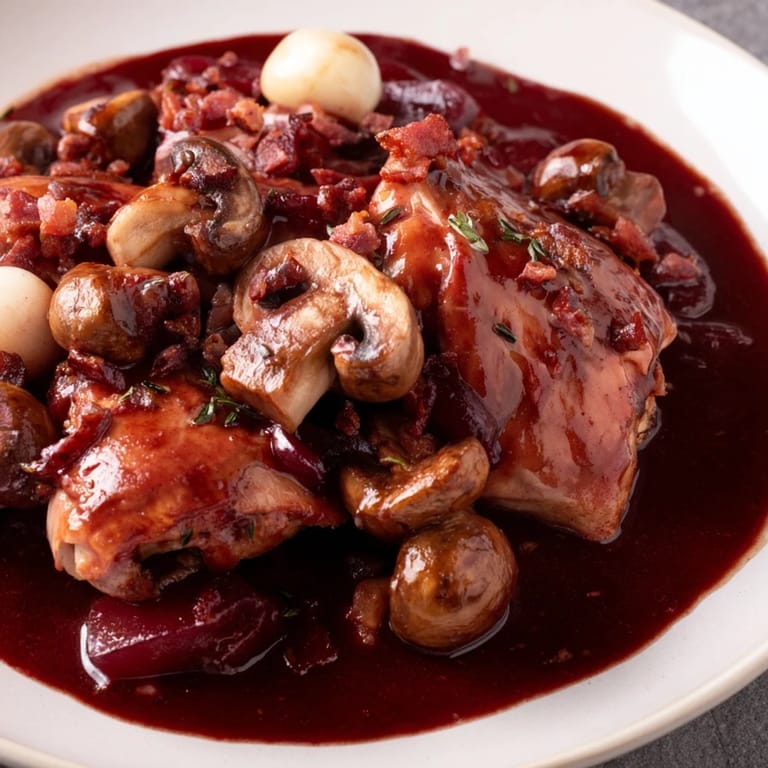
Save There was a winter evening when my neighbor brought over a bottle of Burgundy and mentioned she'd finally mastered coq au vin. I watched her Dutch oven simmer for hours, the kitchen filling with this incredible aroma of wine, bacon, and thyme that made everything else feel less important. That night, tasting her version, I realized this wasn't just a fancy dish—it was comfort food dressed up in French, and I had to learn how to make it myself.
I remember the first time I served this to friends, I was nervous because coq au vin felt like something only experienced cooks could pull off. But once everyone tasted it, the conversation just stopped for a moment—that kind of silence that means the food is doing exactly what it's supposed to. I've made it dozens of times since, and it never fails to feel special.
Ingredients
- Chicken (1 whole bird, cut into 8 pieces): Use a good quality bird if you can; industrial chickens tend to be watery and won't brown as nicely. Cut the legs from the breasts and thighs, then split the breasts in half for even cooking.
- Smoked bacon or pancetta (150 g, diced): This is where the savory backbone comes from—don't skip it or substitute with regular bacon, which lacks the depth. Save the rendered fat for cooking the vegetables.
- Pearl onions (200 g, peeled): Yes, peeling them is tedious, but blanch them first in boiling water for 2 minutes and the skins slip right off. Their natural sweetness is essential to the dish.
- Cremini or button mushrooms (250 g, cleaned and quartered): Clean them gently with a damp cloth rather than rinsing; mushrooms are like sponges and will absorb water, making them steam instead of brown.
- Carrots (2 medium, sliced): Cut them on the bias so they look elegant and cook at the right speed to match the chicken.
- Garlic (2 cloves, minced): Fresh garlic is non-negotiable here; it adds a bright note that powder can't replicate.
- Dry red wine (750 ml, preferably Burgundy or Pinot Noir): This is the soul of the dish, so use something you'd actually drink. Cheap wine means cheap-tasting braised chicken.
- Chicken stock (250 ml): Homemade is best, but quality store-bought works if it's actually flavorful and not oversalted.
- Tomato paste (2 tbsp): This quietly adds umami and helps thicken the sauce without a floury taste.
- All-purpose flour (2 tbsp): A light coating that helps brown the chicken and thickens the sauce naturally as it braises.
- Olive oil (2 tbsp total): Use regular olive oil, not expensive extra virgin, which burns at these temperatures.
- Unsalted butter (2 tbsp): For sautéing the mushrooms separately so they get a proper golden crust.
- Bay leaves (2) and fresh thyme (4 sprigs): Dried herbs turn dusty and bitter during a long braise; fresh herbs stay alive and fragrant throughout the cooking.
- Salt and black pepper: Season in layers, not all at once, so flavors develop as the dish cooks.
Tired of Takeout? 🥡
Get 10 meals you can make faster than delivery arrives. Seriously.
One email. No spam. Unsubscribe anytime.
Instructions
- Prepare and season the chicken:
- Pat your chicken pieces completely dry with paper towels—this is crucial for browning. Season them generously with salt and pepper on both sides and let them sit while you organize everything else.
- Render the bacon:
- In your Dutch oven over medium heat, cook the diced bacon until it's crispy and the fat is golden and aromatic. Remove it with a slotted spoon and pour off about half the fat, leaving enough to brown the chicken.
- Brown the chicken in batches:
- Don't crowd the pot or the chicken will steam instead of brown. Work in batches, letting each piece sit undisturbed for a minute before moving it, until all sides are deeply golden. This takes patience but builds flavor.
- Sauté the vegetables:
- Add the carrots, pearl onions, and garlic to the pot and let them cook for about 5 minutes, stirring occasionally until they're lightly golden at the edges. This caramelization adds sweetness and depth.
- Build the sauce base:
- Stir in the tomato paste and flour, cooking for just 1 minute so the flour loses its raw taste without browning. You're making a light paste that will thicken the braising liquid.
- Combine everything:
- Return the chicken and bacon to the pot, then pour in the red wine and stock. Scrape the bottom of the pot with a wooden spoon to release all those brown, flavorful bits—this is where real depth comes from.
- Braise low and slow:
- Add the bay leaves and thyme sprigs, bring everything to a gentle simmer, then cover and reduce heat to low. Let it cook for about 1.5 hours until the chicken is fall-apart tender and the wine has mellowed into something round and rich.
- Sauté the mushrooms separately:
- While the chicken braises, heat butter and olive oil in a skillet over medium-high heat and add the mushrooms. Don't stir them constantly; let them sit and brown, which takes about 5 minutes. This keeps them from turning into mush in the wine.
- Finish and balance:
- In the last 15 minutes, remove the Dutch oven lid so the sauce reduces slightly and concentrates. Stir in the golden mushrooms and taste for seasoning, adjusting with salt and pepper until it feels balanced and alive.
- Serve with intention:
- Remove the bay leaves and thyme sprigs, ladle the chicken and vegetables into bowls with plenty of sauce, and serve hot with crusty bread or buttered noodles to soak up every drop.
 Save
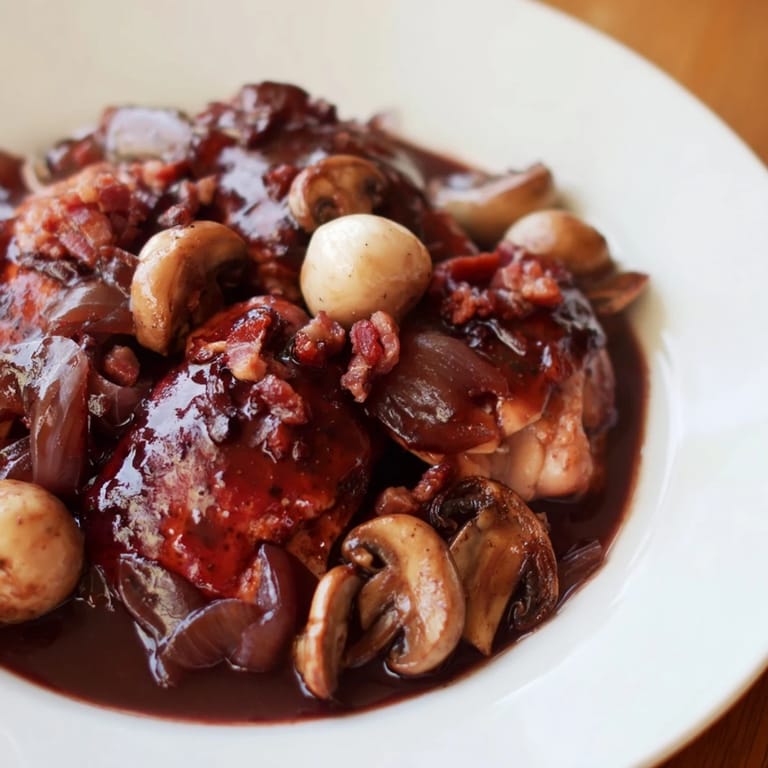
Save I'll never forget watching my mother-in-law serve this dish at a family dinner on a snowy December night. The kitchen had that golden, wine-soaked warmth, and somehow the food made everyone talk slower, laugh easier, stay longer at the table. That's when I understood coq au vin is really about creating a moment, not just making dinner.
Choosing Your Wine Matters
The wine is the entire soul of this dish, so pick one you'd actually enjoy drinking. A decent Burgundy, Pinot Noir, or even a good French Côtes du Rhône will transform the braising liquid into something velvety and complex. I once made this with a cheap supermarket red wine I wouldn't serve to a guest, and the difference was stark—the sauce tasted sharp and one-dimensional. Spend a bit more, or ask your wine shop for their recommendation in the $15-20 range. The cheaper the wine, the more its flaws concentrate during a long braise, so this is one place not to cut corners.
Making It Ahead and Storing
Coq au vin actually tastes better the next day because the flavors deepen and marry overnight in the refrigerator. Make it a day ahead if you can, store it in an airtight container, and gently reheat it over low heat on the stovetop. It keeps for about 3 days refrigerated, or you can freeze it for up to 2 months. I often make a double batch on a quiet Sunday, knowing I have elegant dinner sorted for the week.
Variations and Swaps
While classic coq au vin is a specific thing, you can adapt it slightly based on what's in your kitchen or what sounds good. Chicken thighs work beautifully because they're more forgiving than breasts and stay moist longer. Some cooks add a splash of brandy or Cognac when sautéing the mushrooms for extra richness, though this isn't traditional. If you want to add a touch of elegance, serve it with crusty French bread or buttered egg noodles rather than potatoes, which feel heavier.
- Thighs are more forgiving than breasts and won't dry out during the long braise.
- A splash of brandy adds luxury, but it's completely optional and not necessary for depth.
- Serve with whatever starch feels right to you—bread, potatoes, noodles—and let the sauce do the talking.
 Save
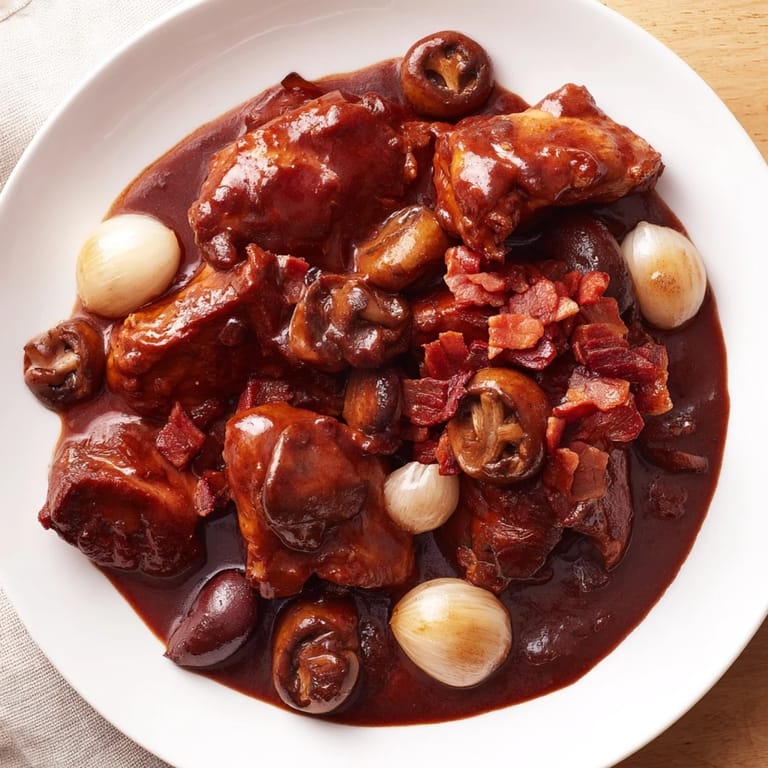
Save This dish reminds me that some foods don't need tricks or shortcuts to be impressive. There's something deeply satisfying about building something this good from simple things—chicken, wine, time, and attention. Make it when you have a little patience and people you want to feed well.
Recipe FAQs
- → What cut of chicken works best for this dish?
Bone-in chicken pieces, such as thighs and drumsticks, are ideal as they stay tender and absorb the braising flavors well.
- → Can I substitute the red wine used in the dish?
Dry red wines like Burgundy or Pinot Noir are preferred for their balance, but other dry reds can work well depending on your taste.
- → How should the mushrooms be cooked before adding?
Sauté mushrooms separately in butter and olive oil until browned to enhance their earthiness before adding them to the stew.
- → What role do the pearl onions play in this dish?
Pearly onions add a subtle sweetness and textural contrast that complements the rich, savory sauce.
- → Is it necessary to remove the bay leaves and thyme before serving?
Yes, removing these herbs ensures a smoother eating experience without tough or woody bits in the dish.