 Save
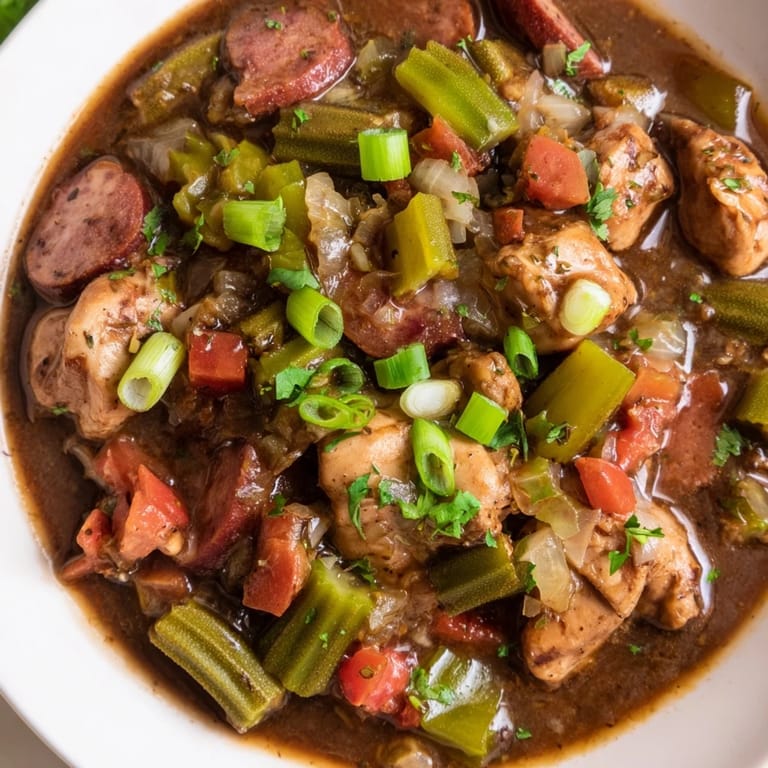
Save My first real gumbo came together on a gray New Orleans afternoon when a neighbor brought over fresh okra from her garden. I'd been intimidated by the roux—that temperamental chocolate-colored base that could turn bitter in a heartbeat—but watching her stir it patiently with the kitchen filling with nutty warmth made it feel less like chemistry and more like rhythm. Something clicked when the sautéed trinity of onion, pepper, and celery hit that hot roux with a satisfying sizzle. By the time the sausage and chicken went in, I understood why gumbo is less a recipe and more a conversation between ingredients.
I made this for friends who'd never had proper gumbo, and their silence when they took that first spoonful—the chicken tender, the sausage smoky, the broth coating their spoons with silky body—told me everything. One friend asked if I'd been cooking this my whole life, and I laughed because two hours earlier I was second-guessing whether my roux was dark enough. That's the magic of gumbo: it looks complex but it's really just ingredients respecting each other.
Ingredients
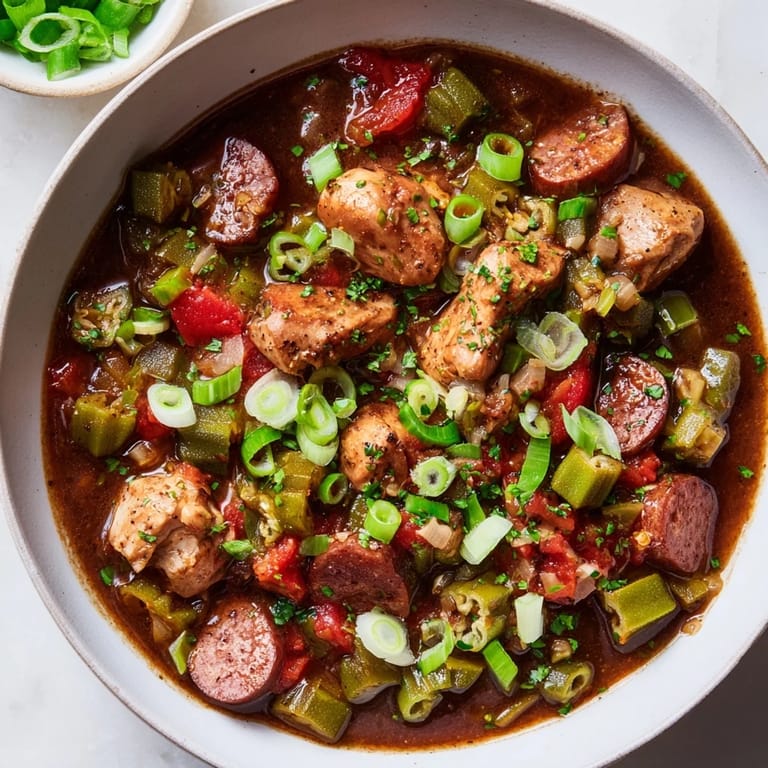
- Boneless, skinless chicken thighs (350 g): Thighs stay moist and tender through the long simmer, unlike breast meat which can turn stringy; they're also more forgiving if you lose track of time.
- Smoked andouille sausage (225 g): The smokiness is non-negotiable—it's the backbone of flavor, so don't substitute with mild sausage or you'll miss that distinctive Creole kick.
- Fresh or frozen okra (250 g): This is your thickener; if using frozen, thaw and pat it very dry or it'll release too much liquid and turn slimy.
- The holy trinity—onion, bell pepper, celery: Together they're the flavor foundation; don't skip the garlic added after either, it rounds everything out.
- All-purpose flour and vegetable oil (60 g each): The roux needs equal parts, and the whole process takes 15–20 minutes of continuous stirring—there's no rushing it without burning.
- Chicken stock (1.5 liters): Use a good-quality stock; the broth is half the dish, so cheap stock means a watery gumbo.
- Bay leaves, thyme, smoked paprika, cayenne: These build layers; the paprika adds earthiness, cayenne brings heat—adjust the cayenne to your tolerance, not the recipe's.
- Worcestershire sauce (1 tsp): A hidden umami bomb that ties everything together without tasting like Worcestershire.
Tired of Takeout? 🥡
Get 10 meals you can make faster than delivery arrives. Seriously.
One email. No spam. Unsubscribe anytime.
Instructions
- Make the roux—the patience test:
- Heat oil in your pot over medium heat, then whisk in flour. This is where most people mess up: they rush it or they burn it. You're looking for deep chocolate brown, and it takes about 15–20 minutes of constant stirring. Your arm will get tired. That's the point—it means you're doing it right. Watch it carefully in the last few minutes; the color goes from mahogany to burnt in about 30 seconds.
- Sauté the holy trinity:
- Once your roux is perfect, add the chopped onion, bell pepper, and celery. Let them soften for 3–4 minutes—you'll smell them wake up in the heat. Add the garlic for one more minute. This step isn't just about cooking vegetables; it's about letting them flavor the roux base.
- Brown the proteins:
- Add the sausage and chicken pieces to the pot and let them sear for about 5 minutes, stirring occasionally. You're not cooking them through; you're just building flavor by letting them touch the hot pan. The chicken will still be slightly pink inside.
- Add the okra:
- Stir in your okra and let it cook for 3–4 minutes. This brief sauté prevents it from turning mushy later. You'll notice the pot starting to smell incredible at this point.
- Build the broth:
- Add the tomatoes, stock, bay leaves, thyme, paprika, cayenne, Worcestershire sauce, salt, and pepper. Bring everything to a boil, then lower the heat and let it simmer uncovered for 45–50 minutes. Stir occasionally to prevent sticking, and taste it halfway through—you might want more cayenne.
- Finish and adjust:
- Remove the bay leaves and taste. Gumbo should be flavorful and bold, not timid. If you want it thicker, sprinkle filé powder on top off the heat—never boil it or it turns slimy. Serve over white rice.
 Save
Save I remember my aunt coming into the kitchen while the gumbo was simmering and just closing her eyes, breathing deeply. She didn't say anything about technique or ingredients—she just said it smelled like coming home. That's when I realized gumbo isn't just dinner; it's a small act of generosity in a pot.
The Roux: Heart of the Dish
The roux is honestly where people get nervous, but it's really just oil and flour getting friendly over time. Start medium, be patient, and stir constantly. The transformation from pale tan to rich chocolate brown happens gradually, then suddenly—you'll see the difference. The deeper the color, the more sophisticated the flavor, but if it goes black and bitter, you've gone too far and you'll need to start over. There's no shortcut here, and honestly, that's a good thing. It forces you to slow down and actually pay attention.
Okra: The Misunderstood Ingredient
Fresh okra is a conversation starter because people either love it or they're suspicious of its slimy reputation. That texture comes from the okra itself—it's not a flaw, it's a feature. The slime is what naturally thickens the gumbo, giving it that silky, luxurious mouthfeel that makes you want to linger over the bowl. If you're using frozen okra, thaw it completely and pat it dry with paper towels before adding it to the pot. And if you're really bothered by okra, use filé powder instead, which adds its own herbaceous complexity without the texture some people find off-putting.
Serving and Stretching This Meal
Gumbo is best served hot over a mound of fluffy white rice, and the rice soaks up all that incredible broth while adding substance to the bowl. Have hot sauce at the table because everyone likes different levels of heat, and it keeps things personal. A chunk of crusty French bread is perfect for soaking up the last bits of broth, and it makes the meal feel complete and a little fancy without actually being fancy.
- Make extra rice if you have a crowd; gumbo is more broth-forward than thick, so rice is the textural counterpoint people reach for.
- If you freeze leftovers, thaw them slowly in the refrigerator overnight and reheat gently on the stove with a splash of stock to revive the broth's body.
- Seafood versions are equally authentic—add peeled shrimp or lump crab meat in the last 10 minutes instead of (or alongside) the chicken if you want to switch things up.
 Save
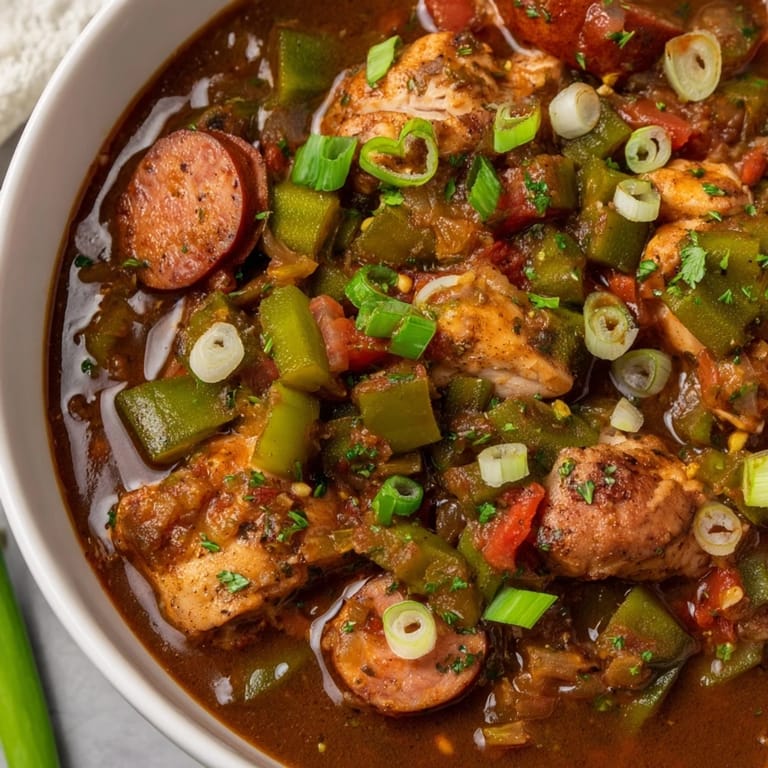
Save There's something deeply satisfying about a pot of gumbo—the way it fills your kitchen with warmth and smell, the way it brings people together around a simple, honest bowl. Make it once and you'll understand why Louisiana holds onto it so fiercely.
Recipe FAQs
- → What is the purpose of making a dark roux?
The dark roux provides a deep, nutty flavor and thickens the broth, forming the rich base that defines this Louisiana stew.
- → Can I substitute the proteins with other meats?
Yes, while chicken thighs and smoked andouille sausage are traditional, other smoked sausages or seafood like shrimp can be used for variation.
- → How do I know when the roux is ready?
Cook the flour and oil mixture until it achieves a deep chocolate brown color, stirring constantly to avoid burning, typically 15-20 minutes.
- → What role does okra play in this dish?
Okra adds a unique texture and natural thickening quality, enhancing the stew’s body and bringing a fresh vegetable element.
- → Is filé powder necessary for thickening?
Filé powder is optional; it adds a distinctive flavor and thickens the gumbo when sprinkled in off the heat, but the roux already provides substantial thickness.
- → What sides complement this stew best?
Cooked white rice is traditional, and crusty French bread pairs well to soak up the flavorful broth.