 Save
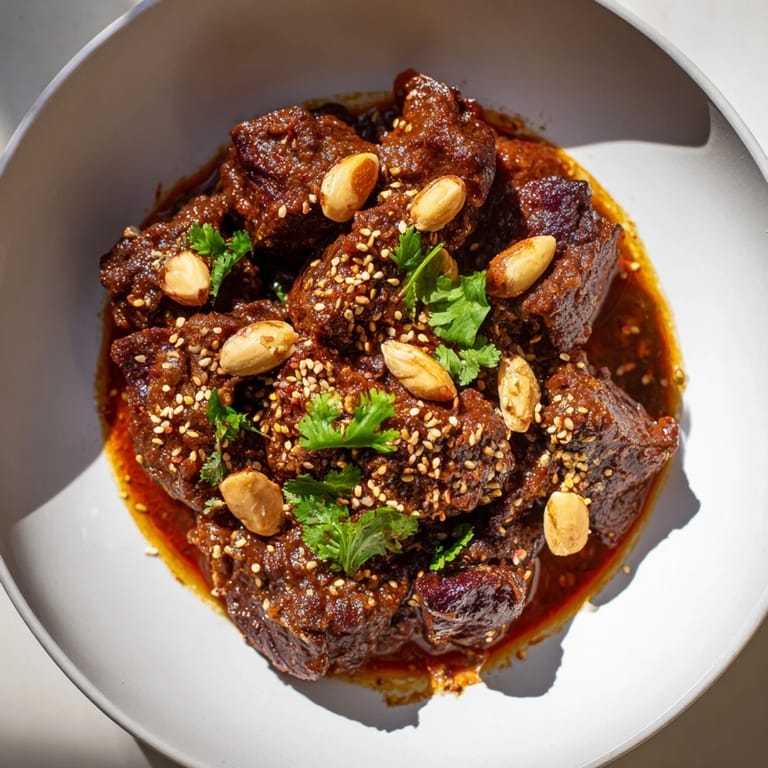
Save The first time I made tagine, I wasn't prepared for how the kitchen would smell—that warm cloud of cinnamon and cumin that seems to wrap around everything. My friend Karim watched me fumble through the spice layering and gently suggested I toast them with the aromatics, a small move that transformed the whole dish. That evening, as the lamb turned impossibly tender over hours, I understood why this stew has fed families across Morocco for centuries. There's patience in every spoonful, and a kind of magic that happens when sweet meets savory meets spice.
I'll never forget when my neighbor knocked on the door halfway through cooking, drawn by the smell alone. She ended up staying for dinner, and by the end of the meal she was asking for the recipe with that look people get when they've tasted something they didn't know they were missing. That moment taught me that tagine isn't just food—it's an invitation to slow down and share something real.
Ingredients
- Lamb shoulder (1.5 kg / 3.3 lbs, cubed): This cut has enough fat and connective tissue to break down beautifully during the long cook, becoming silky rather than tough—avoid leaner cuts or you'll end up with stringy meat.
- Olive oil (2 tbsp): Use good quality here since it's doing real work in browning and flavor, not just filler.
- Onions and garlic (2 large onions, 4 cloves): These become the foundation, melting into the sauce so completely that people won't taste distinct onion but will feel its sweetness throughout.
- Fresh ginger (1-inch piece, grated): This adds a subtle heat and brightness—ground ginger in the spice mix is different, so don't skip the fresh stuff.
- Cinnamon, cumin, coriander, turmeric, black pepper, allspice, ground ginger: Toast these with the aromatics so they wake up and deepen—this is where the magic actually lives.
- Saffron threads (optional pinch): If you have it, it adds a whisper of floral complexity that elevates everything, but the dish is complete without it.
- Beef or lamb broth (400 ml): This is the liquid backbone; use homemade if possible, or at minimum, find broth that doesn't taste aggressively salty.
- Canned chopped tomatoes (400 g): They add acidity and body to balance the sweetness of the honey and prunes.
- Honey (2 tbsp): This isn't about making the dish sweet—it's about depth and binding all the flavors together.
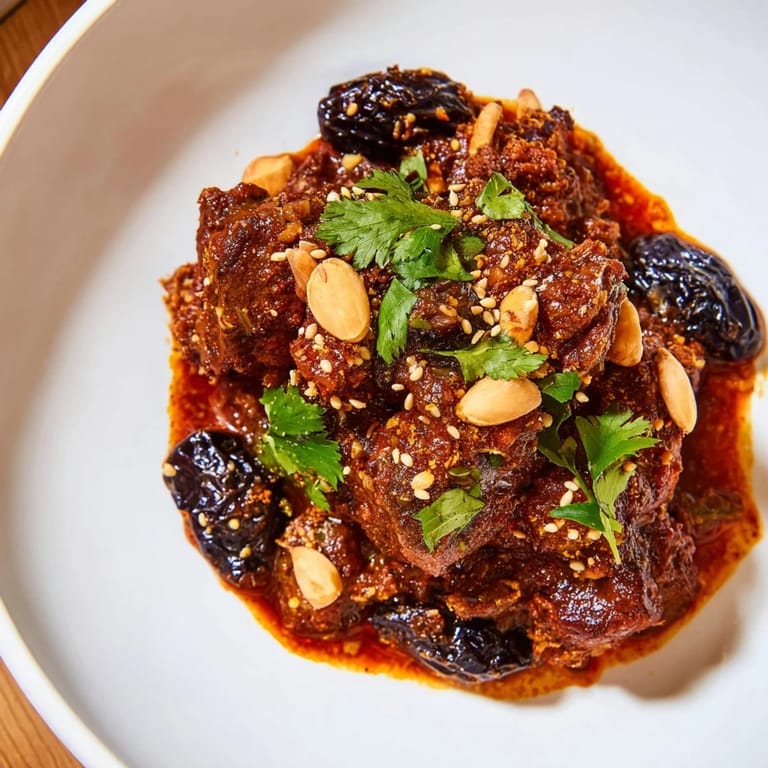
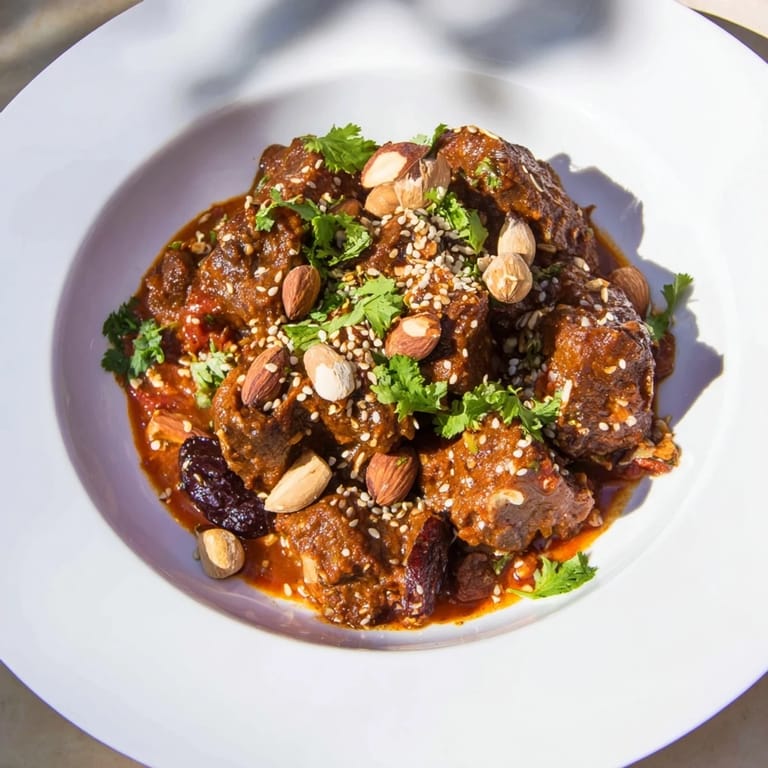
- Prunes (200 g) and blanched almonds (80 g): The prunes plump up and almost dissolve into the sauce, while toasted almonds add crunch and earthiness that keeps the dish from feeling too soft.
- Sesame seeds and fresh cilantro or parsley: Garnish right before serving so the sesame stays crispy and the herbs don't wilt into nothing.
- Salt: Taste as you go and finish with salt, never at the beginning—it changes how spices bloom.
Tired of Takeout? 🥡
Get 10 meals you can make faster than delivery arrives. Seriously.
One email. No spam. Unsubscribe anytime.
Instructions
- Set your oven to 160°C (325°F):
- This low, gentle heat is the whole point—the tagine cooks low and slow, which is why the meat ends up so impossibly tender. If you're using a traditional tagine on the stovetop, that works too, you'll just need to be more attentive.
- Brown the lamb in batches:
- Don't crowd the pot or the meat will steam instead of brown. Let each batch sit undisturbed for a minute or two until a golden crust forms, then turn and repeat. This takes patience but creates flavor you can't skip.
- Build the flavor base:
- Once the meat is set aside, the aromatics go in—onions, garlic, ginger. Let them soften for about 5 minutes, getting translucent and fragrant. You'll smell when they're ready.
- Toast the spices:
- This is the moment everything changes. Sprinkle in cinnamon, cumin, coriander, turmeric, pepper, allspice, ground ginger, and saffron if using. Stir constantly for just 1 minute—any longer and they'll burn, any shorter and they won't bloom. The smell will tell you when it's right.
- Bring everything together:
- Return the lamb, add tomatoes, broth, and honey. Stir well, bring to a gentle simmer, then cover and transfer to the oven. The covered pot traps steam and keeps everything moist.
- Toast the almonds while the stew cooks:
- In a dry skillet over medium heat, shake the almonds around for 2-3 minutes until golden and fragrant. This wakes up their flavor and keeps them crispy in the finished dish.
- Add prunes and almonds at the halfway point:
- After 1 hour 30 minutes, add the prunes and toasted almonds. The remaining cook time lets the prunes soften and infuse the sauce with their sweetness, while the almonds stay textural.
- Finish and serve:
- Taste and adjust salt. Serve hot, garnished with sesame seeds and fresh cilantro or parsley. The contrast of hot stew with cool herbs is essential.
 Save
Save There's a moment, maybe 20 minutes before it's done, when you lift the lid and that steam rises up carrying cinnamon and something you can't quite name, and you just know it's going to be right. That's when I usually set the table and open wine, because the dish has already done the hard part.
What Makes This Different
Tagine sits in that perfect space between stew and braise—it's about coaxing flavors out slowly rather than burning them in fast. The combination of sweet (prunes, honey) with savory (lamb, broth) and warm spices (cinnamon, ginger) creates something that tastes both comforting and exotic. It's not trying to be anything other than what it is, which is why it works.
How to Serve It
Couscous is traditional, but honestly, this stew is flexible. Saffron rice soaks up the sauce beautifully, or tear into crusty bread and let it catch the spiced liquid. Some people add a dollop of yogurt on the side for coolness and tang. The key is giving yourself something to soak the sauce with—that's where half the pleasure lives.
Variations and Make-Aheads
This is one of those dishes that actually gets better the next day, once all the flavors have settled into each other. You can make it up to 3 days ahead and reheat gently on the stovetop. For variation, swap prunes for apricots if you want something brighter, or add a pinch of cayenne if you like heat. Some families add a stick of cinnamon or a bay leaf during cooking, then remove before serving. You can marinate the lamb overnight in spices and oil if you want deeper flavor, though it's not necessary—the long cook does most of the work.
- Pair with Moroccan red wine or strong mint tea to cut through the richness.
- Leftovers transform into something new: shred any remaining lamb and use it to fill pastries, or layer it into a grain bowl with roasted vegetables.
- If you make it for a crowd, it doubles easily and feeds 12 without any fuss.
 Save
Save When you make this, you're not just cooking dinner—you're creating a ritual that takes hours but asks almost nothing of you except presence. That's the real gift of tagine.
Recipe FAQs
- → What cut of lamb works best for this dish?
Lamb shoulder cut into cubes is ideal as it becomes tender and flavorful when slow-cooked.
- → Can I prepare this dish without a traditional tagine?
Yes, a heavy Dutch oven or large oven-safe pot works well for slow braising the lamb.
- → How do the prunes affect the flavor of the dish?
Prunes add a natural sweetness that balances the savory spices and enriches the sauce.
- → Are there alternatives to almonds for garnish?
Toasted nuts like pistachios or walnuts can be used, but almonds provide a classic texture and flavor.
- → What sides complement this lamb dish?
Steamed couscous, saffron-infused rice, or crusty bread are excellent accompaniments to soak up the sauce.