 Save
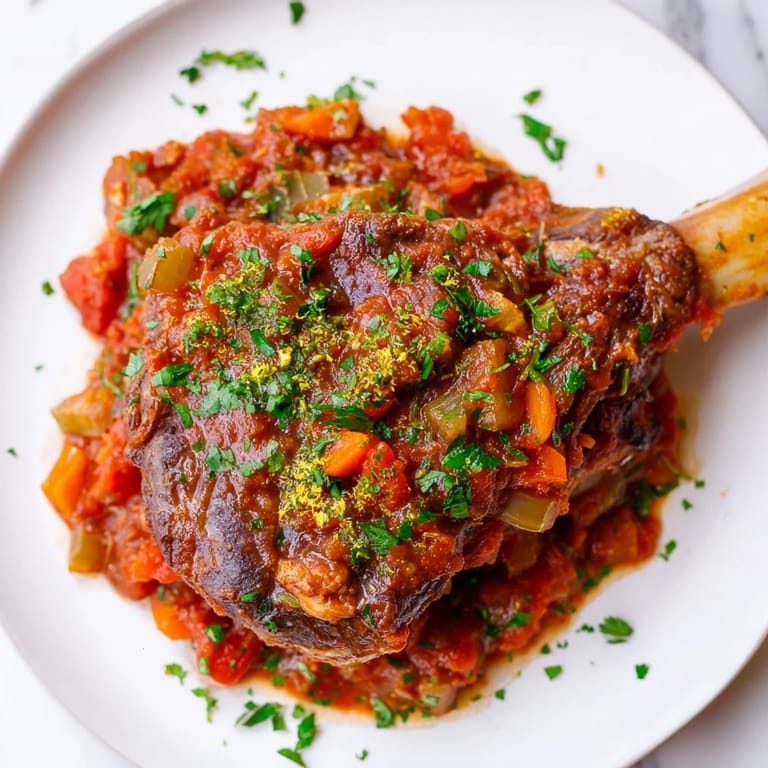
Save The first time I truly understood why Osso Buco matters was when the smell of braising veal filled my tiny kitchen on a rainy Milan-inspired evening, and I realized that slow cooking isn't about patience—it's about transformation. What arrives at your table bears almost no resemblance to those pale shanks you started with, and that moment of revelation never gets old. There's something almost alchemical about how bone marrow, wine, and time conspire to create something this tender and rich.
I learned to make this properly when cooking for my mother's birthday, nervous as anything, and she took one bite and closed her eyes like I'd just handed her a memory. Turns out the people you cook this for will taste the care you put in, and Osso Buco is the kind of dish where every minute of braising shows up on their face.
Ingredients
- Veal shanks: Four thick cross-cut pieces, bone-in and meaty, are what make this dish sing—the marrow and collagen are doing half the cooking for you.
- Salt and freshly ground black pepper: Don't skip the fresh grinding; it makes a real difference in how the meat takes the seasoning.
- All-purpose flour: Just enough to create a light crust that helps with browning; a gluten-free blend works beautifully if needed.
- Olive oil and unsalted butter: The butter adds richness, the oil handles the heat—together they're the foundation of your browning.
- Onion, carrots, celery, and garlic: This is your soffritto base, the flavor foundation that makes everything taste intentional.
- Dry white wine: Something you'd actually drink; bad wine makes bad braise.
- Diced tomatoes, beef or veal stock, tomato paste: These build the sauce body; the tomato paste concentrated in the pan first releases its flavor completely.
- Bay leaves and thyme: Dried herbs work here, but if you have fresh thyme, use it—one branch does the job.
- Lemon zest: Save half for the gremolata; this is where the brightness lives.
- Fresh flat-leaf parsley, garlic, and lemon zest for gremolata: This finisher transforms the entire bowl from heavy to alive.
Tired of Takeout? 🥡
Get 10 meals you can make faster than delivery arrives. Seriously.
One email. No spam. Unsubscribe anytime.
Instructions
- Prepare and season:
- Pat the shanks completely dry with paper towels—moisture is the enemy of browning. Season generously with salt and pepper, then dredge lightly in flour, shaking off any excess so you get a thin, even coat, not a clump.
- Brown the veal:
- Heat your butter and oil together until it's shimmering and just starting to smell nutty, then lay the shanks down carefully. Let them sit undisturbed for 3-4 minutes per side until you get a golden-brown crust that smells incredible; this is flavor you can't get any other way.
- Build your base:
- Remove the shanks to a plate, then add your chopped vegetables to the same pot. As they soften and begin to caramelize, you'll notice the browned bits from the veal starting to dissolve into the oil—that's everything you want.
- Deglaze and concentrate:
- Stir in the tomato paste and let it cook for exactly one minute, getting it to darken slightly and stick to the pan. Then pour in the white wine, scraping the bottom with your spoon to pull up all those stuck-on bits of flavor.
- Build the braising liquid:
- Add the tomatoes, stock, bay leaves, thyme, and half your lemon zest, stirring everything together so nothing sticks to the bottom. The liquid should come about halfway up the sides of the shanks.
- Return the veal and start the braise:
- Nestle the shanks back into the pot in a single layer, spooning some sauce over top. Bring it to a gentle simmer on the stovetop, then cover and transfer to a 160°C/325°F oven for exactly 2 hours, or until a fork slides through the meat with almost no resistance.
- Make the gremolata:
- While the veal braises, mince your parsley, garlic, and remaining lemon zest together on a cutting board, doing it by hand if you can so the pieces stay bright and distinct. Set it aside until serving.
- Finish the dish:
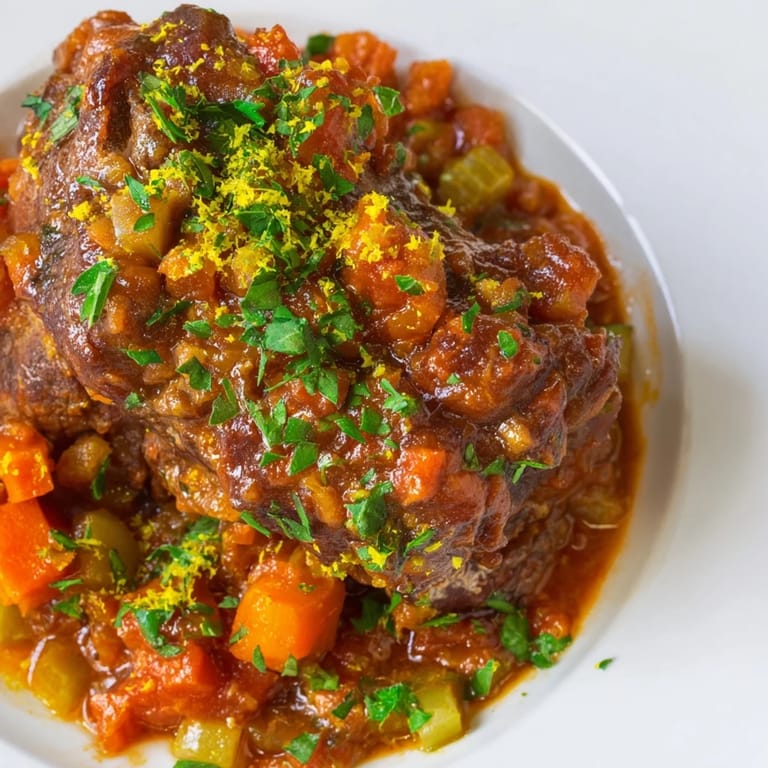
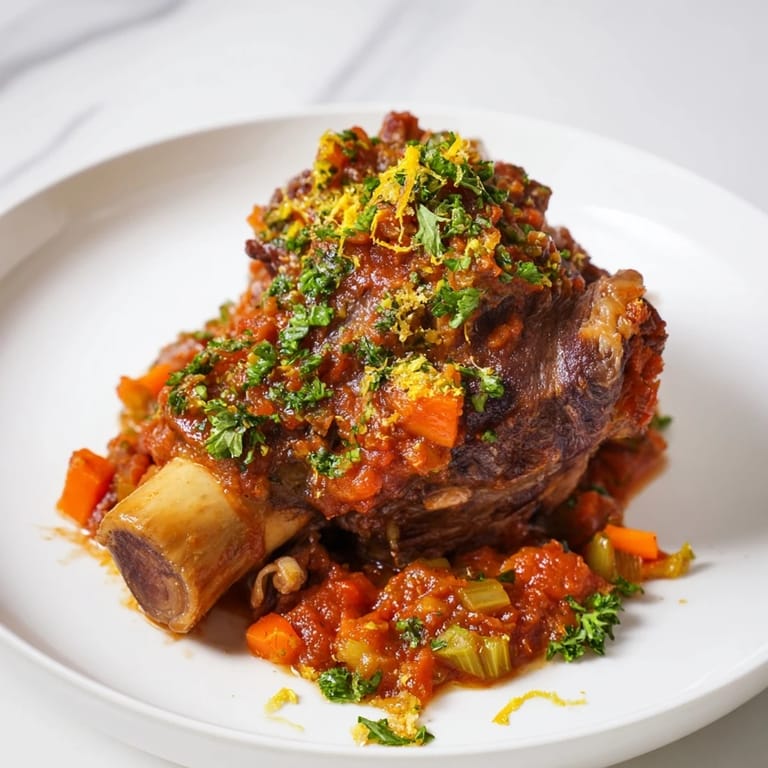
- Remove the braised shanks to a serving platter. If the sauce looks too thin, simmer it uncovered for a few minutes; if there's visible fat on top, skim it gently with a spoon, then spoon the sauce over the shanks and finish with a generous sprinkle of gremolata.
 Save
Save There's a moment toward the end of the cooking time when your house smells so good you almost forget what hunger even feels like. That aroma is how you know the veal is transforming, the wine is melding with the tomatoes, and whatever you're about to serve is going to change how someone thinks about dinner.
What to Serve It With
This dish was born alongside Risotto alla Milanese, the two completing each other on the same plate—the creamy, saffron-laced rice soaks up every drop of sauce while the bright gremolata keeps everything balanced. Creamy mashed potatoes or soft polenta work beautifully too; whatever you choose should be something that welcomes sauce generously.
Why This Takes Time
Two hours in the oven sounds long until you realize those veal shanks are basically collagen and connective tissue that need heat and moisture to break down into pure tenderness. The wine reduces, the tomatoes concentrate, the stock infuses everything with savory depth—it's not really waiting, it's actually cooking, and there's no shortcut that produces the same result. The slow braise is where all the magic happens.
Making It Your Own
Once you've made this a few times, you'll start noticing that a splash more wine if you like it brighter, or an extra bay leaf if you want deeper herbal notes, all work perfectly. Some kitchens add a pinch of nutmeg or a touch of cinnamon—these are whispers, not shouts, but they're worth experimenting with. The bones are always there supporting everything, and the gremolata is always there bringing it back to life.
- If you can't find veal, beef shanks work; just add about 30 minutes to the cooking time and taste the sauce for seasoning at the 2-hour mark.
- Make this a day ahead if you want—the flavors actually deepen overnight, and you can lift off any solidified fat from the top when it's cold.
- Freeze what you don't serve; it thaws beautifully and tastes even better the second time around.
 Save
Save This is the kind of meal that makes people linger at the table, asking for another bite and wondering how something so elegant came from your kitchen. That's the whole point—Osso Buco tastes like you spent all day cooking, but mostly you just let time and heat do the work for you.
Recipe FAQs
- → What cut of meat is best for Osso Buco?
Veal shanks cross-cut with bone-in are ideal, offering tender meat and rich marrow that enhances the dish's flavor.
- → Can the dish be made gluten-free?
Yes, use gluten-free flour for dredging the veal shanks to accommodate gluten sensitivities without altering taste.
- → What vegetables are used in the sauce?
Onions, carrots, celery, and garlic form the aromatic base for the sauce, contributing sweetness and depth.
- → How is gremolata prepared and used?
Gremolata is a fresh mix of lemon zest, garlic, and parsley. It’s sprinkled over the braised shanks to add brightness.
- → What side dishes complement this dish?
Traditional sides include saffron risotto, creamy mashed potatoes, or polenta, which soak up the rich sauce beautifully.