 Save
Save The first time I made paella, I was standing in a cramped Madrid kitchen at my cousin's apartment, sweating through my shirt as she narrated every move in rapid Spanish while her neighbors poked their heads in through the open window to watch. The aroma of saffron hitting hot stock was so intoxicating that I forgot to be nervous. Years later, whenever I make it at home, that moment comes rushing back—the chaos, the laughter, the sudden realization that cooking this dish was less about perfection and more about creating something worth gathering around.
I made this for my partner's birthday dinner last spring, and what started as me nervously checking the time every thirty seconds turned into the most relaxed cooking hour I've had in months. There's something about paella that makes you slow down—you can't rush it, so you stop trying to. By the time we sat down to eat under the patio lights with the pan still steaming between us, I realized the food was almost secondary to the whole experience of making it together.
Ingredients
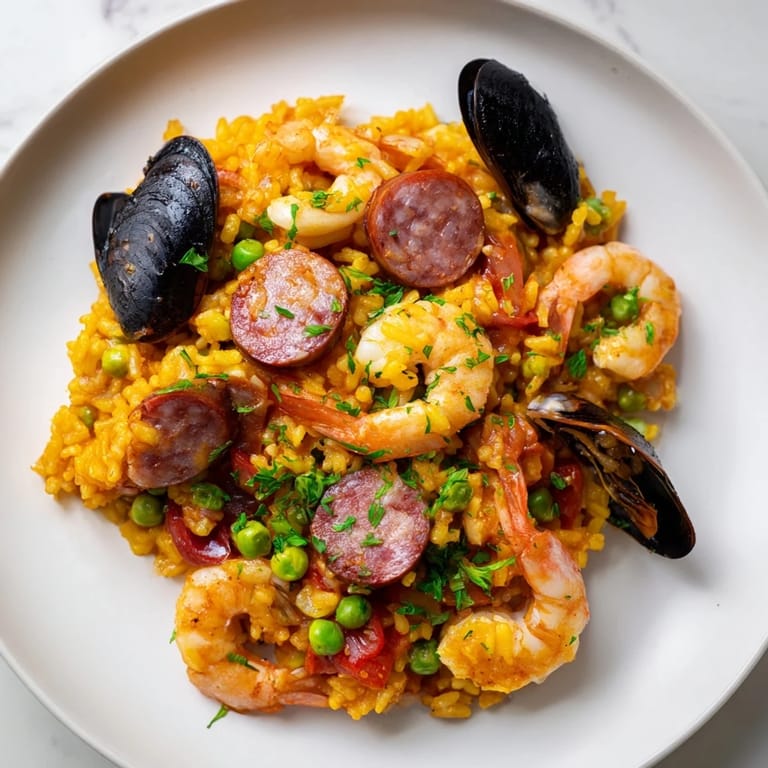
- Chorizo sausage, 200g sliced: The smoky backbone that makes everything taste intentional—don't skip it or use regular sausage, the smoked flavor is non-negotiable.
- Chicken thighs, 250g cut into bite-sized pieces: Dark meat stays juicy where breast would dry out; this is where forgiving cooking begins.
- Large shrimp, 250g peeled and deveined: They're your seafood anchor and cook faster than mussels, so timing matters.
- Mussels, 250g cleaned and debearded: They'll open and tell you when they're ready; if any stubbornly stay closed, let them go.
- Calamari rings, 200g optional: I skip these more often than not, but when the mood strikes, they add a tender chew that's lovely.
- Short-grain paella or Arborio rice, 400g: This rice absorbs liquid without turning to mush, which is the whole point of paella existing.
- Chicken or seafood stock, 1L heated: Hot stock is essential—cold stock will shock the cooking process and mess with your timing.
- Saffron threads, 1/2 tsp: This is the spice that makes paella taste like paella; it's expensive but irreplaceable, so don't substitute.
- Olive oil, 2 tbsp: Use decent oil here, not the cheapest bottle—it flavors everything that follows.
- Onion and bell peppers, mixed: The aromatic base that builds flavor before the rice even touches the pan.
- Garlic, 3 cloves minced: Added after the peppers so it doesn't burn and turn bitter.
- Tomatoes, 2 medium diced: They break down into the rice and add acidity that brightens the whole dish.
- Frozen peas, 150g: They go in late so they stay bright green instead of turning army-colored.
- Smoked paprika, 1 tsp: The Spanish kind (pimentón) is worth hunting down; it's the subtle smoky note that makes people ask what your secret is.
- Salt, black pepper, and a bay leaf: The bay leaf sits in there unobtrusive but essential, like a friend who says nothing but everything changes when they're in the room.
- Fresh parsley and lemon wedges for serving: The parsley is brightness; the lemon is the thing that wakes up your palate at the end.
Tired of Takeout? 🥡
Get 10 meals you can make faster than delivery arrives. Seriously.
One email. No spam. Unsubscribe anytime.
Instructions
- Steep the saffron:
- Pour 3 tablespoons of hot stock over the saffron threads in a small bowl and let them sit while you prep everything else. The threads will release their golden color and that distinctive floral earthiness into the liquid, and you'll know it's ready when the water looks like liquid gold.
- Brown the meat:
- Heat your olive oil in the paella pan over medium heat until it shimmers, then add the chorizo and chicken pieces. Let them sit for a minute before stirring—you want them to brown and caramelize, not just turn pale. After 5–7 minutes, when everything has color, transfer them to a plate.
- Build the base:
- In the same pan with the rendered fat and chorizo drippings, add the onion and bell peppers, stirring every minute or so until they soften and start to turn golden at the edges. This takes about 4–5 minutes and smells incredible. Add the minced garlic and diced tomatoes, cooking for another 2 minutes until the tomatoes start to break down.
- Toast the rice:
- Stir in the rice and smoked paprika, making sure every grain gets coated in the oil and vegetables. You're looking for the rice to turn slightly translucent at the edges—this toasting step ensures the rice stays separate instead of turning into risotto.
- Add the liquid and meat:
- Return the browned chicken and chorizo to the pan, then pour in the saffron-infused stock and the remaining hot stock along with the bay leaf, salt, and pepper. Give it a gentle stir to combine, then bring everything to a boil.
- Let it simmer untouched:
- Once it boils, reduce the heat to low and simmer uncovered for 15 minutes without stirring—this is where the magic happens and the bottom of the rice develops a slightly crispy, golden crust called socarrat. Resist the urge to poke it; trust the process.
- Add the seafood:
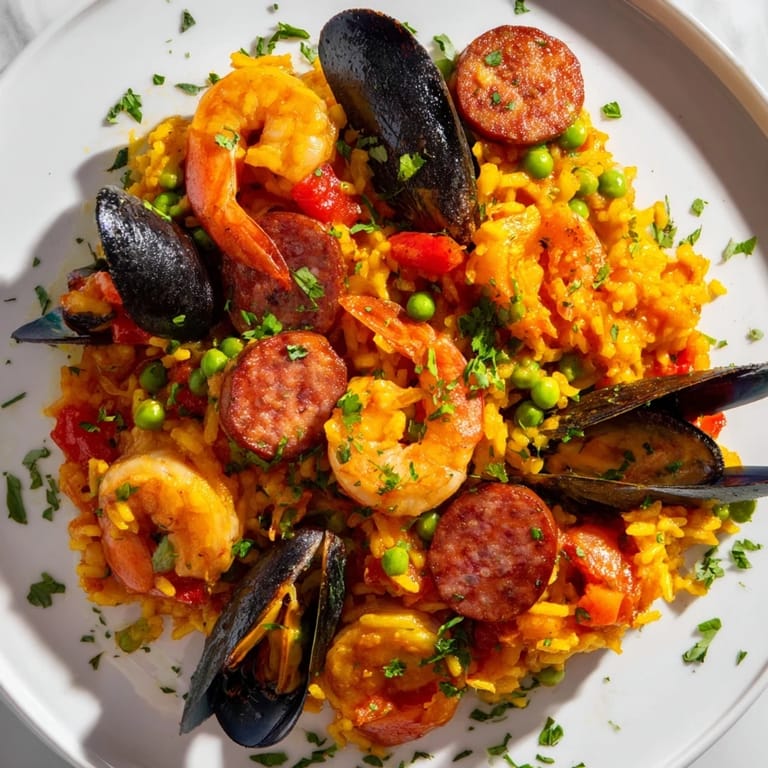
- After 15 minutes, nestle the shrimp, mussels, and calamari (if using) into the rice, then scatter the frozen peas over the top. Loosely cover with foil and cook for another 10–12 minutes until the shrimp turns pink, the mussels open, and the mussels smell like the ocean.
- Rest and finish:
- Remove from heat, keep it covered, and let it rest for 5 minutes—this steam-finishes everything and lets the flavors settle. Check the mussels; discard any that didn't open. Scatter fresh parsley over top and serve with lemon wedges on the side.
 Save
Save There was a night when everything went slightly wrong—I'd forgotten to heat the stock, the timing felt off, and I was sure I'd ruined it. But when I brought that pan to the table and cracked off the foil, my guests made a sound I've never heard before: collective awe mixed with hunger. That's when I understood that paella isn't really about perfection; it's about showing people you cared enough to spend an hour coaxing flavors together.
Why Stock Temperature Matters More Than You'd Think
Cold stock hitting hot rice is like dropping a cold stone into warm water—it disrupts the cooking and throws off your timing. I learned this the hard way when I grabbed stock from the fridge because I'd forgotten to heat it. The rice cooked unevenly, and half the pan was al dente while the other half was mushy. Now I always have stock simmering in a separate pot, not because I'm fancy, but because it genuinely changes the outcome.
The Art of Knowing When Seafood Is Done
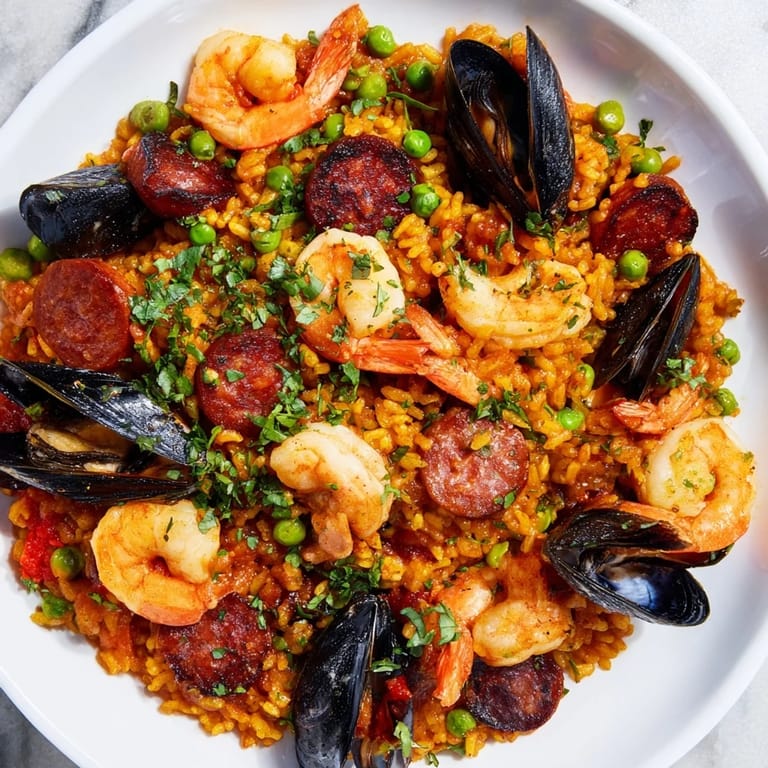
Shrimp turn pink and opaque when they're done—literally two minutes before they start curling too tight and bouncing around the pan. Mussels open when they're ready, and that opening is your signal to stop cooking. If you're using scallops or clams instead, they're more forgiving, but the principle is the same: seafood wants minimal time in heat. I used to overcook everything until I realized that the brief kiss of heat is what keeps them tender.
Making It Your Own
Some nights I make this exactly as written, and some nights I swap in whatever seafood looks good at the market—scallops, clams, even leftover grilled fish. The framework is sturdy enough to hold variations without falling apart. The saffron, the smoked paprika, the technique of building layers—those stay constant, but everything else can breathe and shift.
- If you can't find saffron threads, don't use the powdered stuff; find a different recipe instead because saffron is the voice of this dish.
- Spanish wine matters more than you'd think—a crisp Albariño or Verdejo alongside the paella elevates the whole meal.
- Leftover paella is best eaten cold the next day, straight from the fridge, because it tastes like a different dish in the best way possible.
 Save
Save Paella is the kind of dish that stays in your memory not because it's difficult, but because of how it makes people feel. It's built for gathering, built for slowing down, and built for reminding yourself why cooking matters. Make it once, and you'll understand why my cousin's neighbors kept stopping by.
Recipe FAQs
- → What type of rice works best for paella?
Short-grain rice such as paella or Arborio rice is ideal as it absorbs flavors well while maintaining a firm texture.
- → Can I use other seafood besides shrimp and mussels?
Yes, clams, scallops, or calamari can be used to diversify the seafood flavors according to preference.
- → How do I achieve the signature saffron flavor?
Steep saffron threads in hot stock before adding to the rice to infuse the dish with its distinct aroma and color.
- → Is it necessary to avoid stirring during cooking?
Yes, once the broth is added, stirring should be minimized to develop the desired crust and even cooking.
- → What can I serve alongside this dish?
A crisp Spanish white wine like Albariño or Verdejo pairs wonderfully, complementing the rich and smoky flavors.